6 Best Aquarium Heaters with Digital Thermometer for Every Tank (2026)
Compare 6 aquarium heaters with digital thermometers for freshwater and saltwater tanks. See wattage, controls and pros and cons to find your match.
 By Emily Parker
Updated November 24, 2026
 By Emily Parker
Updated November 2026
Choosing an aquarium heater with digital thermometer saves you from guessing at water temperature every time you check the tank. The best units hold a steady setpoint, show a readable temperature on the front, and match the wattage to your tank volume. Below we compare six models by wattage range, control style, and the trade-offs owners commonly report, so you can narrow the list to the one that fits your setup.
Our top picks at a glance
- 1TOP CHOICEBest overallHiTauing Aquarium Heater 25W/50W/100W/200W/300W, Adjustable Knob FishView on Amazon
- 2
 TOP CHOICEBest for large tanksAQUANEAT Aquarium Heater, 300W Fish Tank Heater, Adjustable SubmersiblView on Amazon
- 3
 TOP CHOICEBest for nano tanksAQUANEAT Aquarium Heater, 50W Fish Tank Heater, Adjustable SubmersibleView on Amazon
- 4
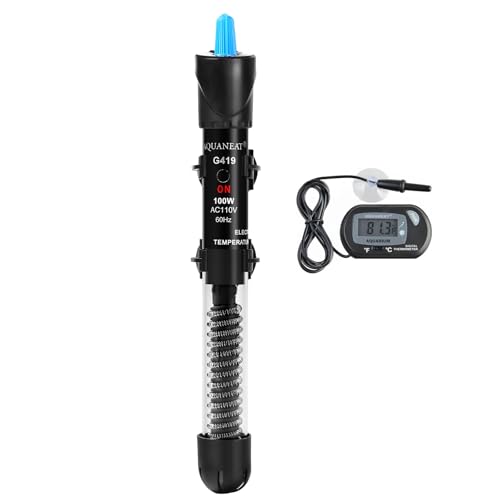 Best for mid-size tanksAQUANEAT Aquarium Heater, 100W Fish Tank Heater, Adjustable SubmersiblView on Amazon
- 5
 Best budget pickDaToo 300W Adjustable Knob Aquarium Heater Submersible Fish Tank HeateView on Amazon
- 6
 Best for high-wattage controlhygger Aquarium Heater 300W/500W/800W/1000W, Submersible Fish Tank HeaView on Amazon
Our Top Picks
Quick Comparison
| Product | Best for | Key feature |
|---|---|---|
| HiTauing Aquarium Heater 25W–300W | General freshwater and saltwater use | Multiple wattage options |
| AQUANEAT Aquarium Heater 300W | Large tanks | Adjustable submersible thermostat |
| AQUANEAT Aquarium Heater 50W | Nano tanks | Compact low-wattage body |
| AQUANEAT Aquarium Heater 100W | Mid-size tanks | Built-in digital readout |
| DaToo 300W Aquarium Heater | Budget-minded buyers | Adjustable knob control |
| hygger Aquarium Heater 300W–1000W | Large or heavily stocked tanks | Auto-stop when out of water |
HiTauing Aquarium Heater 25W/50W/100W/200W/300W, Adjustable Knob Fish Tank Heater with Digital Thermometer
HiTauing Aquarium Heater 25W/50W/100W/200W/300W, Adjustable Knob Fish Tank Heater with Digital Thermometer, Submersible Betta/Turtle Tank Heater for Freshwater and Saltwater Tanks
Best for: General freshwater and saltwater tanks that may change size over time Worth reading next: 7 Best Freesea 25 Watt Aquarium Heaters with Aquarium Submersible Thermometer (2026): Our Picks.
This is a good fit for hobbyists who want one heater model with several wattage options to match different tank sizes, from betta setups to turtle tanks.
Pros
- Several wattage choices in one product line
- Adjustable knob with a digital temperature display
Cons
- Owners should confirm the exact wattage before ordering
AQUANEAT Aquarium Heater, 300W Fish Tank Heater, Adjustable Submersible Water Thermostat with Digital Thermometer
AQUANEAT Aquarium Heater, 300W Fish Tank Heater, Adjustable Submersible Water Thermostat with Digital Thermometer
Best for: Large tanks that need higher heating output
Suited to larger freshwater or saltwater aquariums where a lower-wattage heater would struggle to keep up with heat loss.
Pros
- High wattage for bigger water volumes
- Adjustable thermostat with on-screen temperature
Cons
- Oversized for small tanks, which can overheat without careful setpoint control
AQUANEAT Aquarium Heater, 50W Fish Tank Heater, Adjustable Submersible Water Thermostat with Digital Thermometer
AQUANEAT Aquarium Heater, 50W Fish Tank Heater, Adjustable Submersible Water Thermostat with Digital Thermometer
Best for: Nano tanks and small enclosures
A practical choice for shrimp tanks, betta setups and other small systems where a 300W unit would be far too much.
Pros
- Low wattage suits small water volumes
- Built-in digital thermometer for easy reading
Cons
- Not suitable for tanks much larger than a few gallons
AQUANEAT Aquarium Heater, 100W Fish Tank Heater, Adjustable Submersible Water Thermostat with Digital Thermometer
AQUANEAT Aquarium Heater, 100W Fish Tank Heater, Adjustable Submersible Water Thermostat with Digital Thermometer
Best for: Mid-size tanks in the 20 to 40 gallon range
Works well for community freshwater tanks and smaller reef setups that need a middle-ground heater rather than a large unit.
Pros
- Sensible wattage for mid-size aquariums
- Digital readout makes checking temperature quick
Cons
- Owners of very large tanks may need two units for redundancy
DaToo 300W Adjustable Knob Aquarium Heater Submersible Fish Tank Heater with Digital Thermometer
DaToo 300W Adjustable Knob Aquarium Heater Submersible Fish Tank Heater with Digital Thermometer for Saltwater and Freshwater Tanks
Best for: Budget-conscious buyers with larger tanks
A straightforward option for keepers who want a high-wattage heater with a digital display and a simple knob for setpoint adjustment.
Pros
- Adjustable knob control is easy to use
- Works in both freshwater and saltwater
Cons
- Less feature-rich than controller-based heaters
Buying Guide
Match Wattage to Your Tank Volume
A common starting point is roughly 3 to 5 watts per gallon, but the right number depends on your room temperature and how far you want to raise the water. Cold rooms and larger tanks need more power, while small tanks in warm rooms can run on less. When you are between sizes, choosing the slightly higher wattage gives you more heating headroom, as long as you use a unit with a thermostat.
Check the Thermometer and Display
A digital thermometer is only useful if you can read it at a glance. Look for a clear LED or LCD readout, and consider whether the display sits on the heater itself or on a separate controller. Models with a built-in digital readout make it easier to confirm the setpoint without reaching into the tank.
Consider Control Style: Knob or Digital Controller
Adjustable knob heaters are simple and reliable, and they suit owners who set a temperature once and leave it alone. Digital controllers offer finer adjustment and often add features such as temperature alerts or automatic shutoff. Pick the style that matches how often you plan to check and tweak your settings.
Look for Safety Features
Heaters that cut power when the unit is out of water or overheating protect both your fish and your home. An automatic stop function that shuts off heating when the water level drops is especially valuable for tanks that get topped off or cleaned often. Confirm the heater is rated for freshwater, saltwater, or both before you buy, since that affects the materials and the setup.
Think About Tank Type and Fish Needs
Betta, turtle, and tropical community tanks each have different temperature needs, and some setups benefit from a smaller heater that is easier to position out of the way. Saltwater and reef systems usually call for precise, stable temperatures, so a unit with a reliable thermostat matters more there. Check the species you keep and choose a heater that holds the range they need.
FAQ
Do I need a digital thermometer if my heater has a dial?
A dial sets the heater’s target, but it does not always show the actual water temperature. A separate or built-in digital thermometer lets you confirm what the tank is really at. Using both gives you a clear picture and helps you catch drift early.
How many watts do I need for my aquarium?
Many hobbyists start with about 3 to 5 watts per gallon, then adjust for room temperature and tank setup. Colder rooms and larger tanks generally need more wattage. If you are unsure, choosing a slightly higher wattage with a working thermostat is usually safer than undersizing.
Can I use the same heater for freshwater and saltwater tanks?
Some heaters are labeled for both freshwater and saltwater, but you should always confirm the manufacturer’s rating before installing. Saltwater use can be harder on materials, so check that the unit is designed for it. When in doubt, follow the product guidance and match the heater to your specific tank type.
Should the heater be fully submerged?
Most submersible heaters must be fully underwater to work correctly and safely. Running a heater out of water can damage it and create a fire or shock risk. Always follow the placement instructions in the product manual.
How often should I check the temperature?
Checking the digital thermometer daily is a good habit, especially after water changes or during seasonal room temperature shifts. Stable readings are a sign the heater and thermostat are working as intended. Sudden changes can signal a fault, so investigate promptly if the temperature moves unexpectedly.
Conclusion
If you want a simple, dependable heater and mostly set-and-forget operation, an adjustable knob model with a clear digital thermometer is a practical choice for most freshwater tanks. Owners with larger or saltwater systems, or those who want finer control and extra safety features, may prefer a digital controller unit with an automatic shutoff.
Start by matching wattage to your tank volume and room conditions, then choose the control style and features that fit how you manage your aquarium day to day. Whichever model you pick, verify the freshwater or saltwater rating and confirm the thermometer is easy to read from where you stand.
Related reading
- Zoo Med Digital Aquarium Thermometer: Setup, Accuracy and Tips (2026)
- Zacro LCD Digital Aquarium Thermometer: 7 Best Picks Compared (2026)
- Zacro Digital Aquarium Thermometer Review: Features and Performance
About Emily Parker
Emily Parker is part of our editorial team and reviews and edits our reef & saltwater aquariums guides, checking product details against manufacturer specifications and owner feedback.
About the author
Emily Parker writes reviews and buying guides for My Reef Aquarium.