7 Best Submersible Heaters for Aquarium Picks Compared (2026)
Compare 7 submersible heaters for aquarium use by tank size, wattage, thermostat control and fit. Find the right heater for your freshwater or saltwater setup.
 By Emily Parker
Updated November 8, 2026
 By Emily Parker
Updated November 2026
A submersible heater for aquarium use is the most common way to keep tropical fish, shrimp and reef livestock inside a stable temperature range. Choosing one comes down to a few practical questions: how many gallons you are heating, what wattage fits that volume, whether the thermostat holds steady, and whether the unit is rated for saltwater if you run a marine tank. This list compares seven heaters from the research angle, looking at manufacturer specifications, brand reputation and the patterns owners tend to report, rather than any hands-on bench testing. Each pick is matched to a specific need so you can narrow the field quickly.
Our top picks at a glance
- 1TOP CHOICEBest overallTetra 100W Submersible Aquarium HeaterView on Amazon
- 2
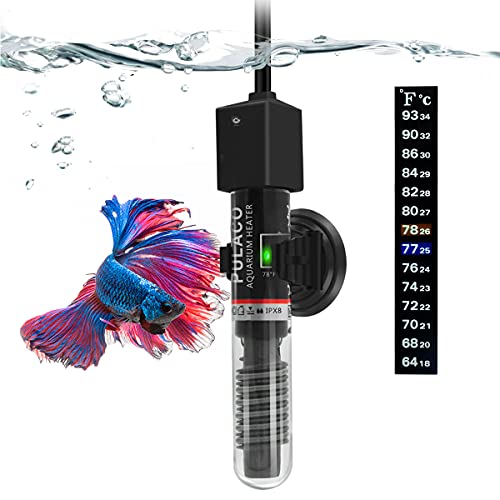 TOP CHOICEBest for small betta tanksPULACO 25Watt Mini Aquarium HeaterView on Amazon
- 3
 TOP CHOICEBest for a digital displayhygger Small Aquarium Betta HeaterView on Amazon
- 4
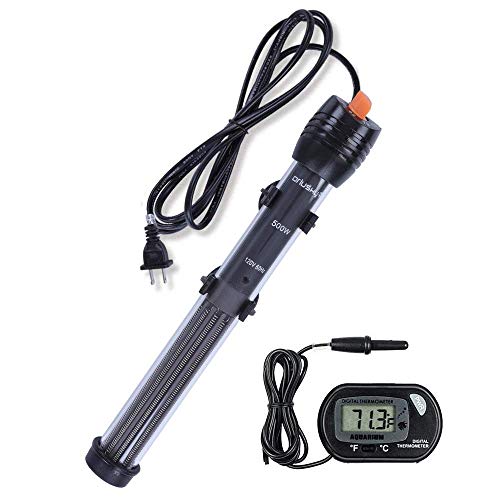 Best budget pickOrlushy Submersible Aquarium HeaterView on Amazon
- 5
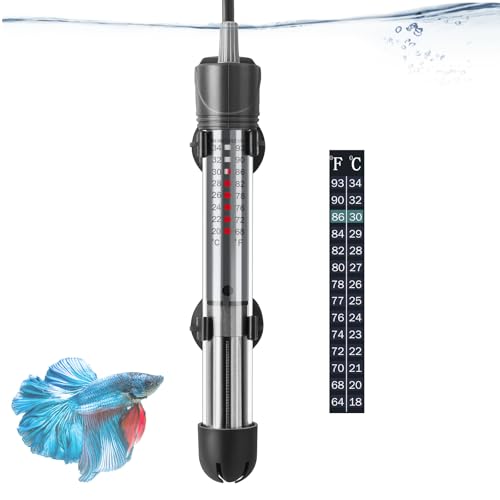 Best for mid-size freshwater tanksHITOP 50W Adjustable Aquarium HeaterView on Amazon
- 6
 Best for adjustable heat on a medium tankAQUANEAT Aquarium HeaterView on Amazon
- 7
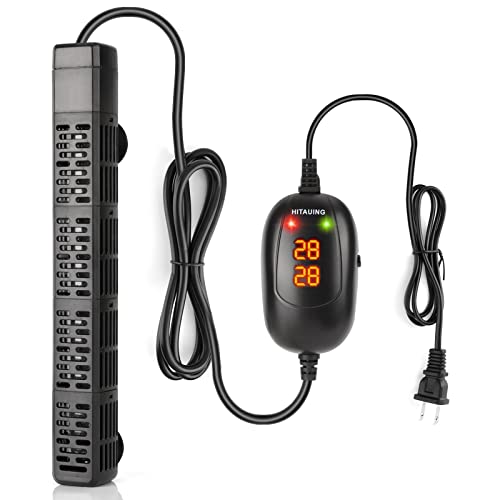 Best for large or marine tanksHiTauing Aquarium HeaterView on Amazon
Our Top Picks
Quick Comparison
| Product | Best for | Key feature |
|---|---|---|
| Tetra 100W Submersible Aquarium Heater | 10–30 gallon freshwater tanks | Built-in automatic thermostat |
| PULACO 25Watt Mini Aquarium Heater | 1–6 gallon betta and nano tanks | Preset temperature with thermometer strip |
| hygger Small Aquarium Betta Heater | Small tanks up to 26 gallons | Selectable wattage and LED digital display |
| Orlushy Submersible Aquarium Heater | Budget-minded freshwater setups | Adjustable heat with free thermometer |
| HITOP 50W Adjustable Aquarium Heater | 6–15 gallon freshwater tanks | Adjustable thermostat with suction cups |
| AQUANEAT Aquarium Heater | Medium freshwater tanks | Adjustable submersible thermostat |
| HiTauing Aquarium Heater | Large freshwater and saltwater tanks | Multiple wattage options with over-temperature protection |
Tetra 100W Submersible Aquarium Heater
Tetra 100W Submersible Aquarium Heater For 10-30 Gallon Fish Tanks | Automatic Thermostat Keeps Water At 78 Degrees, Easy To Use – Attaches To Aquarium Wall, Heat & Shock Resistant
Best for: Overall reliability in 10–30 gallon freshwater aquariums
This is a mainstream choice for community fish keepers who want a straightforward heater with a built-in thermostat and suction-cup mounting. It suits tanks where stable tropical temperatures matter more than fine-tuning.
Key specs
- 100W rated output
- Designed for 10–30 gallon tanks
- Built-in automatic thermostat
- Attaches to the aquarium wall
Pros
- Well-known brand with wide availability of replacement parts
- Simple, set-and-forget operation
- Heat and shock resistant housing, as described in the listing
Cons
- Not intended for saltwater or very small tanks
- Fixed temperature setting, so less flexibility than adjustable models
Bottom line: A sensible first heater for a standard freshwater community tank in the 10–30 gallon range.
View on AmazonPULACO 25Watt Mini Aquarium Heater
PULACO 25Watt Mini Aquarium Heater, Submersible Betta Heater | Small Fish Tank Heater with Free Thermometer Strip for 1-6 Gallon Fish Tanks (Preset Temperature 78℉)
Best for: Small betta and nano tanks, 1–6 gallons
Small tanks are easy to overheat, so a low-wattage heater with a preset temperature suits betta keepers and nano setups. Owners of small enclosures often prefer a compact unit that will not dominate the space.
Key specs
- 25W rated output
- Designed for 1–6 gallon tanks
- Preset temperature of 78°F as stated in the listing
- Includes a thermometer strip
Pros
- Right-sized for very small volumes
- Preset temperature keeps setup simple
- Thermometer strip helps with monitoring
Cons
- Not suitable for tanks larger than a few gallons
- No adjustable range beyond the preset
Bottom line: The right pick for a betta bowl or nano tank where a larger heater would be a risk.
View on Amazonhygger Small Aquarium Betta Heater
hygger Small Aquarium Betta Heater, Submersible Fish Tank Heater 10W/25W/50W/100W with LED Digital Display, Suitable for Marine Saltwater and Freshwater up to 5/10/16/26 Gallon
Best for: Users who want to see the temperature at a glance
This heater is aimed at keepers who want a readable digital display and the option to choose from several wattage settings matched to tank size. It fits small to mid-sized tanks.
Key specs
- Selectable wattage: 10W, 25W, 50W and 100W
- Rated for tanks up to roughly 5, 10, 16 and 26 gallons depending on setting
- LED digital display
- Suitable for freshwater and saltwater, per the listing
Pros
- Multiple wattage options in one unit
- Digital display makes checking temperature easy
- Works in both freshwater and marine setups
Cons
- Display electronics add a point of potential failure compared with simple analog units
- Wattage should be matched carefully to avoid under- or overheating
Bottom line: A good match for small to mid-sized tanks where readable digital feedback is a priority.
View on AmazonOrlushy Submersible Aquarium Heater
Orlushy Submersible Aquarium Heater, Adjustable Fish Tahk Heater with Free Thermometer Suitable for Marine Saltwater and Freshwater
Best for: Budget-minded freshwater and marine setups
Owners who want an adjustable heater with a thermometer included without paying for premium branding often look at this type of unit. It targets a broad range of freshwater and saltwater tanks.
Key specs
- Adjustable temperature setting
- Includes a free thermometer
- Listed for marine saltwater and freshwater use
Pros
- Adjustable control suits a range of species
- Thermometer included
- Works across freshwater and saltwater tanks
Cons
- Less brand history than long-established names
- Owners should verify the wattage against tank volume before buying
Bottom line: A practical option for keepers who want adjustability and a thermometer on a tighter budget.
View on AmazonHITOP 50W Adjustable Aquarium Heater
HITOP 50W Adjustable Aquarium Heater, Submersible Fish Tank Heater Thermostat with Suction Cups for 6-15Gal
Best for: Mid-sized freshwater tanks that need adjustable heat
This heater suits tanks in the 6–15 gallon range where a moderate wattage and an adjustable thermostat give flexibility for different species.
Key specs
- 50W rated output
- Designed for 6–15 gallon tanks
- Adjustable thermostat
- Suction cup mounting
Pros
- Adjustable temperature suits varied fish requirements
- Wattage matches common mid-size tanks
- Suction cups allow easy placement
Cons
- Not intended for large tanks
- Suction cups can loosen over time and should be checked regularly
Bottom line: A solid fit for a 6–15 gallon freshwater tank where you want to dial in the temperature.
View on AmazonAQUANEAT Aquarium Heater
AQUANEAT Aquarium Heater, 50W Fish Tank Heater, Adjustable Submersible Water Thermostat with Thermometer
Best for: Adjustable heat on a medium freshwater tank
Keepers who want a 50W adjustable heater with a thermometer for monitoring will find this model fits a typical medium aquarium setup.
Key specs
- 50W rated output
- Adjustable submersible thermostat
- Includes a thermometer
Pros
- Adjustable range for different species
- Thermometer included for monitoring
- Wattage suits medium tanks
Cons
- Brand has less long-term track record than some established names
- Check the listed tank size range carefully before purchase
Bottom line: A reasonable choice for adjustable heating on a medium freshwater tank.
View on AmazonHiTauing Aquarium Heater
HiTauing Aquarium Heater, 50W/100W/200W/300W/500W Submersible Fish Tank Heater with Over-Temperature Protection and Automatic Power-Off When Leaving Water for Saltwater and Freshwater
Best for: Larger freshwater and saltwater tanks needing higher output
This heater offers several wattage choices, which makes it relevant for larger volumes and for marine keepers who need more heating capacity than small units provide.
Key specs
- Wattage options: 50W, 100W, 200W, 300W and 500W
- Over-temperature protection
- Automatic power-off when out of water, as stated in the listing
- Suitable for saltwater and freshwater
Pros
- Wide wattage range covers larger volumes
- Safety features including over-temperature protection
- Usable in both freshwater and marine tanks
Cons
- Higher wattage requires careful sizing to avoid overheating small tanks
- Larger units may be more than needed for a standard community tank
Bottom line: Best suited to larger tanks and reef or marine setups that need a higher-output heater with safety features.
View on AmazonBuying Guide
Match Wattage to Tank Volume
A common rule of thumb in the hobby is roughly 3 to 5 watts per gallon for typical room temperatures, but the right figure depends on room temperature, tank lid coverage and how far the target sits above the ambient room. Start with the gallon rating of each heater and treat it as a range, not a guarantee. Undersized heaters run constantly and may never reach setpoint, while oversized ones can overshoot quickly without a reliable thermostat. See our Aquarium Heater Size Guide: How to Pick the Right Wattage (2026) for a fuller sizing method.
Good picks for this: Tetra 100W Submersible Aquarium Heater and HiTauing Aquarium Heater
Thermostat Accuracy and Control
Look for a heater with a thermostat that holds the setpoint within a degree or so. Adjustable models give more control for species with specific needs, while preset units keep things simple. Pair any heater with an independent thermometer so you can verify the reading rather than trusting the heater’s own display.
Good picks for this: HITOP 50W Adjustable Aquarium Heater and AQUANEAT Aquarium Heater
Tank Size and Fit
Small tanks, especially those under 10 gallons, need low-wattage units to avoid sudden temperature spikes. Check whether the heater’s rated size covers your actual water volume, not just the tank’s nominal size. Mounting style matters too: suction cups suit glass tanks, while some heaters are better for sumps or equipment chambers.
Good picks for this: PULACO 25Watt Mini Aquarium Heater and hygger Small Aquarium Betta Heater
Freshwater Versus Saltwater Rating
Not every heater is designed for marine use. Some are listed for both, and marine keepers should confirm the listing says saltwater explicitly. Saltwater environments are more corrosive, so housing material and seal quality matter more in reef setups.
Good picks for this: Orlushy Submersible Aquarium Heater and HiTauing Aquarium Heater
Safety Features
Over-temperature protection and automatic shutoff when the heater is out of water reduce the risk of cracked glass and fire. Look for these features in the specification list. Never run a heater outside water, and unplug it before any water change or maintenance.
Good picks for this: HiTauing Aquarium Heater and hygger Small Aquarium Betta Heater
Durability and Brand Track Record
Owners often report that established brands have better warranty support and replacement parts. Newer or lesser-known brands can still perform well, but a heater that fails in a sealed tank is a serious problem, so consider how easily you can replace a unit.
Good picks for this: Tetra 100W Submersible Aquarium Heater and Orlushy Submersible Aquarium Heater
Ongoing Care and Monitoring
Heaters need periodic checks: look for salt or mineral buildup on the glass, confirm the suction cups still hold, and verify the temperature with a thermometer weekly. Keeping a spare heater on hand can save a tank during a failure.
Good picks for this: HITOP 50W Adjustable Aquarium Heater and AQUANEAT Aquarium Heater
FAQ
What size submersible heater for aquarium do I need?
Start from your water volume in gallons and the wattage guidance in the product listing. Many hobbyists use roughly 3 to 5 watts per gallon as a starting point, adjusted for room temperature and lid coverage. When in doubt, choose a heater with an adjustable or reliable thermostat.
Can I use a freshwater heater in a saltwater tank?
Only if the manufacturer lists it for saltwater use. Some heaters are rated for both, and marine keepers should confirm that before buying, since corrosion and seal failure are real concerns in saltwater.
Should I mount the heater horizontally or vertically?
Follow the manufacturer’s instructions. Many units are designed to sit fully submerged in a specific orientation. Placement near a water flow source helps distribute heat evenly.
How do I know if my heater is working correctly?
Check the temperature with a separate thermometer. A heater that never reaches setpoint may be undersized or failing, while one that overshoots may have a faulty thermostat. Unplug the heater before any water change.
Is a heater with a digital display more accurate?
Not necessarily. A display shows what the internal sensor reads, which may differ from the water temperature at the heater’s location. An independent thermometer is still the best way to verify.
How long do submersible heaters last?
Lifespan varies with brand, water chemistry and use. Owners often report replacing heaters every few years as a precaution, but check your unit regularly for signs of wear.
Can a heater be left running all the time?
Yes, in most freshwater tanks a heater runs continuously with its thermostat cycling on and off. Make sure it is fully submerged whenever it is powered.
Conclusion
For most community freshwater tanks in the 10–30 gallon range, the Tetra 100W Submersible Aquarium Heater is a dependable starting point. Betta and nano keepers should look at the PULACO 25Watt Mini Aquarium Heater, while owners who want a digital readout may prefer the hygger model. Budget-conscious buyers can consider the Orlushy unit, and those wanting adjustable heat on mid-sized tanks have the HITOP and AQUANEAT options. Marine and larger tanks benefit from the higher-output HiTauing heater, provided it is sized carefully. Match wattage to your actual water volume, verify the temperature independently, and confirm the saltwater rating before you buy.
Sources
- Consumer safety guidance on electrical appliances and product recalls relevant to heaters (cpsc.gov)
- General information on electrical equipment efficiency and safe appliance operation (energy.gov)
- Background on temperature and care considerations for companion animals, useful as a general reference (akc.org)
Related reading
- Under Tank Aquarium Heater: 5 Best Picks for Every Setup (2026)
- Most Efficient Aquarium Heater: 6 Best Picks Compared (2026)
- Heater for 5 Gallon Aquarium: 7 Best Picks Compared (2026)
About Emily Parker
Emily Parker is part of our editorial team and reviews and edits our reef & saltwater aquariums guides, checking product details against manufacturer specifications and owner feedback.
About the author
Emily Parker writes reviews and buying guides for My Reef Aquarium.