Automatic Temperature Compensation Refractometer: 6 Best Picks Compared (2026)
Compare six automatic temperature compensation refractometers for reef and brewing use. See specs, pros, cons and who each model suits before you buy.
 By Caleb Morgan
Updated November 21, 2026
 By Caleb Morgan
Updated November 2026
Choosing an automatic temperature compensation refractometer comes down to what you measure and how precise you need to be. Temperature shifts change the way light bends through a liquid, so a refractometer with ATC corrects readings as the sample warms or cools, which is why it is the go-to tool for checking salinity in a reef tank, sugar content in syrup or alcohol strength in a finished batch. The picks below were selected on published specifications, brand reputation and common owner feedback patterns, with the scale range, unit options and intended application as the main criteria.
Our top picks at a glance
- 1TOP CHOICEBest overallAutomatic Temperature Compensation Refractometer with °F unit systemView on Amazon
- 2
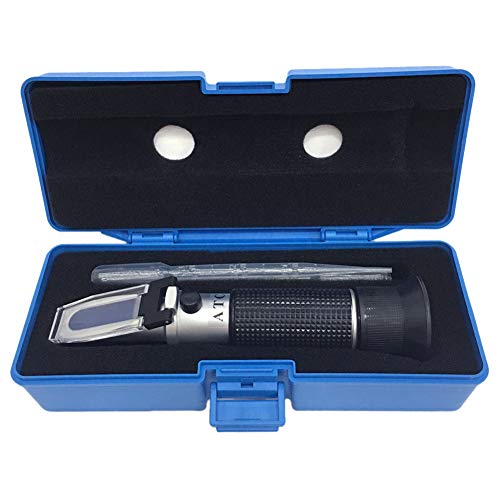 TOP CHOICEBest for homebrewersaichose Brix Refractometer with ATC, Dual ScaleView on Amazon
- 3
 TOP CHOICEBest for general-purpose ATC useSybon Refractometer with Automatic Temperature CompensationView on Amazon
- 4
 Best for professional sugar workAtago 2382 MASTER-20T Hand-Held RefractometerView on Amazon
- 5
 Best for spirit strengthAgriculture Solutions Alcohol RefractometerView on Amazon
- 6
 Best budget pick for low-sugar liquids0-10% Brix Refractometer for Maple Sap, Syrup and TeaView on Amazon
Our Top Picks
Quick Comparison
| Product | Best for | Key feature |
|---|---|---|
| Automatic Temperature Compensation Refractometer (°F) | General ATC use with Fahrenheit readouts | Built-in automatic temperature compensation with °F unit system |
| aichose Brix Refractometer, Dual Scale | Homebrewing and beer/wine work | Dual scale covering specific gravity and Brix |
| Sybon Refractometer with ATC | General-purpose liquid checks | Automatic temperature compensation on a handheld body |
| Atago 2382 MASTER-20T | Precise sugar measurement | Brix range 0.0 to 20.0% with ATC |
| Agriculture Solutions Alcohol Refractometer | Spirit alcohol checks | Alcohol range 0–80% v/v with ATC |
| 0–10% Brix Refractometer with LED light | Maple sap, syrup and low-concentration solutions | Low 0–10% Brix range with LED light and pipettes |
Automatic Temperature Compensation Refractometer with °F unit system
Automatic Temperature Compensation Refractometer with °F unit system
Best for: Overall ATC use with Fahrenheit-based workflows
This is a good fit for readers who want a straightforward refractometer with automatic temperature compensation and a Fahrenheit unit system, especially if their other equipment and notes already use °F.
Key specs
- Automatic temperature compensation
- °F unit system as named in the listing
Pros
- Automatic temperature compensation removes manual correction steps
- Unit system matches Fahrenheit-based routines
- Simple single-purpose design
Cons
- Scale range and calibration details should be confirmed in the full listing
- Limited to the function named in the listing
Bottom line: A solid pick for anyone who wants ATC and Fahrenheit readings without extra features.
View on Amazonaichose Brix Refractometer with ATC, Dual Scale
aichose Brix Refractometer with ATC, Dual Scale – Specific Gravity & Brix, Hydrometer in Wine Making and Beer Brewing, Homebrew Kit
Best for: Homebrewers and beer or wine makers
Brewers who check both specific gravity and Brix on the same instrument will find the dual scale useful, since it covers the two readings most often needed during fermentation tracking.
Key specs
- Dual scale: specific gravity and Brix
- Automatic temperature compensation
Pros
- Dual scale reduces the need for a second instrument
- Listed for wine making and beer brewing
- ATC keeps readings consistent across sample temperatures
Cons
- Brewing-focused design is less suited to saltwater or spirit work
- Owners often note that readings should be checked against a known standard
Bottom line: The most practical choice for homebrewers who want one tool for gravity and sugar checks.
View on AmazonSybon Refractometer with Automatic Temperature Compensation
Sybon Refractometer with Automatic Temperature Compensation
Best for: General-purpose liquid checks with ATC
This suits readers who want a basic handheld refractometer with automatic temperature compensation for a range of liquid tests and don’t need a specialized scale.
Key specs
- Automatic temperature compensation
- Handheld refractometer design
Pros
- ATC removes the need for manual temperature correction
- Compact handheld format
- Straightforward for routine checks
Cons
- Scale details should be confirmed against the specific use case
- Not a specialized instrument for one niche task
Bottom line: A reasonable general-purpose option for users who want ATC without paying for specialist features.
View on AmazonAtago 2382 MASTER-20T Hand-Held Refractometer
Atago 2382 MASTER-20T Hand-Held Refractometer, Automatic Temperature Compensation, Brix 0.0 to 20.0%
Best for: Precise sugar measurement in a professional setting
Users who need repeatable Brix readings in the 0.0 to 20.0% range, such as those checking juice, beverages or food processing samples, will find this model’s specialized scale a good match.
Key specs
- Brix range 0.0 to 20.0%
- Automatic temperature compensation
Pros
- Atago is a long-established refractometer manufacturer
- Defined Brix range suits sugar-focused work
- ATC supports consistent readings across temperatures
Cons
- Narrow range makes it unsuitable for high-concentration samples
- Specialized design is more than most hobbyists need
Bottom line: Best for users who want a dependable, sugar-specific instrument with a known manufacturer behind it.
View on AmazonAgriculture Solutions Alcohol Refractometer
Agriculture Solutions Alcohol Refractometer for Spirit Alcohol Volume Percent Measurement with Automatic Temperature Compensation (ATC), Range 0-80% v/v.
Best for: Spirit alcohol strength checks
Distillers and home spirit makers who need volume percent readings can use this model’s 0–80% v/v range with automatic temperature compensation to check alcohol content.
Key specs
- Range 0–80% v/v
- Automatic temperature compensation (ATC)
Pros
- Purpose-built alcohol scale
- ATC keeps spirit readings consistent
- Range covers typical spirit strengths
Cons
- Not suitable for sugar or salinity work
- Owners often recommend verifying readings against a hydrometer
Bottom line: The right tool for anyone who needs alcohol-by-volume readings rather than sugar or salt readings.
View on Amazon0-10% Brix Refractometer for Maple Sap, Syrup and Tea
0-10% Brix Refractometer for Testing Sugar Content Maple sap Syrup, Low-Concentrated Sugar Solutions, Tea, Portable Hand Held Sugar Content Measurement with ATC Function and LED Light, pipettes
Best for: Low-concentration sugar solutions
Maple syrup producers, tea drinkers and anyone measuring dilute sugar solutions will find the 0–10% range more precise than a standard high-range instrument.
Key specs
- Brix range 0–10%
- ATC function and LED light
- Includes pipettes
Pros
- Narrow low range improves resolution for dilute samples
- LED light helps reading in dim spaces
- Pipettes simplify small-sample testing
Cons
- Not designed for high-concentration liquids
- Low range limits use for brewing or spirit work
Bottom line: A practical pick for low-sugar testing and maple sap work, but a poor fit for wider applications.
View on AmazonBuying Guide
Match the scale to your liquid
Each refractometer is calibrated for a specific scale, such as Brix, specific gravity, alcohol by volume or salinity. Pick a model whose range covers your expected readings. A 0–10% Brix instrument will saturate on a concentrated syrup, and a 0–20% Brix model gives coarser readings on dilute sap.
Good picks for this: 0–10% Brix Refractometer, Atago 2382 MASTER-20T
Confirm automatic temperature compensation
ATC corrects the reading as the sample temperature changes. Without it, you need to apply a correction table manually. Check the listing for ATC specifically, since some models are sold with manual correction only.
Good picks for this: Sybon Refractometer with ATC, Automatic Temperature Compensation Refractometer (°F)
Check the unit system
Some refractometers read in Celsius, others in Fahrenheit, and scales may use different units for sugar or gravity. If your notes, recipes or reference charts use a specific unit, choose a model that matches to avoid conversion errors.
Good picks for this: Automatic Temperature Compensation Refractometer (°F), aichose Brix Refractometer
Consider dual scales
A dual-scale instrument reads two measurements, such as specific gravity and Brix. This can simplify routines for brewers who track fermentation, though the secondary scale may be less precise than a single-purpose model.
Good picks for this: aichose Brix Refractometer, Sybon Refractometer
Prioritize build and optics
Look for a sturdy housing, a clear prism window and a simple calibration method, such as a distilled water zero. Durable instruments tolerate repeated rinsing, which matters for saltwater and sugar work where residue builds up.
Good picks for this: Atago 2382 MASTER-20T, Agriculture Solutions Alcohol Refractometer
Think about lighting and sample size
An LED light helps when reading in dim areas, and pipettes make small-volume sampling easier. If you often test tiny samples, these features save time and reduce waste.
Good picks for this: 0–10% Brix Refractometer with LED light and pipettes
Plan for calibration and care
Every refractometer needs periodic zeroing with distilled water and cleaning after use. Owners often report that salt or sugar residue on the prism skews readings, so a soft cloth and distilled water rinse should be part of your routine.
Good picks for this: Sybon Refractometer with ATC, Automatic Temperature Compensation Refractometer (°F)
FAQ
What does automatic temperature compensation actually do?
It adjusts the refractive reading as the sample temperature changes, so you get a corrected value without applying a separate correction chart. Refractive index shifts with temperature, so ATC keeps readings consistent across a range of conditions.
Can one refractometer measure both sugar and alcohol?
Not reliably. Each instrument is calibrated for a specific scale. A Brix refractometer will not give accurate alcohol readings, and an alcohol refractometer is not designed for sugar. Choose a model built for the scale you need.
Do I need ATC if my samples are at room temperature?
Room temperature still varies through the day and between sample and instrument. ATC removes that variable, which is helpful if you take readings in different rooms or seasons.
How often should I calibrate a refractometer?
Calibrate with distilled water before each session, and check it periodically against a known standard if accuracy matters. Manufacturers generally recommend zeroing before use and cleaning the prism after every reading.
Is a refractometer better than a hydrometer?
A refractometer needs only a few drops of sample and reads quickly, while a hydrometer requires a larger volume. Hydrometers are still useful for some brewing and winemaking tasks, so many users keep both.
Can I use a refractometer for saltwater tanks?
Some users do, but a dedicated salinity or specific gravity refractometer is designed for that scale. For more on salinity tools, see Salinity in Reef Tank: 5 Best Refractometers and Hydrometers Compared (2026) and 5 Best Refractometers for Saltwater Aquarium Compared (2026).
What temperature should my samples be?
ATC handles most variation, but very hot or very cold samples can still take longer to settle. Let samples come close to room temperature for the most stable reading.
Conclusion
For most readers, the Automatic Temperature Compensation Refractometer with °F unit system is a solid general choice, while the aichose dual-scale model suits brewers and the Atago 2382 suits precise sugar work. Spirit makers should look at the alcohol-specific model, and maple or tea users will find the 0–10% Brix instrument the best fit. The Sybon model covers general ATC needs. Match the scale to your liquid first, then weigh ATC, unit system and build.
For more guidance on related tools, see 7 Best Refractometers for Saltwater Tank Options (2026) and How to Check Aquarium Temperature Without Thermometer: 5 Reliable Methods.
Sources
- Measurement standards and calibration practices relevant to optical instruments (nist.gov)
- Sugar and syrup measurement guidance for food producers (usda.gov)
- Federal rules and methods for measuring alcohol content in beverages (ttb.gov)
About Caleb Morgan
Caleb Morgan is part of our editorial team and reviews and edits our reef & saltwater aquariums guides, checking product details against manufacturer specifications and owner feedback.
About the author
Caleb Morgan writes reviews and buying guides for My Reef Aquarium.