How to Calibrate Refractometer with Distilled Water: 7 Best Picks (2026)
Learn how to calibrate refractometer with distilled water, plus 7 reef-friendly refractometers and hydrometers compared for accurate salinity checks.
 By Audrey Hayes
Updated November 22, 2026
 By Audrey Hayes
Updated November 2026
If you want to calibrate refractometer with distilled water, you need a reliable tool first, and that tool has to read accurately at the low end of the scale where a zero-point check happens. This guide compares seven salinity refractometers and digital testers commonly used in reef and marine aquariums. We focused on the measuring range listed for each model, whether it includes automatic temperature compensation, whether the maker describes a distilled water zero-point procedure, and the patterns hobbyists tend to mention in owner feedback about drift, clarity of the scale and ease of cleaning.
Our top picks at a glance
- 1TOP CHOICEBest overallAgriculture Solutions Salinity Refractometer for Seawater and Marine FView on Amazon
- 2
 TOP CHOICEBest for digital readoutsMilwaukee MA887 Digital Refractometer for Saltwater AquariumsView on Amazon
- 3
 TOP CHOICEBest for dual readingsHallocool Salinity Refractometer for Aquarium Seawater Marine FishkeepView on Amazon
- 4
 Best budget pickSunGrow Measure Salinity of Water with Aquarium Refractometer, RemarkaView on Amazon
- 5
 Best for hydrometer backupSeawater Salinity Refractometer, Automatic Temperature Compensation SeView on Amazon
- 6
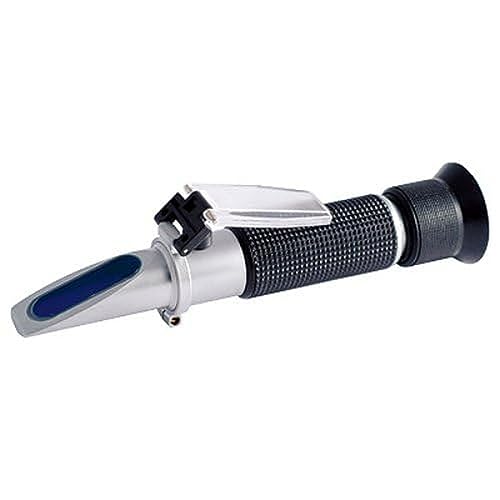 Best for coolant-style scalesHHIP 8010-0018 Water Soluble or Synthetics Coolant Tester RefractometeView on Amazon
- 7
 Best for non-marine testingTRZ Refractometer Honey 10-32% Water Honey 58-90% Brix Sugar Baume forView on Amazon
Our Top Picks
Quick Comparison
| Product | Best for | Key feature |
|---|---|---|
| Agriculture Solutions Salinity Refractometer | Overall salinity checks | 0-100 PPT range with automatic temperature compensation |
| Hallocool Salinity Refractometer | Side-by-side readings | Refractometer plus specific gravity scale |
| HHIP 8010-0018 Refractometer | Scale familiarity from coolant use | 0-18% measuring range |
| Milwaukee MA887 Digital Refractometer | Digital readout users | Digital display for saltwater |
| Seawater Salinity Refractometer (B01N9KGKE8) | Hydrometer-style backup | 0-100 ppt and 1.000-1.070 specific gravity |
| TRZ Refractometer (Honey/Brix) | Non-marine sugar and honey work | Brix and Baume scales |
| SunGrow Aquarium Refractometer | Entry-level aquarium testing | Simple, easy-to-read scale |
Agriculture Solutions Salinity Refractometer for Seawater and Marine Fishkeeping Aquarium 0-100 PPT with Automatic Temperature Compensation
Agriculture Solutions Salinity Refractometer for Seawater and Marine Fishkeeping Aquarium 0-100 PPT with Automatic Temperature Compensation
Best for: Overall salinity checks
This suits reefers who want an optical refractometer dedicated to seawater and want a clear scale for routine readings after water changes and top-offs.
Key specs
- Measuring range: 0-100 PPT (as stated in the listing)
- Automatic temperature compensation
- Designed for seawater and marine aquariums
Pros
- Dedicated saltwater scale
- Temperature compensation reduces adjustment steps
- Simple optical reading through the eyepiece
Cons
- Optical readings depend on good lighting and eye position
- Calibration still requires separate distilled water and a calibration fluid or zero check
Bottom line: A strong first choice for hobbyists who want a dedicated, straightforward saltwater refractometer.
View on AmazonHallocool Salinity Refractometer for Aquarium Seawater Marine Fishkeeping | Salinity Tester 0-100PPT & 1.000-1.070 Salinity Hydrometer Slatwater Refractometer with Automatic Temperature Compensation
Hallocool Salinity Refractometer for Aquarium Seawater Marine Fishkeeping | Salinity Tester 0-100PPT & 1.000-1.070 Salinity Hydrometer Slatwater Refractometer with Automatic Temperature Compensation
Best for: Side-by-side readings
This fits keepers who like to compare a PPT reading with a specific gravity reading, which can help when learning how the two scales relate.
Key specs
- Measuring range: 0-100 PPT and 1.000-1.070 specific gravity (per listing)
- Automatic temperature compensation
Pros
- Two scales on one tool
- Useful for learning salinity conversions
- Compact handheld body
Cons
- Dual scales can make the reading slightly busier to interpret
- Owners report the need for careful cleaning of the prism
Bottom line: Good for hobbyists who want both PPT and specific gravity on a single instrument.
View on AmazonHHIP 8010-0018 Water Soluble or Synthetics Coolant Tester Refractometer, 0-18% Solution Measuring Range
HHIP 8010-0018 Water Soluble or Synthetics Coolant Tester Refractometer, 0-18% Solution Measuring Range
Best for: Scale familiarity from coolant use
This is a coolant-tester refractometer rather than a marine tool. It suits people already used to percentage-based refractometers who want a simple, rugged optical instrument.
Key specs
- Measuring range: 0-18% (per listing)
- Designed for water-soluble coolant testing
Pros
- Simple, durable optical design
- Percentage scale is easy to read
- No electronics to fail
Cons
- Not designed for typical reef salinity ranges; confirm scale suitability before using for seawater
- No marine-specific scale
Bottom line: Best reserved for users who understand refractometer scales and want a general-purpose instrument; reefers should choose a marine-labeled model instead.
View on AmazonMilwaukee MA887 Digital Refractometer for Saltwater Aquariums
Milwaukee Salinity Digital Refractometer for Saltwater Aquariums – MA887
Best for: Digital readout users
This suits hobbyists who prefer a digital display over an eyepiece and want a clear numeric output for salinity.
Key specs
- Digital display for saltwater salinity
- Designed for saltwater aquarium use
Pros
- Numeric display removes guesswork from the scale
- Easy to read in dim tank rooms
- Good for quick repeated checks
Cons
- Requires batteries and periodic checking
- Owners often note the need for calibration against a known standard
Bottom line: A solid pick for digital-minded reefers who want a numeric readout and are comfortable calibrating.
View on AmazonSeawater Salinity Refractometer, Automatic Temperature Compensation Seawater Salinity Hydrometer, 0-100ppt & 1.000-1.070 Salinity Specific Gravity Tester for Aquarium, Pool, Tank, Marine, Fishkeeping
Seawater Salinity Refractometer, Automatic Temperature Compensation Seawater Salinity Hydrometer, 0-100ppt & 1.000-1.070 Salinity Specific Gravity Tester for Aquarium,Pool, Tank, Marine, Fishkeeping
Best for: Hydrometer-style backup
This works for keepers who want a second instrument or a specific gravity reading alongside PPT, useful for cross-checking.
Key specs
- Measuring range: 0-100 ppt and 1.000-1.070 specific gravity (per listing)
- Automatic temperature compensation
Pros
- Dual-scale reading for cross-checks
- Covers common marine salinity ranges
- Works for pool and tank use as well
Cons
- Generic branding; verify build quality on arrival
- Dual scales can be confusing for beginners
Bottom line: A practical backup instrument for reefers who want to verify readings against a second scale.
View on AmazonTRZ Refractometer Honey 10-32% Water Honey 58-90% Brix Sugar Baume for Beekeeping, Honey, Condensed Milk, Sugar Syrup, Fruit jam
TRZ Refractometer Honey 10-32% Water Honey 58-90% Brix Sugar Baume for Beekeeping, Honey, Condensed Milk, Sugar Syrup, Fruit jam, Hamh Optics&Tools
Best for: Non-marine sugar and honey work
This is a food and beekeeping refractometer. It is included here only for readers who want to understand how a general refractometer differs from a marine instrument.
Key specs
- Brix and Baume scales (per listing)
- Designed for honey and sugar solutions
Pros
- Clear Brix scale
- Sturdy optical body
- Useful for general liquid density checks
Cons
- Not calibrated for seawater salinity
- Scale does not match reef tank needs
Bottom line: Not a reef-tank choice, but useful for non-marine sugar and honey testing.
View on AmazonSunGrow Measure Salinity of Water with Aquarium Refractometer, Remarkable Accuracy, Easy Reading
SunGrow Measure Salinity of Water with Aquarium Refractometer, Remarkable Accuracy, Easy Reading
Best for: Entry-level aquarium testing
This suits beginners who want an affordable optical refractometer for routine salinity checks without a lot of extra features.
Key specs
- Designed for aquarium salinity measurement
- Optical scale with easy reading
Pros
- Simple, approachable design
- Good starting point for new reefers
- Clear scale for quick checks
Cons
- Fewer advanced features than premium models
- Calibration still depends on user technique
Bottom line: A sensible budget pick for newer keepers who want a dependable optical tool.
View on AmazonBuying Guide
Measuring range and scale
Check that the instrument reads salinity in parts per thousand (PPT) or specific gravity, and that the range covers typical reef values. Most reef keepers aim for roughly 1.025 specific gravity, or about 35 PPT, so a 0-100 PPT scale gives comfortable room. Avoid coolant or sugar scales for seawater.
Good picks for this: Agriculture Solutions Salinity Refractometer, Seawater Salinity Refractometer (B01N9KGKE8)
Automatic temperature compensation
Salinity readings shift with temperature. A model with automatic temperature compensation adjusts the reading so you can test without waiting for the sample to match room conditions exactly. This feature matters most for optical units used in cool rooms or after a fresh batch of mixed saltwater.
Good picks for this: Hallocool Salinity Refractometer, Milwaukee MA887
Optical versus digital design
Optical refractometers need no batteries and are easy to maintain, but readings depend on lighting and eye position. Digital units show a number on a screen, which reduces interpretation errors but adds battery and calibration tasks. Choose based on how you prefer to read the instrument.
Good picks for this: Milwaukee MA887 Digital Refractometer, SunGrow Aquarium Refractometer
Ease of calibration
To calibrate refractometer with distilled water, you place a few drops of distilled water on the prism, close the cover, and adjust the zero point with the calibration screw until the scale reads zero. Look for a model with an accessible adjustment screw and a clearly marked zero line. Owner feedback often mentions that a well-marked zero makes periodic checks quicker.
Good picks for this: Agriculture Solutions Salinity Refractometer, SunGrow Aquarium Refractometer
Prism cleaning and maintenance
Salt residue and tank film can distort readings. Rinse the prism with distilled water after each use, dry it gently with a soft lint-free cloth, and never scrub the glass. Store the instrument in its case to keep dust off the prism surface.
Good picks for this: Hallocool Salinity Refractometer, Seawater Salinity Refractometer (B01N9KGKE8)
Build quality and durability
Look for a sturdy housing and a tightly sealed cover. Splashes from saltwater are common, so a body that resists corrosion and a cover that closes firmly help the instrument last. Owners of budget units sometimes report the scale becoming hard to read over time, so check the printing quality on arrival.
Good picks for this: Agriculture Solutions Salinity Refractometer, HHIP 8010-0018 Refractometer
Intended use case
Match the scale to your system. A reef tank needs a marine-labeled instrument. Sugar, honey or coolant refractometers can be useful for other hobbies but will not give correct reef salinity. Confirming the intended use on the listing saves a lot of confusion.
Good picks for this: SunGrow Aquarium Refractometer, TRZ Refractometer (for non-marine use only)
FAQ
How often should I calibrate refractometer with distilled water?
Many keepers check the zero point before each salinity reading session or at least once a week, and always after cleaning the prism. If readings drift, recheck the zero with fresh distilled water before trusting the scale.
What is the correct way to calibrate refractometer distilled water zero?
Clean and dry the prism, place two or three drops of distilled water on it, close the cover, and look through the eyepiece in good light. The boundary line should sit on zero. If not, turn the calibration screw until it does, then wipe the prism dry.
Can I use tap water or RO water instead of distilled water?
Distilled water is the standard choice because it has no dissolved salts. Tap water contains minerals that can shift the zero point, so it is not suitable for calibration. Reverse osmosis water is closer to pure, but distilled water is the common reference recommended by most manufacturers.
Why does my refractometer read differently from a hydrometer?
Optical and hydrometer methods measure density in different ways, and temperature affects both. Automatic temperature compensation helps, but small differences are normal. Consistent use of one instrument is more useful than comparing across tools.
Do I need automatic temperature compensation for reef tanks?
It is not mandatory, but it simplifies readings when your sample temperature differs from the calibration temperature. Many reefers find it saves time and reduces mistakes, especially when testing samples straight from a mixing container.
How should I store a refractometer?
Keep it in its case, away from direct sunlight and heat, and rinse it with distilled water after use if it has been exposed to saltwater. Dry it completely before storing so salt does not crystallize on the prism.
Is a digital refractometer better than an optical one?
Neither is universally better. Digital models offer numeric readouts that are easy to read, while optical models need no batteries. Pick the style that you can read most accurately and that fits your routine.
Conclusion
To calibrate refractometer with distilled water correctly, choose an instrument with a marine scale, a clearly marked zero point and an accessible calibration screw. The Agriculture Solutions model suits most reefers looking for a dedicated optical tool. The Milwaukee MA887 fits anyone who prefers a digital readout, the Hallocool and Seawater Salinity models suit those who want a second scale for cross-checking, and the SunGrow unit is a sensible entry-level option. The HHIP and TRZ units are useful for other fluids but are not designed for reef salinity, so they belong in a different category.
Sources
- Background on water density, dissolved solids and how they affect measurement (usgs.gov)
- Information on seawater salinity and its variation with temperature and density (noaa.gov)
- General guidance on water quality testing and instrument calibration practices (epa.gov)
Related reading
- 5 Best Refractometers for Salt Water Options for Accurate Reef Readings (2026)
- 5 Best Distilled Waters for Reef Tank (2026): Our Picks
- Top 7 Refractometers for Coolant Testing Picks Compared (2026)
- Salinity in Reef Tank: 5 Best Refractometers and Hydrometers Compared (2026)
- Refractometer for Sugar Content: 7 Best Brix Meters Compared (2026)
- Ideal Reef Tank Salinity: 6 Refractometers and Hydrometers Compared (2026)
- Automatic Temperature Compensation Refractometer: 6 Best Picks Compared (2026)
About Audrey Hayes
Audrey Hayes is part of our editorial team and reviews and edits our reef & saltwater aquariums guides, checking product details against manufacturer specifications and owner feedback.
About the author
Audrey Hayes writes reviews and buying guides for My Reef Aquarium.