7 Best Hows to Calibrate Salinity Refractometer (2026): Our Picks
Learn how to calibrate a salinity refractometer with distilled water, plus 7 reef-tank refractometers compared by specs and owner feedback. Read before you test
 By Caleb Morgan
Updated November 24, 2026
 By Caleb Morgan
Updated November 2026
Learning how to calibrate salinity refractometer readings is the difference between a reef tank that holds steady and one that drifts without you noticing. A refractometer is only as accurate as its last calibration, and most salt-water hobbyists check salinity every week or two. This guide covers the calibration routine itself, then compares seven refractometers that reef keepers commonly consider. The selection criteria were research-based: published specifications, brand reputation in the aquarium trade, the range and temperature compensation each model lists, and recurring patterns in owner feedback about accuracy, ease of reading and build quality. We did not test these units ourselves.
Our top picks at a glance
- 1TOP CHOICEBest overallAgriculture Solutions Salinity Refractometer for Seawater and Marine FishkeepingView on Amazon
- 2
 TOP CHOICEBest for digital readoutsMilwaukee Salinity Digital Refractometer MA887View on Amazon
- 3
 TOP CHOICEBest for professional-minded hobbyistsVee Gee Scientific STX-3 Handheld Salinity RefractometerView on Amazon
- 4
 Best budget pickHallocool Salinity Refractometer for Aquarium Seawater Marine FishkeepingView on Amazon
- 5
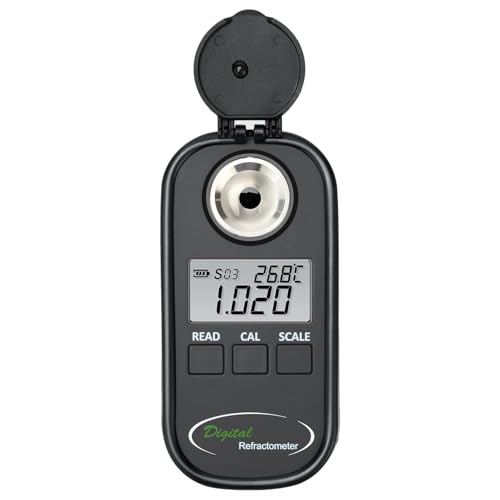 Best for wide specific gravity coverageDigital Salinity Refractometer Salinity Meter Salt MeterView on Amazon
- 6
 Best for general-purpose handheld useAichose 0-80% Brix Meter RefractometerView on Amazon
- 7
 Best for multi-use tanksSeawater Salinity Refractometer Automatic Temperature Compensation HydrometerView on Amazon
Our Top Picks
How to calibrate salinity refractometer: the basics before you start
Calibration means setting the instrument’s zero point using a reference liquid of known value. For a salinity refractometer, that reference is distilled or reverse-osmosis water, which reads 0 ppt (parts per thousand) or 1.000 specific gravity. A refractometer measures how light bends through a liquid, and that bending changes with dissolved solids. If the zero point is off, every reading you take will be off by the same amount. Calibrate before the first use of each session, and always after cleaning the prism. Check your model’s manual for the exact scale, since some display salinity in ppt, others in specific gravity, and many show both.
Quick Comparison
| Product | Best for | Key feature |
|---|---|---|
| Agriculture Solutions Salinity Refractometer | Reef tanks needing a dependable everyday tool | 0-100 PPT range with automatic temperature compensation |
| Milwaukee Salinity Digital Refractometer MA887 | Hobbyists who prefer a digital readout | Digital display for easier reading |
| Vee Gee Scientific STX-3 Handheld Salinity Refractometer | Buyers wanting an industrial-style build | ATC with a listed five-year warranty |
| Hallocool Salinity Refractometer | Budget-minded reef keepers | 0-100 PPT and 1.000-1.070 specific gravity scales |
| Digital Salinity Refractometer Salinity Meter | Users wanting a broader percentage range | Range listed as 0-28% with 1.000-1.217 specific gravity |
| Aichose 0-80% Brix Meter Refractometer | General handheld use beyond salt water | Automatic temperature compensation on a wide Brix scale |
| Seawater Salinity Refractometer Hydrometer | Aquarium, pool and marine uses | 0-100 ppt and 1.000-1.070 specific gravity |
Agriculture Solutions Salinity Refractometer for Seawater and Marine Fishkeeping
Agriculture Solutions Salinity Refractometer for Seawater and Marine Fishkeeping Aquarium 0-100 PPT with Automatic Temperature Compensation
Best for: Everyday salinity checks in reef and fish-only tanks
This is a straightforward optical refractometer aimed at marine fishkeepers who want a reliable, no-battery tool for routine checks. It suits reef keepers who test a few times a week and want the calibration routine kept simple.
Key specs
- Range: 0-100 PPT (as stated in the listing)
- Automatic temperature compensation
- Designed for seawater and marine aquariums
Pros
- Clear scale for reading salinity at a glance
- Automatic temperature compensation reduces manual correction
- Simple calibration with distilled water
Cons
- Optical readings depend on good lighting and steady eyesight
- Owners often recommend recalibrating regularly to keep readings consistent
Bottom line: A strong default choice for most reef keepers who want a dependable, low-maintenance refractometer.
View on AmazonMilwaukee Salinity Digital Refractometer MA887
Milwaukee Salinity Digital Refractometer for Saltwater Aquariums – MA887
Best for: Hobbyists who want a digital readout instead of reading a scale
This digital model suits reef keepers who find small optical scales hard to read or who want a number displayed directly. It is a good match for those who prefer a more instrument-like experience.
Key specs
- Digital display for salinity readings
- Designed for saltwater aquarium use
Pros
- Digital readout removes guesswork about the scale line
- Easier to read for users with limited close-up vision
- Brand recognized for test instruments
Cons
- Digital units depend on batteries, so keep spares on hand
- Calibration steps should be followed carefully, as with any instrument
Bottom line: Best for reef keepers who want a clear digital number and don’t mind managing batteries.
View on AmazonVee Gee Scientific STX-3 Handheld Salinity Refractometer
Vee Gee Scientific STX-3 Handheld Salinity Refractometer with ATC, Industrial-Grade, 0-100% Salinity Range, 1.000-1.070 Specific Gravity Range, 5-Year Warranty
Best for: Buyers who want an industrial-style build with a longer warranty
This handheld unit is described with an industrial-grade build and a five-year warranty, which appeals to hobbyists who value durability. It suits anyone who plans to use the instrument for years and wants to rely on the warranty.
Key specs
- Salinity range: 0-100%
- Specific gravity range: 1.000-1.070
- Automatic temperature compensation
- Five-year warranty (per listing)
Pros
- Industrial-grade construction as described
- Long warranty period per the listing
- Covers both salinity percentage and specific gravity
Cons
- Range is described as 0-100%, which is broader than most reef needs
- Optical readings still require good light and a steady hand
Bottom line: A solid pick for hobbyists who want a rugged, long-warranty instrument.
View on AmazonHallocool Salinity Refractometer for Aquarium Seawater Marine Fishkeeping
Hallocool Salinity Refractometer for Aquarium Seawater Marine Fishkeeping | Salinity Tester 0-100PPT & 1.000-1.070 Salinity Hydrometer Slatwater Refractometer with Automatic Temperature Compensation
Best for: Budget-minded reef keepers who want the core features
This model covers the essentials for marine aquariums at a budget-friendly position. It suits new reef keepers who want a dedicated salinity tool without paying for extras.
Key specs
- Salinity scale: 0-100 PPT
- Specific gravity scale: 1.000-1.070
- Automatic temperature compensation
Pros
- Covers the core salinity and specific gravity scales
- Good starting point for first-time refractometer buyers
- Includes automatic temperature compensation
Cons
- Build quality is often described as basic compared with premium units
- Owners may need to check calibration more often to trust readings
Bottom line: Pick this if you want the essentials on a tight budget and are comfortable with a simpler build.
View on AmazonDigital Salinity Refractometer Salinity Meter Salt Meter
Digital Salinity Refractometer Salinity Meter Salt Meter Range 0-28%, Specific Gravity 1.000-1.217
Best for: Users who want a wider percentage range and specific gravity coverage
This digital meter lists a 0-28% range and a specific gravity span of 1.000-1.217. Those figures are well above reef needs, so it suits buyers who also use it for brine or other salt solutions.
Key specs
- Salinity range: 0-28%
- Specific gravity range: 1.000-1.217
- Digital display
Pros
- Wide specific gravity range covers many applications
- Digital readout for easier reading
- Useful for salt solutions beyond aquariums
Cons
- The reef-typical range (around 1.020-1.026) sits in a small part of the scale, so precision may be less visible
- Calibration still requires distilled water and careful handling
Bottom line: Best for multi-purpose salt testing rather than reef-only use.
View on AmazonAichose 0-80% Brix Meter Refractometer
Aichose 0-80% Brix Meter Refractometer for Measuring Sugar Content in Fruit, Honey, Maple Syrup and Other Sugary Drink, with Automatic Temperature Compensation Function
Best for: General handheld refractometer use beyond salt water
This unit is designed primarily for measuring sugar content in fruit, honey and syrups, but its Brix scale and automatic temperature compensation make it a candidate for buyers who want a general-purpose instrument. Reef keepers should confirm the scale matches their needs before buying.
Key specs
- Brix range: 0-80%
- Automatic temperature compensation
Pros
- Versatile for kitchen and lab-style tasks
- Automatic temperature compensation listed
- Simple handheld format
Cons
- Brix scale is not a salinity scale, so reef users must convert or verify carefully
- Not purpose-built for marine aquariums
Bottom line: A general-purpose option for buyers who also want a sugar or Brix tool; reef-only users should look at salinity-specific models first.
View on AmazonSeawater Salinity Refractometer Automatic Temperature Compensation Hydrometer
Seawater Salinity Refractometer, Automatic Temperature Compensation Seawater Salinity Hydrometer, 0-100ppt & 1.000-1.070 Salinity Specific Gravity Tester for Aquarium,Pool, Tank, Marine, Fishkeeping
Best for: Multi-use tanks covering aquarium, pool and marine needs
This listing is aimed at aquarium, pool and marine fishkeeping, with both ppt and specific gravity scales. It suits a hobbyist who may test several types of water and wants one instrument for seawater checks.
Key specs
- Scale: 0-100 ppt
- Specific gravity: 1.000-1.070
- Automatic temperature compensation
Pros
- Both ppt and specific gravity scales in one tool
- Automatic temperature compensation listed
- Covers aquarium and pool-style uses
Cons
- Multi-use designs can be less specialized for reef accuracy
- Owners often recommend regular calibration checks
Bottom line: Good for reef keepers who also test other water and want a single, versatile salinity tool.
View on AmazonBuying Guide
Scale and range
Check whether the instrument reads ppt, specific gravity or both. Reef tanks typically sit near 1.025 specific gravity or about 35 ppt, so a range covering 0-100 ppt is more than enough. A very wide range can make the reef-relevant band harder to read precisely.
Good picks for this: Agriculture Solutions Salinity Refractometer, Hallocool Salinity Refractometer
Temperature compensation
Salinity readings shift with temperature, so automatic temperature compensation (ATC) matters. Models listing ATC save you from manual correction charts and reduce reading errors when your tank and room temperatures differ.
Good picks for this: Vee Gee Scientific STX-3, Seawater Salinity Refractometer Hydrometer
Optical versus digital
Optical refractometers need no batteries but require good light and a clear eye for the scale line. Digital models display a number directly, which many hobbyists find easier, though they depend on batteries and their own calibration routine.
Good picks for this: Milwaukee Salinity Digital Refractometer MA887, Digital Salinity Refractometer Salinity Meter
Build quality and warranty
Look for a robust housing and a clear warranty statement. Instruments used around salt water face corrosion and splashes, so a sealed build and a published warranty period are useful signs of manufacturer confidence.
Good picks for this: Vee Gee Scientific STX-3, Agriculture Solutions Salinity Refractometer
Budget versus long-term use
A basic refractometer is adequate if you calibrate carefully and test on a schedule. If you manage several tanks or want to keep one instrument for years, a more robust build tends to pay off in consistency and peace of mind.
Good picks for this: Hallocool Salinity Refractometer, Vee Gee Scientific STX-3
Use case: reef-only versus multi-purpose
If you only test reef tanks, a salinity-specific model with a tight scale is easiest to read. If you also test pool water, brine or sugar solutions, a multi-scale unit saves buying extra tools. Choose for the work you actually do.
Good picks for this: Seawater Salinity Refractometer Hydrometer, Aichose 0-80% Brix Meter Refractometer
Care and calibration routine
Rinse the prism with distilled water after each use, dry gently with a soft lint-free cloth, and never scrub the glass. Recalibrate with distilled water before each session, and store the instrument away from heat and direct sunlight. Consistent care matters more than the model you pick.
Good picks for this: Agriculture Solutions Salinity Refractometer, Milwaukee Salinity Digital Refractometer MA887
FAQ
How often should I calibrate my salinity refractometer?
Calibrate before each testing session as a habit, and always after cleaning the prism or dropping the instrument. Many reef keepers test weekly, so a quick distilled-water check at that point keeps readings trustworthy.
What liquid should I use to calibrate a refractometer?
Use distilled or reverse-osmosis water, which reads 0 ppt or 1.000 specific gravity. Avoid tap water, since dissolved minerals will shift the zero point and throw off every later reading.
Why does my refractometer read differently from my hydrometer?
Both tools can drift, and each has its own calibration needs. Refractometers should be zeroed with distilled water, while hydrometers should be checked against a known reference. If the two disagree by a meaningful amount, recalibrate both and compare again at a stable temperature.
Does temperature affect refractometer readings?
Yes. Salinity readings change with temperature, which is why many models include automatic temperature compensation. Without ATC, you may need to apply a correction based on the manufacturer’s chart.
Can I use a refractometer for freshwater tanks?
Salinity refractometers are built for seawater scales, so they are not the right tool for freshwater tanks. Freshwater keepers usually rely on other test methods suited to their water chemistry.
What should I do if the zero point will not calibrate?
Clean the prism and cover plate thoroughly, confirm you are using fresh distilled water, and check that the instrument is dry before testing. If the zero still will not set, the instrument may need servicing or replacement, and the manufacturer’s support line is the right next step.
Is a digital refractometer more accurate than an optical one?
Not necessarily. Accuracy depends on calibration habits and the quality of the optics or sensor. Digital models are easier to read, but they still need regular calibration with distilled water.
Conclusion
Calibrating a salinity refractometer is a short routine with a big payoff: accurate salinity keeps corals and fish stable. For most reef keepers, the Agriculture Solutions Salinity Refractometer is a dependable default, while the Milwaukee MA887 suits anyone who wants a digital readout. The Vee Gee Scientific STX-3 fits buyers who value a rugged build and a long warranty, and the Hallocool model covers the essentials on a budget. Wider-range and multi-use units such as the Digital Salinity Refractometer and the Seawater Salinity Refractometer serve buyers with broader testing needs. Whichever you choose, calibrate with distilled water before every session and keep the prism clean.
Sources
- Background on seawater properties, salinity and ocean measurement practices (noaa.gov)
- Guidance on specific gravity, dissolved solids and water measurement methods (usgs.gov)
- Standards and measurement traceability for laboratory instruments (nist.gov)
Before you buy: helpful guides
Related reading
- How to Calibrate Refractometer with Distilled Water: 7 Best Picks (2026)
- Top 7 Refractometers for Salinity Measurement Picks for Reef Tanks (2026)
- Salinity in Reef Tank: 5 Best Refractometers and Hydrometers Compared (2026)
About Caleb Morgan
Caleb Morgan is part of our editorial team and reviews and edits our reef & saltwater aquariums guides, checking product details against manufacturer specifications and owner feedback.
About the author
Caleb Morgan writes reviews and buying guides for My Reef Aquarium.