How Does a Brix Refractometer Work? 6 Best Picks Compared (2026)
Learn how a brix refractometer works, what to look for when buying one, and compare six well-regarded models for fruit, honey, wine and beer.
 By Caleb Morgan
Updated November 24, 2026
 By Caleb Morgan
Updated November 2026
Anyone who needs to measure sugar content quickly, whether in fruit, honey, maple syrup, wine, or beer, will eventually ask how does a brix refractometer work and which model is worth buying. This guide answers both questions. We looked at each model’s listed specifications, the brand’s reputation for optics and calibration, and the patterns owners tend to mention in their feedback, including scale range, temperature compensation, build quality, and whether the unit suits a single job or several. None of the picks below were tested in a lab by us, so treat the specs as manufacturer-stated and check them against your own needs.
Our top picks at a glance
- 1TOP CHOICEBest overallMilwaukee 0 to 85% Brix Digital Refractometer – MA871View on Amazon
- 2
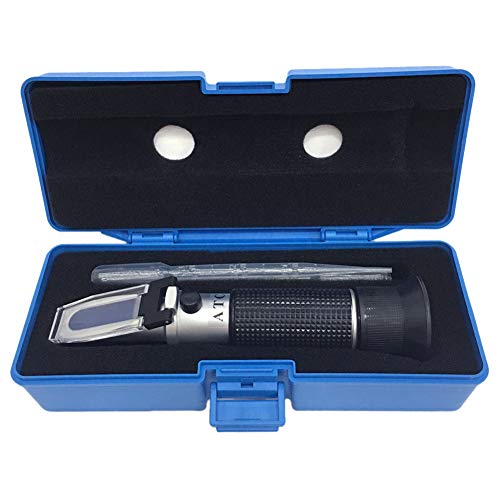 TOP CHOICEBest for wine and beer makersaichose Brix Refractometer with ATC, Dual Scale – Specific Gravity and BrixView on Amazon
- 3
 TOP CHOICEBest for juice and winemaking on a budgetExtech RF12 Portable Brix RefractometerView on Amazon
- 4
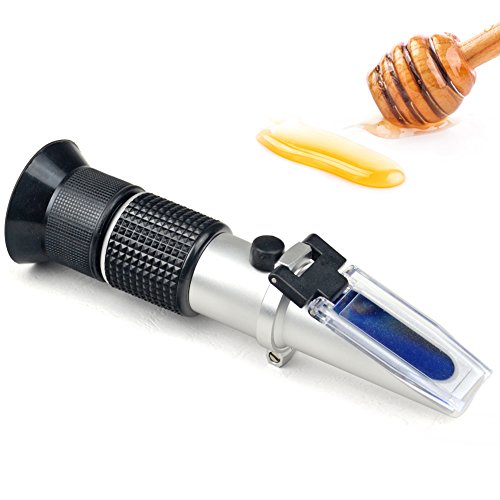 Best for honey and syrupsaichose Honey Refractometer for Honey Moisture, Brix and BaumeView on Amazon
- 5
 Best for professional-grade readingsAtago 3810 PAL-1 Digital Hand Held Pocket RefractometerView on Amazon
- 6
 Best for fruit and general sugar checksAichose 0-80% Brix Meter Refractometer for Fruit and Sugary DrinksView on Amazon
How a Brix Refractometer Works
A brix refractometer measures how much light bends as it passes through a liquid. That bending is called refraction, and it changes with the concentration of dissolved solids. In a sugar solution, more dissolved sugar means the liquid bends light more strongly. The instrument turns that optical effect into a reading on a scale expressed in degrees Brix, where 1 degree Brix equals roughly 1 gram of sucrose per 100 grams of solution.
The optical path step by step
- Light enters the sample. A few drops of liquid sit on a prism at the end of the instrument. A light source, often an LED or a daylight lens on handheld optical models, shines through a window and into the prism.
- Light meets the sample boundary. At the interface between the prism and the liquid, the light bends by an amount that depends on the liquid’s refractive index.
- The light reaches a detector or scale. The bent light forms a boundary line or a shadow on a scale. On optical models you read the line against a Brix scale through the eyepiece. Digital models use a sensor to detect the boundary and display the number.
- Temperature is compensated. Liquids change refractive index as they warm or cool. Many units include automatic temperature compensation (ATC), usually abbreviated ATC, which adjusts the reading so you do not need to correct it by hand.
Why refractive index tracks sugar
Sugar molecules slow light more than water does, so a sugar-rich solution has a higher refractive index. Refractometers are calibrated against known sucrose solutions, so the Brix value reflects the sugar content of that reference. Other dissolved solids, such as acids, salts or proteins, also affect refraction, which is why the reading is best described as total soluble solids and is only an approximation for sugar in mixed liquids like wine or fruit juice.
Optical versus digital
Optical refractometers need only daylight and an eye, and owners often report that they hold up well in the field. Digital refractometers use a sensor and display a numeric reading, which is easier to read and often gives more consistent numbers between users. Both principles produce the same optical result; the difference is how the boundary is read.
Our Top Picks
Quick Comparison
| Product | Best for | Key feature |
|---|---|---|
| Milwaukee 0 to 85% Brix Digital Refractometer – MA871 | Overall use, broad scale | Wide 0 to 85% Brix range |
| aichose Brix Refractometer with ATC, Dual Scale | Wine and beer makers | Dual scale for specific gravity and Brix |
| Extech RF12 Portable Brix Refractometer | Juices, wines and agriculture | Automatic temperature compensation and carry case |
| aichose Honey Refractometer for Honey Moisture, Brix and Baume | Honey, maple syrup, molasses | Three-in-one scales |
| Atago 3810 PAL-1 Digital Hand Held Pocket Refractometer | Professional-grade readings | 0.0 to 53.0% Brix measurement range |
| Aichose 0-80% Brix Meter Refractometer | Fruit and general sugar checks | Automatic temperature compensation on a wide range |
Milwaukee 0 to 85% Brix Digital Refractometer – MA871
Milwaukee 0 to 85% Brix Digitial Refractometer – MA871
Best for: Overall use across a broad sugar range
This digital model suits buyers who want one instrument that covers fruit, syrups and concentrated solutions. Owners often describe its readings as easy to take and repeatable once the instrument is calibrated.
Key specs
- Brix scale: 0 to 85%
- Digital display
Pros
- Wide scale covers most food and beverage uses
- Digital readout reduces reading errors
- Brand known for test and measurement tools
Cons
- Needs regular calibration with distilled water
- Less specialized than dedicated wine or honey models
Bottom line: A strong first choice for someone who needs one meter for mixed produce and syrups.
View on Amazonaichose Brix Refractometer with ATC, Dual Scale – Specific Gravity and Brix
aichose Brix Refractometer with ATC, Dual Scale – Specific Gravity & Brix, Hydrometer in Wine Making and Beer Brewing, Homebrew Kit
Best for: Wine and beer makers
Home brewers and winemakers often want both a Brix reading and a specific gravity estimate. The dual scale lets you track fermentation progress without switching tools.
Key specs
- Dual scale: specific gravity and Brix
- Automatic temperature compensation (ATC)
Pros
- Dual scale suits fermentation checks
- ATC reduces manual correction
- Compact and easy to carry to the brew area
Cons
- Brix and specific gravity readings are approximate in fermenting liquids
- Requires clean prism care after alcohol-rich samples
Bottom line: A practical pick for brewers who want one tool for wort and wine checks.
View on AmazonExtech RF12 Portable Brix Refractometer
Extech RF12 Portable Brix Refractometer, 0-18% Brix, ATC | Sugar concentration 0-18% Brix, automatic temperature compensation, handheld, juices/wines/agriculture, case
Best for: Juices, wines and agricultural checks on a budget
The RF12 is a handheld optical model aimed at field and produce checks. Its listed range of 0 to 18% Brix suits juice, wine and many crop measurements.
Key specs
- Range: 0 to 18% Brix
- Automatic temperature compensation
- Handheld, supplied with case
Pros
- Lower range matches juice and light wine readings well
- Portable with a case for field use
- ATC simplifies readings in changing temperatures
Cons
- Range too narrow for honey or thick syrups
- Optical reading requires good light and a steady eye
Bottom line: Best for buyers who measure thin liquids in the field and do not need high-concentration range.
View on Amazonaichose Honey Refractometer for Honey Moisture, Brix and Baume
aichose Honey Refractometer for Honey Moisture, Brix and Baume, 3-in-1 Uses, 58-90% Brix Scale Range Honey Moisture Tester, with ATC, Ideal for Honey, Maple Syrup, and Molasses, Bee Keeping Supplies
Best for: Honey, maple syrup and molasses
Beekeepers and syrup producers need to check moisture as well as sugar. This model’s three scales address honey moisture, Brix and Baume in one body.
Key specs
- Brix scale range: 58 to 90%
- Three uses: honey moisture, Brix and Baume
- Automatic temperature compensation
Pros
- Scale range suits thick honey and syrups
- Three scales in one instrument
- ATC helps keep honey readings consistent
Cons
- Scale range is too high for juice or wine
- Honey must be warmed or stirred well for accurate prism contact
Bottom line: The right pick for beekeepers and syrup makers who mostly measure thick, high-sugar liquids.
View on AmazonAtago 3810 PAL-1 Digital Hand Held Pocket Refractometer
Atago 3810 PAL-1 Digital Hand Held Pocket Refractometer, 0.0 – 53.0% Brix Measurement Range
Best for: Professional-grade readings in the field
Atago is a long-established optics brand, and owners often mention the consistency of its pocket models. This unit suits users who want a digital reading they can trust across a moderate sugar range.
Key specs
- Measurement range: 0.0 to 53.0% Brix
- Digital pocket format
Pros
- Reputation for optical precision
- Pocket size suits field work
- Digital display reduces reader variation
Cons
- Range does not reach honey-level concentrations
- Higher-end models cost more to maintain with calibration
Bottom line: A solid choice for growers and food technicians who value a respected optics brand.
View on AmazonAichose 0-80% Brix Meter Refractometer for Fruit and Sugary Drinks
Aichose 0-80% Brix Meter Refractometer for Measuring Sugar Content in Fruit, Honey, Maple Syrup and Other Sugary Drink, with Automatic Temperature Compensation Function
Best for: Fruit and general sugar checks
This model’s wide 0 to 80% range covers fruit, honey, maple syrup and sugary drinks in one unit, with automatic temperature compensation built in.
Key specs
- Brix range: 0 to 80%
- Automatic temperature compensation
Pros
- Wide range for many kitchen and orchard uses
- ATC removes manual correction
- Works for both fruit and syrup checks
Cons
- Wide range can reduce resolution at the low end
- Needs regular cleaning after sticky samples
Bottom line: A versatile pick for anyone who checks a mix of fruit, syrup and sweet drinks.
View on AmazonBuying Guide
Scale range
Match the scale to what you measure. Thin liquids like juice and wine usually sit in the 0 to 25% Brix range, while honey and syrups need 58% or higher. A wide-range meter covers more uses but may read less precisely at low concentrations.
Good picks for this: Milwaukee MA871, Aichose 0-80% Brix Meter
Temperature compensation
Refractive index shifts with temperature, so automatic temperature compensation (ATC) matters if you test outdoors or across several batches. If a model lacks ATC, you will need to correct readings against a temperature chart.
Good picks for this: Extech RF12, aichose Brix Refractometer with ATC
Optical versus digital display
Optical models are durable and need no batteries; digital models are easier to read and give more uniform numbers across users. Choose based on how you read: a small team sharing one meter often prefers digital, while a single user in bright light may be happy with optical.
Good picks for this: Atago 3810 PAL-1, Milwaukee MA871
Intended use case
Brewers need a dual scale that reads specific gravity as well as Brix. Beekeepers need moisture and high-Brix scales. Growers and food handlers generally need a portable, wide-range unit. Buying for your main task saves you from using the wrong scale.
Good picks for this: aichose Brix Refractometer with ATC, aichose Honey Refractometer
Size, portability and fit in your workflow
A pocket or handheld meter suits field work and farmers’ markets. Bench units are better for labs. Check that the prism is easy to reach and clean, and that a case or sleeve protects the optics during travel.
Good picks for this: Extech RF12, Atago 3810 PAL-1
Durability and build quality
Prisms and windows can scratch, and sugar residue can dry and cling. Look for a body that feels solid, a sealed sample well, and a case. Owners often mention that careful rinsing with water after each use extends the life of both optical and digital models.
Good picks for this: Atago 3810 PAL-1, Milwaukee MA871
Calibration and care
Plan to calibrate with distilled water on a regular schedule, and keep a clean, dry prism between readings. Digital models may need battery checks, while optical models need a steady hand and good light. Consult the manufacturer’s instructions for the exact calibration procedure.
Good picks for this: aichose Honey Refractometer, Extech RF12
FAQ
How does a brix refractometer work in simple terms?
It shines light through a few drops of liquid on a prism. The sugar in the liquid bends the light more strongly, and the instrument converts that bend into a Brix reading.
What is the difference between Brix and specific gravity?
Brix measures percent sugar by weight, while specific gravity compares a liquid’s density to water. Brewers often use both to track fermentation, but readings during fermentation can be approximate because alcohol also affects refraction.
Do I need to calibrate a brix refractometer?
Yes, most owners calibrate with distilled water at the start of a session and periodically afterward. Follow the manufacturer’s directions for the exact steps.
Does temperature affect the reading?
It does. Refractive index changes with temperature, which is why automatic temperature compensation (ATC) is useful. Without it, correct the reading using a temperature chart.
Can a brix refractometer measure honey moisture?
Some models include a honey moisture scale. A dedicated honey refractometer is designed for this, since moisture and sugar content are read on different scales.
How should I clean the prism?
Rinse with distilled water and wipe gently with a soft, lint-free cloth. Avoid abrasive tissues and do not let sugar residue dry on the prism.
Are home refractometer readings as accurate as lab results?
For many home and field uses, a well-calibrated refractometer gives useful readings. For regulated food labeling or lab work, use the methods and instruments required by your industry and consult a qualified professional.
Conclusion
Understanding how a brix refractometer works makes choosing one much easier. The light-bending principle is the same across models, so the decision comes down to scale range, temperature compensation, display type and your main task. For a broad, single-meter setup, the Milwaukee MA871 and Aichose 0-80% model are sensible starting points. Brewers should look at the Aichose dual-scale unit, beekeepers at the Aichose honey refractometer, and field workers at the Extech RF12 or the Atago pocket model. Match the scale to what you measure and you will get the most value from any of these picks.
Sources
- Standards and agricultural testing guidance for produce and sugar content (usda.gov)
- Food safety and labeling information relevant to measuring sugar in beverages and syrups (fda.gov)
- Research-based extension resources on fruit quality and soluble solids measurement (extension.org)
Before you buy: helpful guides
Related reading
- Top 5 Brix Refractometers for Plants Compared for Growers
- Refractometer for Sugar Content: 7 Best Brix Meters Compared (2026)
- How to Calibrate Refractometer with Distilled Water: 7 Best Picks (2026)
About Caleb Morgan
Caleb Morgan is part of our editorial team and reviews and edits our reef & saltwater aquariums guides, checking product details against manufacturer specifications and owner feedback.
About the author
Caleb Morgan writes reviews and buying guides for My Reef Aquarium.