6 Best Auto Water Top Off Systems for Reef Tanks (2026)
Compare six auto water top off system options for reef tanks. See specs, pros, cons and who each suits to keep salinity and water levels stable.
 By Audrey Hayes
Updated November 11, 2026
 By Audrey Hayes
Updated November 2026
An auto water top off system keeps your reef tank’s water level steady by replacing the water that evaporates overnight. Evaporation removes pure water and leaves salt behind, so without a top off system your salinity can climb and drift in ways that stress corals, fish and invertebrates. This guide compares six products that reefers commonly consider, based on published specifications, brand reputation and the patterns owners tend to report. We did not test these units ourselves, so treat the notes below as a research summary and confirm details against each listing before you buy.
Our top picks at a glance
- 1TOP CHOICEBest overallUseek Auto Top Off System Saltwater Aquarium, Water ATO for Reef Fresh TankView on Amazon
- 2
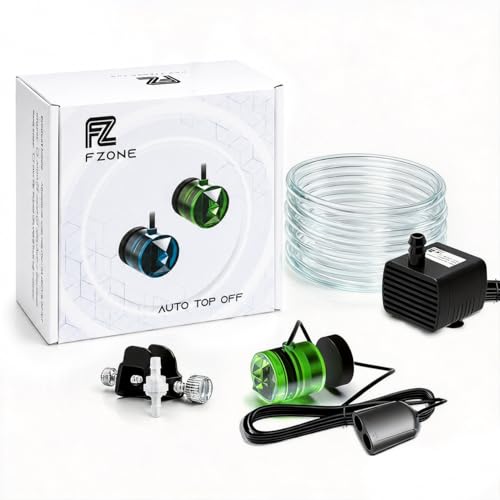 TOP CHOICEBest for dual-sensor reliabilityFZONE ATO System, Auto Top Off with Dual Optical Sensors for AquariumView on Amazon
- 3
 TOP CHOICEBest budget pickClscea Aquarium Auto Top Off System Water Filler CompensatorView on Amazon
- 4
 Best for controller-based setupsFZONE Aquarium ATO System, QST2.0 Auto Top Off Controller for TanksView on Amazon
- 5
 Best for compact sumpsAuto Top Off System Saltwater Aquarium, ATO Reef Fresh Tank Anti-OverflowView on Amazon
- 6
 Best for magnetic-pump simplicityMagTool ATO Aquarium Auto Top Off System with Dual Optical SensorView on Amazon
Our Top Picks
How We Selected These Systems
Every product in this list was chosen against the same criteria. We looked at the sensing method (optical, float or probe), whether the unit includes anti-overflow or auto shutoff protection, the stated precision of the water-level detection, pump type and reported pump life, the physical footprint for sump and tank-mounted use, and the warranty terms the manufacturer lists. We also looked for patterns in owner feedback, such as recurring comments about sensor drift, false triggers or leaks at the fittings. Where a spec was not clearly published, we left it out rather than guess.
Quick Comparison
| Product | Best for | Key feature |
|---|---|---|
| Useek Auto Top Off System Saltwater Aquarium | Overall reliability and easy setup | Real-time anti-overflow with 1mm precision sensing |
| FZONE ATO System with Dual Optical Sensors | Redundant level detection | Dual optical sensors for reef and freshwater tanks |
| Clscea Aquarium Auto Top Off System | Budget-minded hobbyists | Simple water filler compensator design |
| FZONE Aquarium ATO System QST2.0 | Controller-driven top offs | Precise QST2.0 controller for stable levels |
| Auto Top Off System Saltwater Aquarium (anti-overflow) | Small sumps and tight spaces | Compact probe with sealed sensor and auto shutoff |
| MagTool ATO Aquarium Auto Top Off System | Owners wanting a straightforward dual-sensor unit | Dual optical sensor with automatic level control |
Useek Auto Top Off System Saltwater Aquarium, Water ATO for Reef Fresh Tank
Useek Auto Top Off System Saltwater Aquarium, Water ATO for Reef Fresh Tank | Stable Water Levels & Salinity, QST Real-Time Anti-Overflow, 1mm Precision Sensing, Easy Setup, 2-Year Warranty, Blue
Best for: Overall reliability and easy setup 7 Best Cat Litter Disposal Systems goes further into this.
This is a good starting point for reef keepers who want a single system that handles both level control and overflow protection without a lot of configuration. It suits tanks from nano sizes up to mid-sized reef displays.
Key specs
- Real-time anti-overflow (QST) function
- 1mm precision sensing, per the listing
- Designed for saltwater and fresh tanks
- 2-year warranty, per the listing
Pros
- Anti-overflow feature addresses the most common ATO failure
- Precision sensing helps hold water level within a narrow band
- Straightforward setup for first-time users
Cons
- Like all probe-based units, sensor cleaning is still required every few weeks
- Owners with very large sumps may need to plan around the reservoir size
Bottom line: A strong default choice for most reef tanks if you want protection built in and do not want to fine-tune a controller.
View on AmazonFZONE ATO System, Auto Top Off with Dual Optical Sensors for Aquarium
FZONE ATO System, Auto Top Off with Dual Optical Sensors for Aquarium Green | Dual optical sensor ATO system for reef and freshwater tanks, with precise water level control and stable operation
Best for: Redundant level detection
Aimed at hobbyists who want a second sensing layer so a single fouled sensor does not cause a runaway top off. It fits both reef and freshwater tanks.
Key specs
- Dual optical sensor design
- Suitable for reef and freshwater tanks
- Precise water level control, per the listing
Pros
- Two sensors give redundancy against a single failure point
- Optical sensing avoids moving float parts that can stick
- Works across saltwater and freshwater setups
Cons
- Optical sensors still need periodic cleaning to avoid false readings
- Dual-sensor wiring takes more care during installation
Bottom line: Best for reefers who value a backup sensor and are comfortable with a slightly more involved install.
View on AmazonClscea Aquarium Auto Top Off System Water Filler Compensator
Clscea Aquarium Auto Top Off System Water Filler Compensator Blue, 1pcs
Best for: Budget-minded hobbyists
A simpler, lower-cost option for keepers with small to moderate tanks who want the basic function of automatic top offs without advanced features.
Key specs
- Single-unit water filler compensator design
- Sold as one piece per listing
Pros
- Simple concept that is easy to understand and troubleshoot
- Suits small tanks and freshwater setups
- Few components to maintain
Cons
- Fewer protective features than the sensor-and-controller systems above
- Owners should verify compatibility with their reservoir and pump setup
Bottom line: A reasonable pick for smaller tanks where a budget unit is the priority, provided you add your own overflow safeguards.
View on AmazonFZONE Aquarium ATO System, QST2.0 Auto Top Off Controller for Tanks
FZONE Aquarium ATO System, QST2.0 Auto Top Off Controller for Tanks | Smart ATO system with precise controller for saltwater and freshwater aquariums, maintaining stable water levels
Best for: Controller-driven top offs
Suited to hobbyists who prefer a dedicated controller that manages sensing and pump timing, especially for saltwater tanks where stable levels matter most.
Key specs
- QST2.0 controller design
- Covers saltwater and freshwater aquariums, per the listing
Pros
- Controller logic can give more consistent level holding
- Clear separation between sensing and pump control
- Suitable for both saltwater and freshwater use
Cons
- More components to mount and wire than a single-piece unit
- Setup is less forgiving for beginners
Bottom line: Pick this if you want controller-based management and are comfortable with a modest amount of installation work.
View on AmazonAuto Top Off System Saltwater Aquarium, ATO Reef Fresh Tank Anti-Overflow
Auto Top Off System Saltwater Aquarium, ATO Reef Fresh Tank Anti-Overflow | compact probe, sealed sensor, flood prevention, long pump life, strong magnet, auto shutoff, freshwater, 2-year warranty
Best for: Small sumps and tight spaces
Designed around a compact probe, this unit suits nano tanks and sumps where cabinet space is limited and a bulky reservoir is not practical.
Key specs
- Compact probe with sealed sensor
- Auto shutoff and anti-overflow protection, per the listing
- Strong magnet and long pump life, per the listing
- 2-year warranty, per the listing
Pros
- Small footprint fits tight sump and stand configurations
- Sealed sensor helps resist splash and salt creep
- Includes flood-prevention features
Cons
- Compact reservoirs need refilling more often, so plan your RO/DI supply
- Probe placement requires care to avoid false triggers
Bottom line: A practical choice for nano and small sump systems where space is the main constraint.
View on AmazonMagTool ATO Aquarium Auto Top Off System with Dual Optical Sensor
MagTool ATO Aquarium Auto Top Off System with Dual Optical Sensor-Green | Automatic water level control for reef, saltwater and freshwater tanks with dual optical sensors for accurate top-off.
Best for: Magnetic-pump simplicity
Targets hobbyists who want automatic level control with dual optical sensing and a straightforward operating model for reef, saltwater and freshwater tanks.
Key specs
- Dual optical sensor design
- Automatic water level control
- Suitable for reef, saltwater and freshwater tanks
Pros
- Dual optical sensing adds a level of redundancy
- Automatic control reduces daily manual checks
- Covers several tank types
Cons
- Optical sensors need occasional cleaning to stay accurate
- Owners should confirm the pump and reservoir fit their sump layout
Bottom line: A solid dual-sensor option for reefers who want automatic control with a simple, well-defined function.
View on AmazonBuying Guide
Sensing Method
Auto top off systems detect water level with floats, optical sensors or conductive probes. Float switches are simple but can stick from salt creep. Optical sensors have no moving parts but collect film and need cleaning. Probes depend on water conductivity and can be fooled by buildup. Dual sensors give you redundancy, which matters most when a single failure could drop salinity or flood the room.
Good picks for this: FZONE ATO System with Dual Optical Sensors, MagTool ATO Aquarium Auto Top Off System
Anti-Overflow and Auto Shutoff
The most important safety feature is a shutoff that stops the pump if the water level rises past a set point. Look for an explicit anti-overflow or auto shutoff function in the listing, and consider a separate leak sensor on the floor for added protection.
Good picks for this: Useek Auto Top Off System Saltwater Aquarium, Auto Top Off System Saltwater Aquarium (anti-overflow)
Reservoir Size and Refill Frequency
Your reservoir should hold enough RO/DI water for at least several days of evaporation. A small reservoir needs refilling often and risks running dry. Estimate your evaporation rate by tracking how much water you add over a week, then size the reservoir to match.
Good picks for this: Auto Top Off System Saltwater Aquarium (anti-overflow), Clscea Aquarium Auto Top Off System
Sump and Space Fit
Measure the cabinet or sump opening before buying. Probes and float arms need clearance, and some units require a mounting position that conflicts with heaters, skimmers or return plumbing. Compact probes are easier to place in tight sumps.
Good picks for this: Auto Top Off System Saltwater Aquarium (anti-overflow), FZONE Aquarium ATO System QST2.0
Controller Versus Single-Piece Design
Controller-based systems separate sensing from pump operation and can offer more consistent control. Single-piece units are easier to install but offer fewer adjustments. Decide how much setup work you want to do and whether you value fine-tuning.
Good picks for this: FZONE Aquarium ATO System QST2.0, Useek Auto Top Off System Saltwater Aquarium
Durability and Materials
Reef tanks run saltwater 24/7, so corrosion resistance matters. Check whether the listing mentions sealed sensors, marine-rated components or a warranty. Owners often report that fittings and tubing are the first parts to degrade, so inspect them regularly.
Good picks for this: Auto Top Off System Saltwater Aquarium (anti-overflow), MagTool ATO Aquarium Auto Top Off System
Care and Maintenance
Every sensing system needs routine cleaning. Plan to wipe optical sensors and probes every one to two weeks, check the pump and tubing monthly, and confirm the shutoff still triggers during each maintenance session. Keep a spare sensor if your system uses one.
Good picks for this: FZONE ATO System with Dual Optical Sensors, Useek Auto Top Off System Saltwater Aquarium
FAQ
What does an auto water top off system do?
It monitors your tank or sump water level and adds fresh RO/DI water when the level drops from evaporation. This keeps salinity stable, since evaporation removes pure water and leaves dissolved salts behind.
Do I still need to check my tank if I use a top off system?
Yes. Even reliable systems can fail from sensor fouling, pump problems or an empty reservoir. Check the system, the reservoir and the water level regularly, and confirm the overflow protection still works.
What is the difference between optical and float sensors?
Optical sensors detect water with light and have no moving parts, which helps reduce sticking. Float sensors rely on a mechanical arm that can stall from salt creep. Both need periodic cleaning.
Should I use RO/DI water in my top off reservoir?
Generally, yes. Top off water should be pure RO/DI water, not tap water or saltwater. Tap water adds minerals and contaminants, and saltwater would raise salinity further. Consult a professional aquarist if you are unsure about your water source.
How often should I clean the sensors?
Many reefers clean optical sensors and probes every one to two weeks, though the right interval depends on your tank’s bioload and how quickly film builds up. Check sensors after any water change or skimmer adjustment.
What is anti-overflow protection?
It is a feature that stops the pump when the water level rises past a set point, such as after a sensor failure. It is one of the most important safety functions to look for in any system.
Can one system work for both reef and freshwater tanks?
Several of the products above are listed for both saltwater and freshwater use. Confirm compatibility with your specific tank type and sump layout before buying, and avoid using a single reservoir for both tank types.
Conclusion
For most reef tanks, a system with anti-overflow protection and a clear sensing method is the safest starting point. The Useek unit suits keepers who want built-in protection and easy setup. The FZONE dual-optical option fits those who want a backup sensor. Budget-minded hobbyists with smaller tanks may consider the Clscea unit, while controller fans may prefer the FZONE QST2.0. For tight sumps, the compact anti-overflow probe is practical, and the MagTool dual-sensor unit suits owners who want automatic control with redundancy. Match the choice to your tank size, sump space and how much setup work you want to do.
Sources
- Guidance on water quality and safe handling of household and laboratory-grade water (epa.gov)
- Electrical and product safety information relevant to pumps and plug-in aquarium equipment (cpsc.gov)
- Standards and certification information for water treatment and filtration products (nsf.org)
Related reading
- 7 Best Auto Top Off System Reef Tank Picks for Stable Water Levels (2026)
- 5 Best Auto Water Top Off Systems for Reef Tanks (2026)
- Tunze 3155.000 Osmolator Auto Top Off System: Setup, Calibration and Fixes
- Top 7 Pool Auto Top Off Systems for Reef Tanks Compared (2026)
- Top 7 Auto Top Offs for Nano Tank Systems with Reliable Sensing
About Audrey Hayes
Audrey Hayes is part of our editorial team and reviews and edits our reef & saltwater aquariums guides, checking product details against manufacturer specifications and owner feedback.
About the author
Audrey Hayes writes reviews and buying guides for My Reef Aquarium.