6 Best Aquarium Auto Top Off System Picks for Reef Tanks (2026)
Compare six aquarium auto top off systems for reef and saltwater tanks. See key features, pros, cons and buying tips to choose the right ATO for your setup.
 By Emily Parker
Updated November 11, 2026
 By Emily Parker
Updated November 2026
An aquarium auto top off system replaces water lost to evaporation so your salinity and water level stay steady between manual top-offs. For reef keepers, that stability matters: even a small salinity swing can stress corals and invertebrates. The picks below were compared on sensing method, overflow protection, controller type, fit for common tank sizes, and the patterns owners tend to mention in their feedback. Nothing here comes from our own bench testing, so check each listing’s current specifications before buying.
Our top picks at a glance
- 1TOP CHOICEBest overallUseek Auto Top Off System Saltwater Aquarium, Water ATO for Reef Fresh TankView on Amazon
- 2
 TOP CHOICEBest for compact sumpsATO Reef Fresh Tank Anti-Overflow SystemView on Amazon
- 3
 TOP CHOICEBest for smart controlFZONE QST2.0 Auto Top Off ControllerView on Amazon
- 4
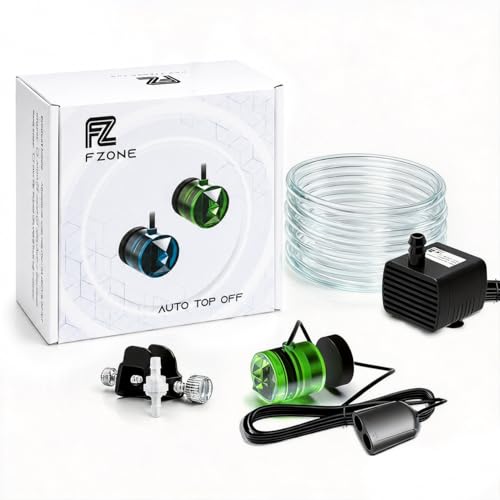 Best for dual-sensor redundancyFZONE ATO System, Auto Top Off with Dual Optical Sensors for Aquarium GreenView on Amazon
- 5
 Best for plug-and-play setupsATET Auto Top Off System Saltwater Aquarium, ATO for Fresh & Reef TankView on Amazon
- 6
 Best budget pickClscea Aquarium Auto Top Off System Water Filler CompensatorView on Amazon
Our Top Picks
Quick Comparison
| Product | Best for | Key feature |
|---|---|---|
| Useek Auto Top Off System Saltwater Aquarium | Overall reef use | QST real-time anti-overflow with 1mm precision sensing |
| ATO Reef Fresh Tank Anti-Overflow System | Compact sumps | Sealed compact probe and auto shutoff |
| FZONE QST2.0 Auto Top Off Controller | Smart control | Precise controller for salt and freshwater |
| FZONE Auto Top Off with Dual Optical Sensors | Redundant sensing | Dual optical sensors for water level control |
| ATET Auto Top Off System Saltwater Aquarium | Plug-and-play setups | QST anti-overflow with dual optical sensor |
| Clscea Aquarium Auto Top Off System | Budget setups | Simple water filler compensator design |
Useek Auto Top Off System Saltwater Aquarium, Water ATO for Reef Fresh Tank
Useek Auto Top Off System Saltwater Aquarium, Water ATO for Reef Fresh Tank | Stable Water Levels & Salinity, QST Real-Time Anti-Overflow, 1mm Precision Sensing, Easy Setup, 2-Year Warranty, Blue
Best for: Overall reef use
This is a good fit for reef keepers who want a stable water level with an overflow safeguard built in, especially in tanks where evaporation is steady and a mistake would be costly.
Key specs
- Real-time anti-overflow (QST) function
- 1mm precision sensing
- Listed with a 2-year warranty
- Blue finish
Pros
- Anti-overflow protection is a central feature, not an add-on
- Fine sensing resolution suits reef salinity targets
- Setup is generally described as straightforward
Cons
- Requires a reservoir and a reliable pump, which add cost and space
- Calibration still needs attention to get the sensor height right
Bottom line: A strong first choice for most reef tanks where safety features and a clear warranty matter most.
View on AmazonATO Reef Fresh Tank Anti-Overflow System
Auto Top Off System Saltwater Aquarium, ATO Reef Fresh Tank Anti-Overflow | compact probe, sealed sensor, flood prevention, long pump life, strong magnet, auto shutoff, freshwater, 2-year warranty
Best for: Compact sumps
Suited to smaller reef and freshwater tanks or tight sump spaces, where a low-profile probe and sealed sensor are easier to fit. 7 Best Auto Top Off Systems for Sump Setups (2026) goes further into this.
Key specs
- Compact probe design
- Sealed sensor
- Strong magnet for mounting
- Auto shutoff and 2-year warranty per listing
Pros
- Compact footprint for crowded sumps
- Flood prevention is listed as a core function
- Works for both saltwater and freshwater use
Cons
- A small probe can be more sensitive to splash and surface film
- Owners often mention checking the magnet placement carefully
Bottom line: A practical pick when space is the main constraint and you still want sealed sensing and shutoff. A related read: 6 Best Pond Auto Top Off Systems for Koi and Garden Ponds (2026).
View on AmazonFZONE QST2.0 Auto Top Off Controller
FZONE Aquarium ATO System, QST2.0 Auto Top Off Controller for Tanks | Smart ATO system with precise controller for saltwater and freshwater aquariums, maintaining stable water levels
Best for: Smart control
Aimed at hobbyists who want a dedicated controller with precise level management and a clear separation between sensing and pumping. Worth reading next: JBJ Auto Top Off Not Working: Troubleshooting Steps That Fix It.
Key specs
- QST2.0 controller
- Rated for saltwater and freshwater aquariums
Pros
- Controller-based design suits tanks that need tight level control
- Covers both salt and freshwater setups
- Stable operation is a recurring theme in owner descriptions
Cons
- More components to mount and wire than a single-probe kit
- Setup takes more care for users new to controllers
Bottom line: Best for hobbyists comfortable with a controller who want precise, consistent level management.
View on AmazonFZONE ATO System, Auto Top Off with Dual Optical Sensors for Aquarium Green
FZONE ATO System, Auto Top Off with Dual Optical Sensors for Aquarium Green | Dual optical sensor ATO system for reef and freshwater tanks, with precise water level control and stable operation
Best for: Redundant sensing
A fit for reef tanks where a second sensor is worth having, since one failed or fouled sensor can otherwise leave the tank short or overfilled. A related read: Red Sea Reefer Auto Top Off: Setup and Calibration Steps for Reef Tanks.
Key specs
- Dual optical sensor design
- Suitable for reef and freshwater tanks
Pros
- Dual sensing adds a layer of redundancy
- Optical sensing avoids some mechanical wear issues
- Precise level control is the stated focus
Cons
- Optical sensors need occasional cleaning to stay accurate
- Two sensors mean more positioning to get right
Bottom line: Worth a look if you want backup sensing and are willing to keep the sensors clean.
View on AmazonATET Auto Top Off System Saltwater Aquarium, ATO for Fresh & Reef Tank
ATET Auto Top Off System Saltwater Aquarium, ATO for Fresh & Reef Tank | Maintain stable salinity & water level, QST Anti-Overflow, Dual Optical Sensor, 1mm Precision Sensor, Plug & Play, Purple
Best for: Plug-and-play setups
Intended for keepers who want a system that works out of the box with a single-tank reef or freshwater setup and minimal wiring.
Key specs
- QST anti-overflow
- Dual optical sensor
- 1mm precision sensor
- Plug-and-play design
Pros
- Plug-and-play layout reduces setup time
- Combines anti-overflow with dual sensing
- Suits both reef and freshwater tanks
Cons
- Plug-and-play still requires correct sensor height
- Owner feedback on long-term durability varies
Bottom line: A good match for beginners who want fewer steps and a safety-focused design.
View on AmazonClscea Aquarium Auto Top Off System Water Filler Compensator
Clscea Aquarium Auto Top Off System Water Filler Compensator Blue, 1pcs
Best for: Budget setups
A straightforward option for small tanks or hobbyists who want to try automatic top-off before committing to a controller-based system.
Key specs
- Water filler compensator design
- Single unit, sold as one piece
Pros
- Simple concept with fewer parts to manage
- Suits small freshwater and light-load tanks
- Easy to understand for first-time users
Cons
- Lighter feature set than anti-overflow systems
- Reef keepers may want stronger overflow protection
Bottom line: A reasonable entry point for smaller tanks, though serious reef setups may warrant a model with anti-overflow.
View on AmazonBuying Guide
Sensing method
Most systems use either a float or a conductivity or optical probe. Optical sensors avoid some moving-part wear, while conductivity probes can be affected by salt creep and film. Check which method a model uses and how often its maintainers recommend cleaning the sensor.
Good picks for this: Useek Auto Top Off System, FZONE Dual Optical Sensors
Overflow protection
Anti-overflow or auto shutoff is the feature that prevents a pump failure from flooding the room. For reef tanks, treat it as essential rather than optional.
Good picks for this: ATO Reef Fresh Tank Anti-Overflow System, ATET Auto Top Off System
Controller type
Some kits pair a sensor with a simple on/off pump relay, while others use a dedicated controller with more precise level control. Controllers suit tanks with tight salinity needs; simpler kits suit lighter loads.
Good picks for this: FZONE QST2.0 Auto Top Off Controller, Clscea Aquarium Auto Top Off System
Size and fit
Measure the space in your sump or cabinet and the sensor cable reach before ordering. Compact probes help in tight sumps; check that the sensor can sit at the correct height without interfering with the skimmer or return.
Good picks for this: ATO Reef Fresh Tank Anti-Overflow System, ATET Auto Top Off System
Use case: reef versus freshwater
Saltwater tanks benefit most from automatic top-off because salinity drifts when only freshwater evaporates. Freshwater tanks can use simpler systems, but reef keepers should match their system to the precision their livestock needs.
Good picks for this: FZONE QST2.0 Auto Top Off Controller, Useek Auto Top Off System
Durability and pump life
Owners often mention pump longevity and sealed sensor housings. Look for clear warranty terms and parts that can be replaced. Check the reservoir too, since a leaking container causes as many problems as a failed sensor.
Good picks for this: ATO Reef Fresh Tank Anti-Overflow System, FZONE ATO System with Dual Optical Sensors
Maintenance and calibration
Plan to clean sensors, check tubing for algae, and verify the reservoir level every few weeks. Calibration is usually a one-time task, but recheck it after moving the sensor or changing the water level.
Good picks for this: ATET Auto Top Off System, Clscea Aquarium Auto Top Off System If you want more background, see 6 Best Aquarium Auto Top Off Float Valves for Reef Tanks (2026).
FAQ
What does an aquarium auto top off system do?
It detects when water in the display tank drops below a set level and adds fresh water, usually from a reservoir, to bring it back up. This keeps salinity and water level more stable than manual top-offs.
Is an auto top off system safe for a reef tank?
It can be, when the system includes anti-overflow protection and the sensor is calibrated correctly. Always confirm the shutoff behavior before relying on it, and consult a professional aquarist if you are unsure about wiring or electrical safety.
Can I use an auto top off system in a freshwater tank?
Yes. Several models list both saltwater and freshwater use. Freshwater tanks often have lower precision requirements, so simpler kits can work well.
Where should the sensor be placed?
Mount the sensor at the correct water level, away from splash zones and surface film where possible. Follow the manufacturer’s height guidance and recheck it after any change.
How often should I clean the sensor?
Many owners check sensors every one to two weeks, especially in reef tanks with high protein or film. Optical and conductivity sensors can give false readings when coated, so cleaning is part of routine maintenance.
Do I still need to test salinity?
Yes. An auto top off system maintains water level, but salinity should still be verified with a reliable refractometer or conductivity meter, since the top-off water itself must be correctly mixed. We also found Hydor Smart Level Auto Top Off: Setup and Calibration Steps for Reef Tanks useful on this point.
Conclusion
For most reef tanks, the Useek Auto Top Off System is a sensible starting point because anti-overflow protection and fine sensing are central to its design. Smaller sumps point toward the ATO Reef Fresh Tank Anti-Overflow System, while keepers who want a dedicated controller should look at the FZONE QST2.0. Dual-sensor redundancy suits the FZONE Dual Optical Sensor model, and the ATET is a good plug-and-play option. The Clscea is the most basic choice, better suited to smaller or freshwater tanks. Match the system to your tank’s load, your sump space and how much control you want.
Sources
- General guidance on water use, evaporation and household water handling (epa.gov)
- Electrical safety basics for equipment near water (osha.gov)
- Standards and certification information for electrical aquarium equipment
Related reading
- 8 Best Auto Top Offs for Aquarium Picks Compared (2026)
- 7 Best Hygger Auto Top Off Systems for Reef Tanks (2026)
- Tunze Osmolator 3 Auto Top Off: Setup and Calibration Guide
- Tunze Auto Top Off: Setup, Calibration and Troubleshooting Guide (2026)
About Emily Parker
Emily Parker is part of our editorial team and reviews and edits our reef & saltwater aquariums guides, checking product details against manufacturer specifications and owner feedback.
About the author
Emily Parker writes reviews and buying guides for My Reef Aquarium.