6 Best Aquarium Sump and Pump Options for Reef Tanks (2026)
Compare the best aquarium sump and pump options for reef and fish tanks. Learn key specs, pros, cons and how to choose the right return pump for your sump.
 By Audrey Hayes
Updated November 8, 2026
 By Audrey Hayes
Updated November 2026
Choosing an aquarium sump and pump is one of the most important decisions in any reef or fish system, because the return pump moves all the water through your filtration, heating and dosing area every hour. This guide compares six return pumps that owners commonly consider for sump circulation. Our selection looks at published specifications, manufacturer claims, brand reputation and the patterns owners tend to report about noise, controllability and long-term reliability. We have not bench-tested these products ourselves, so treat the notes below as a research summary to check against the current listings.
Our top picks at a glance
- 1TOP CHOICEBest overallOrlushy Silent Swirl Controllable DC Aquarium PumpView on Amazon
- 2
 TOP CHOICEBest for quiet reef sumpshygger 800GPH Quiet Submersible and External 24V Water PumpView on Amazon
- 3
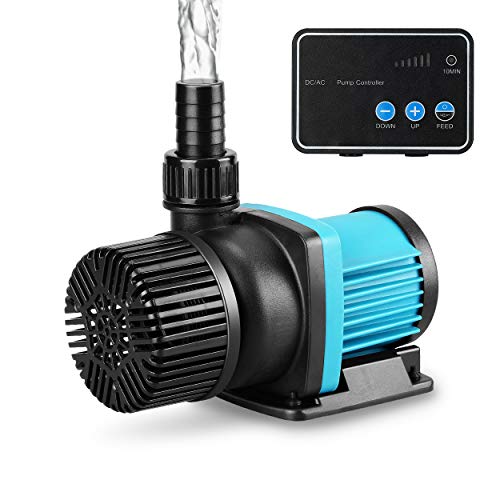 TOP CHOICEBest for larger tanksJEREPET 1850GPH 55W Aquarium 24V DC Water PumpView on Amazon
- 4
 Best budget pickVIVOSUN 800GPH Submersible Fountain Water PumpView on Amazon
- 5
 Best for precise flow controlJEREPOND 660GPH Aquarium Return Pump with LCD ControllerView on Amazon
- 6
 Best for high-flow sumpshygger 1060GPH Quiet Submersible and External 24V Water PumpView on Amazon
Our Top Picks
Quick Comparison
| Product | Best for | Key feature |
|---|---|---|
| Orlushy Silent Swirl Controllable DC Aquarium Pump | Reef sumps needing wave-style flow | Wave function and sine mode controller |
| hygger 800GPH Quiet Submersible and External 24V Water Pump | Quiet mid-size sumps | 30%–100% adjustable controller |
| JEREPET 1850GPH 55W Aquarium 24V DC Water Pump | Large tanks and high-volume sumps | Up to 1850 GPH rated flow |
| VIVOSUN 800GPH Submersible Fountain Water Pump | Budget-conscious setups | 10 ft. high lift with three nozzles |
| JEREPOND 660GPH Aquarium Return Pump | Fine-tuned flow in smaller systems | LCD display with 20 speed settings |
| hygger 1060GPH Quiet Submersible and External 24V Water Pump | High-flow sumps and turnover-focused tanks | 33W draw and 13.1 ft. head |
Orlushy Silent Swirl Controllable DC Aquarium Pump
Orlushy Silent Swirl Controllable DC Aquarium Pump with Wave Function/Mode and sine Ultra Quiet Controller for Salt/Freshwater Coral Reef Fish Tank Sump Circulation
Best for: Reef sumps that benefit from varied, wave-like circulation.
This pump suits hobbyists who want the flow pattern to change over time rather than run at one constant output. Its wave and sine modes are aimed at mimicking natural water movement in a sump-fed display.
Key specs
- DC brushless design with an external controller
- Wave function and sine mode settings
- Suitable for saltwater and freshwater, as stated in the listing
Pros
- Controller offers flow patterns beyond simple speed adjustment
- Marketed as ultra quiet, which owners often value in bedroom or living room tanks
- Compatible with both reef and fish-only sumps
Cons
- Wave modes are less useful in sumps where steady, predictable flow is preferred
- Impeller and controller settings take some time to learn
Bottom line: A strong fit for reef keepers who want programmable flow variation from a sump return.
View on Amazonhygger 800GPH Quiet Submersible and External 24V Water Pump
hygger 800GPH Quiet Submersible and External 24V Water Pump, with Controller (30%-100% Settings), Powerful Return Pump for Fish Tanks, Aquariums, Ponds, Fountains, Sump, Hydroponics (25W, 9.8ft)
Best for: Quiet mid-size sumps where noise matters.
Hobbyists running sumps in shared rooms often look for a pump that holds its volume without humming. This model is positioned for submersible or external placement, which makes it flexible in tight sump layouts.
Key specs
- 800 GPH rated flow
- Controller with 30%–100% speed range
- 24V DC operation
- Listed for fish tanks, aquariums, ponds, fountains and sumps
Pros
- Adjustable output lets you dial in return flow without swapping pumps
- Submersible or external use gives setup flexibility
- Owners often describe it as quieter than basic AC return pumps
Cons
- The 30% minimum output may be too strong for very gentle sump flow
- Intake screens may need periodic cleaning in high-detritus systems
Bottom line: Best for keepers who want a quiet, adjustable return in a mid-size reef or fish sump.
View on AmazonJEREPET 1850GPH 55W Aquarium 24V DC Water Pump
JEREPET 1850GPH 55W16FT Aquarium 24V DC Water Pump with Controller, Submersible and Inline Return Pump for Fish Tank,Aquariums,Fountains,Sump,Hydroponic,Pond,Freshwater and Marine Water Use
Best for: Large tanks and high-volume sump systems.
When a sump needs to turn over a large volume of water quickly, a high-GPH return can make the difference. This model is aimed at larger aquariums and hydroponic or pond uses as well.
Key specs
- 1850 GPH rated flow
- 55W power draw
- 24V DC with controller
- Submersible or inline installation
Pros
- High rated flow suits large sumps and long return runs
- Inline option helps with plumbing layouts
- Controller allows speed reduction when full flow is not needed
Cons
- High flow can cause splash and surface agitation if the return is not positioned well
- Power draw is higher than smaller return pumps
Bottom line: Suited to larger reef or fish systems that need serious turnover from the sump.
View on AmazonVIVOSUN 800GPH Submersible Fountain Water Pump
VIVOSUN 800GPH Submersible Fountain Water Pump for Pond, Aquarium, Statuary | 3000L/H, 50W, Ultra Quiet Water Pump with 10ft. High Lift and 6.5ft. Power Cord, 3 Nozzles for Hydroponics, Green
Best for: Budget-conscious setups and small-to-mid sumps.
This is a general-purpose submersible pump that many hobbyists use for sump return, topping off or light water features. It is a practical option when you want a simple, no-frills pump.
Key specs
- 800 GPH (3000 L/H) rated flow
- 50W power draw
- 10 ft. high lift
- 6.5 ft. power cord
- Three nozzles included
Pros
- Simple setup with included nozzles and a long cord
- High lift rating helps when the sump sits below the display
- Widely available and broadly reviewed by owners
Cons
- No built-in speed controller, so flow is harder to fine-tune
- Marketed primarily for fountains and hydroponics, so reef keepers should verify fit with their setup
Bottom line: A reasonable choice for hobbyists who want a basic return pump and can accept fixed flow.
View on AmazonJEREPOND 660GPH Aquarium Return Pump with LCD Controller
JEREPOND 660GPH Aquarium Return pump with LCD display controller, DC 24V 25W aquarium pump for saltwater freshwater aquarium,fish tank,sump,20 speeds ECO Quiet Submersible and inline pump
Best for: Fine-tuned flow in smaller saltwater or freshwater systems.
Owners who make frequent adjustments often prefer a pump with a readable display and many speed steps. This model is positioned for fish tanks, saltwater systems and sumps.
Key specs
- 660 GPH rated flow
- DC 24V, 25W
- LCD display controller
- 20 speed settings
- Submersible and inline use
Pros
- Twenty speed steps allow precise flow matching
- LCD display makes settings easy to read
- Eco-quiet operation is commonly reported by owners
Cons
- Lower flow limits its use in larger sumps
- Controller buttons can be fiddly for some users
Bottom line: Good for smaller tanks where precise return control matters more than raw volume.
View on Amazonhygger 1060GPH Quiet Submersible and External 24V Water Pump
hygger 1060GPH Quiet Submersible and External 24V Water Pump, with Controller (30%-100% Settings), Powerful Return Pump for Fish Tanks, Aquariums, Ponds, Fountains, Sump, Hydroponics (33W, 13.1ft)
Best for: High-flow sumps and turnover-focused tanks.
This larger sibling of the 800GPH model is aimed at sumps that need more lift and higher flow. It keeps the same controller approach, which makes it easy to compare with the smaller version.
Key specs
- 1060 GPH rated flow
- 33W power draw
- 13.1 ft. maximum head, as stated in the listing
- 24V DC with 30%–100% controller
Pros
- Higher head rating suits sumps with tall return runs
- Same controller style as the 800GPH model for consistency
- Submersible or external setup
Cons
- Stronger flow may be excessive for shallow or nano sumps
- Higher wattage than smaller pumps adds to running cost over time
Bottom line: A fit for larger reef sumps that need strong return flow and a higher lift.
View on AmazonBuying Guide
Flow Rate (GPH)
Many reef keepers aim for a total turnover of roughly 4 to 10 times the display volume per hour through the sump, though the right number depends on your livestock and equipment. Compare the pump’s rated GPH against the head height and plumbing losses, because real-world flow is always lower than the rated figure.
Good picks for this: JEREPET 1850GPH 55W Aquarium 24V DC Water Pump, hygger 1060GPH Quiet Submersible and External 24V Water Pump
Head Height and Lift
Measure from the water level in the sump to the highest point of the return line, including the fall back into the display. Pumps with higher head ratings can maintain flow over tall returns and long plumbing runs. Check the listed maximum head before buying.
Good picks for this: VIVOSUN 800GPH Submersible Fountain Water Pump, hygger 1060GPH Quiet Submersible and External 24V Water Pump
Speed Control and Flow Adjustment
A controller lets you match return flow to your tank’s needs and reduce splash or noise. Look for clear speed steps, a stable minimum output and an easy-to-read display if you plan frequent changes.
Good picks for this: JEREPOND 660GPH Aquarium Return Pump with LCD Controller, Orlushy Silent Swirl Controllable DC Aquarium Pump
Noise Level
Return pumps can hum or rattle, especially when mounted against glass or sump walls. Owners often report that DC pumps and well-mounted submersible units run quieter than older AC models. Use a soft pad or mount to reduce vibration.
Good picks for this: hygger 800GPH Quiet Submersible and External 24V Water Pump, JEREPOND 660GPH Aquarium Return Pump with LCD Controller
Use Case: Reef, Fish-Only or Mixed
Reef systems often need steady, predictable flow for coral feeding and gas exchange, while fish-only tanks may tolerate stronger or more varied output. Decide which system you run before choosing a wave or sine mode.
Good picks for this: Orlushy Silent Swirl Controllable DC Aquarium Pump, hygger 800GPH Quiet Submersible and External 24V Water Pump
Intake Screen and Maintenance
Pumps with accessible impellers and intake screens are easier to clean. Plan a routine check, typically monthly, to remove detritus, algae and calcium buildup that can reduce flow over time. Unplug and disconnect power before any cleaning.
Good picks for this: VIVOSUN 800GPH Submersible Fountain Water Pump, hygger 800GPH Quiet Submersible and External 24V Water Pump
Durability and Power Supply
DC pumps run on low-voltage power supplies, so check that the included adapter or controller matches the pump’s rated voltage. Quality plugs and cords that stay dry and secured reduce the risk of electrical faults around water. A licensed electrician can help if you are unsure about wiring near a sump.
Good picks for this: JEREPET 1850GPH 55W Aquarium 24V DC Water Pump, JEREPOND 660GPH Aquarium Return Pump with LCD Controller
FAQ
What size return pump do I need for my sump?
Start with a turnover target that suits your system, often several times the display volume per hour, and then account for head height and plumbing. Pick a pump whose real-world flow at your head height meets that target, not just its maximum rated GPH.
Can I use a freshwater fountain pump in a saltwater sump?
Some fountain pumps are sold for aquarium and sump use, but check that the manufacturer states saltwater compatibility and that the materials are suitable. Many reef keepers use dedicated return pumps for this reason.
How often should I clean a sump return pump?
A monthly inspection is a common routine, with more frequent cleaning in systems with heavy detritus or high nutrient loads. Clean the intake screen and impeller, and check flow after each cleaning.
Is a DC pump better than an AC pump for a sump?
DC pumps often offer finer speed control and quieter operation, which many owners prefer. AC pumps can still be reliable, so choose based on your control needs, noise tolerance and budget.
Will a higher GPH pump always be better?
No. Excess flow can cause splash, reduce skimmer efficiency and stress some livestock. Match flow to your tank’s design and inhabitants rather than choosing the highest number available.
Do I need a controller with my sump pump?
A controller is not strictly necessary, but it makes it much easier to tune flow, reduce noise and respond to changes in your system over time.
Where should I place the return pump in the sump?
Place the pump in a section of the sump that stays submerged at low water levels, with enough space around the intake to avoid clogging. Keep it away from the skimmer’s influence zone if you want to limit interference.
Conclusion
For most reef keepers, the Orlushy Silent Swirl Controllable DC Aquarium Pump is the strongest overall fit when programmable flow is a priority. If quiet, adjustable return flow matters most, the hygger 800GPH model is a practical mid-size choice. Larger systems that need high turnover and lift are better served by the JEREPET 1850GPH or the hygger 1060GPH. The VIVOSUN 800GPH suits budget-conscious setups, while the JEREPOND 660GPH is a good match for smaller tanks that need fine control. Always verify flow at your actual head height and confirm electrical setup with a qualified professional if needed.
Sources
- Guidance on efficient motors and pumping systems, useful for comparing power draw and running cost (energy.gov)
- Electrical safety information for household and low-voltage equipment, relevant when plugging pumps near water (cpsc.gov)
- Workplace electrical and wet-area safety principles that apply to equipment handling (osha.gov)
Related reading
- Marine Aquarium with Sump: 5 Best Pumps and Skimmers Compared (2026)
- Top 5 Reef Aquariums with Sump Picks for Every Setup (2026)
- Sump Tank for Saltwater Aquarium: 7 Best Picks Compared (2026)
About Audrey Hayes
Audrey Hayes is part of our editorial team and reviews and edits our reef & saltwater aquariums guides, checking product details against manufacturer specifications and owner feedback.
About the author
Audrey Hayes writes reviews and buying guides for My Reef Aquarium.