Top 6 Auto Top Off Reef Systems Compared for Reef Tanks (2026)
Looking for the best auto top off reef system? Compare six ATO units by sensing, anti-overflow features and setup, and find the right fit for your tank.
 By Audrey Hayes
Updated November 11, 2026
 By Audrey Hayes
Updated November 2026
Evaporation is the quiet enemy of every reef tank. Water leaves the system every day, salinity creeps up, and if nothing replaces that water, your corals pay the price. An auto top off reef system solves this by sensing the water level in your sump or display and adding fresh RO/DI water automatically. This guide compares six units from our research into manufacturer specifications, brand reputation and the patterns owners commonly report, with a focus on sensing method, anti-overflow protection, installation effort and how well each system suits different tank sizes. We did not bench-test these units ourselves, so treat the notes below as a buyer’s map rather than measured results.
Our top picks at a glance
- 1TOP CHOICEBest overallUseek Auto Top Off System Saltwater Aquarium, Water ATO for Reef Fresh TankView on Amazon
- 2
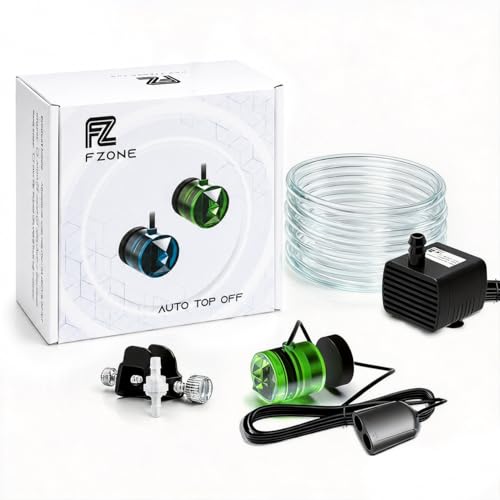 TOP CHOICEBest for dual-sensor reliabilityFZONE ATO System, Auto Top Off with Dual Optical Sensors for AquariumView on Amazon
- 3
 TOP CHOICEBest for nano sumpsAuto Top Off Saltwater Freshwater Aquarium, Anti-Overflow ATO Reef TankView on Amazon
- 4
 Best budget pickAuto Top Off System Saltwater Aquarium, ATO Reef Fresh Tank Anti-OverflowView on Amazon
- 5
 Best for plug-and-play setupsMagTool ATO Aquarium Auto Top Off System with Dual Optical SensorView on Amazon
- 6
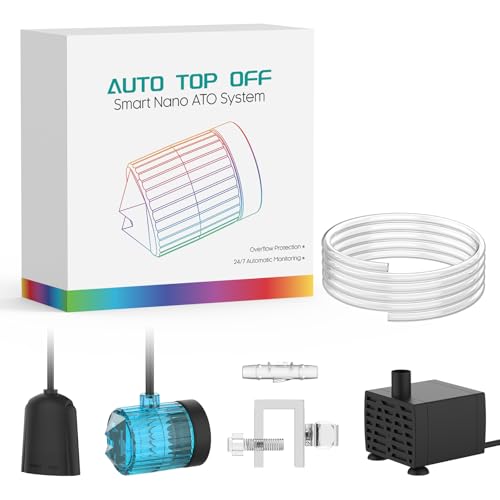 Best for stable salinityATET Auto Top Off System Saltwater Aquarium, ATO for Fresh & Reef TankView on Amazon
Best overall: Useek Auto Top Off System – View on Amazon
Our Top Picks
Before the individual reviews, here is how we weighed each system. We looked at sensing method (float switch versus optical sensor), the presence of a secondary anti-overflow cutoff, probe design, the reservoir and pump package, and how owners describe setup. Compatibility with saltwater and freshwater tanks mattered too, since many hobbyists run both. If you are new to ATO, our article Auto Top Off Kit: A Step-by-Step Setup Guide for Reef Tanks (2026) walks through the install in detail.
Useek Auto Top Off System Saltwater Aquarium, Water ATO for Reef Fresh Tank
Useek Auto Top Off System Saltwater Aquarium, Water ATO for Reef Fresh Tank | Stable Water Levels & Salinity, QST Real-Time Anti-Overflow, 1mm Precision Sensing, Easy Setup, 2-Year Warranty, Blue
Best for: Reef keepers who want stable water level and salinity with an anti-overflow safeguard.
This kit suits hobbyists running a sump-based saltwater system who want a dedicated anti-overflow layer on top of the standard level sensor. It is a sensible starting point for mid-sized reef tanks.
Key specs:
- Designed for saltwater and freshwater aquariums
- Listed with QST real-time anti-overflow protection
- 1 mm precision sensing, as stated in the listing
- Listed 2-year warranty
Pros:
- Anti-overflow feature adds a safety margin
- Precision sensing supports tight level control
- Straightforward setup for a first ATO
Cons:
- Requires careful probe placement to avoid false triggers
- Some owners report needing to fine-tune sensitivity
Bottom line: A strong all-around choice for a standard reef sump, especially if you want a backup overflow layer.
View on AmazonFZONE ATO System, Auto Top Off with Dual Optical Sensors for Aquarium
FZONE ATO System, Auto Top Off with Dual Optical Sensors for Aquarium Green | Dual optical sensor ATO system for reef and freshwater tanks, with precise water level control and stable operation
Best for: Keepers who prefer optical sensing and redundant level detection.
Dual optical sensors give a second point of confirmation, which many hobbyists find reassuring for unattended operation. It works for both reef and freshwater tanks.
Key specs:
- Dual optical sensor design
- Suitable for reef and freshwater tanks
Pros:
- Two sensors reduce the chance of a single point of failure
- Supports precise water level control
- Versatile across tank types
Cons:
- Optical sensors need to be kept clean of salt creep
- Limited technical detail in the listing for some specs
Bottom line: Good for owners who want redundancy and plan to run a mixed or converted tank.
View on AmazonAuto Top Off Saltwater Freshwater Aquarium, Anti-Overflow ATO Reef Tank
Auto Top Off Saltwater Freshwater Aquarium, Anti-Overflow ATO Reef Tank | sealed, mini top off, one piece probe, no flood, nano sump, easy setup, silent, reef safe, 2-year warranty, AI smart
Best for: Nano reef and small sump setups where space and quiet operation matter.
This sealed, compact design targets smaller systems. Its listing emphasizes a mini top-off approach, which keeps water additions small and frequent.
Key specs:
- Sealed design
- Single-piece probe
- Listed as suitable for nano sumps
- Listed 2-year warranty
Pros:
- Compact footprint fits tight cabinets
- Small, frequent top-offs reduce salinity swings
- Listed as quiet in operation
Cons:
- Smaller reservoir capacity limits runtime
- Less suited to large display tanks
Bottom line: A tidy fit for nano and small reef systems that need gentle, frequent water replacement.
View on AmazonAuto Top Off System Saltwater Aquarium, ATO Reef Fresh Tank Anti-Overflow
Auto Top Off System Saltwater Aquarium, ATO Reef Fresh Tank Anti-Overflow | compact probe, sealed sensor, flood prevention, long pump life, strong magnet, auto shutoff, freshwater, 2-year warranty
Best for: Budget-minded hobbyists who still want flood protection.
A budget pick that keeps the core features most keepers look for: a compact probe, a sealed sensor and an auto shutoff. It is practical for starter reef tanks.
Key specs:
- Compact probe with sealed sensor
- Listed auto shutoff and strong magnet mount
- Listed 2-year warranty
Pros:
- Good feature set for the price tier
- Magnetic mount simplifies installation
- Listed to help extend pump life
Cons:
- Fewer advanced controls than premium systems
- Owners sometimes report needing to reposition the probe
Bottom line: A sensible entry point if you want flood protection without stepping up to a higher-end controller.
View on AmazonMagTool ATO Aquarium Auto Top Off System with Dual Optical Sensor
MagTool ATO Aquarium Auto Top Off System with Dual Optical Sensor-Green | Automatic water level control for reef, saltwater and freshwater tanks with dual optical sensors for accurate top-off.
Best for: Keepers who want a straightforward, plug-and-play dual-sensor unit.
The dual optical sensor design makes this a dependable option for reef, saltwater and freshwater tanks. It suits owners who want accurate top-offs without a complicated install.
Key specs:
- Dual optical sensor design
- Suitable for reef, saltwater and freshwater tanks
Pros:
- Dual sensing supports accurate level control
- Works across several tank types
- Simple to set up
Cons:
- Sensor surfaces need periodic cleaning
- Detailed specs are limited in the listing
Bottom line: A solid pick for hobbyists who want dual sensing and a quick install.
View on AmazonATET Auto Top Off System Saltwater Aquarium, ATO for Fresh & Reef Tank
ATET Auto Top Off System Saltwater Aquarium, ATO for Fresh & Reef Tank | Maintain stable salinity & water level, QST Anti-Overflow, Dual Optical Sensor, 1 mm Precision Sensing, Plug & Play, Blue
Best for: Owners focused on keeping salinity and water level steady day to day.
Its listing emphasizes stable salinity and water level, combined with dual optical sensing and anti-overflow protection. It fits well in established reef systems where small swings matter.
Key specs:
- Dual optical sensor
- QST anti-overflow protection
- 1 mm precision sensing, as stated in the listing
- Plug-and-play setup
Pros:
- Anti-overflow plus dual sensing adds layered safety
- Plug-and-play simplifies setup
- Targets stable salinity
Cons:
- Premium features mean a more involved decision than basic units
- Owners should still verify probe placement in their sump
Bottom line: Best for established reef tanks where salinity stability is the top priority.
View on AmazonQuick Comparison
| Product | Best for | Key feature |
|---|---|---|
| Useek Auto Top Off System | Stable level and salinity | QST anti-overflow |
| FZONE ATO System | Redundant sensing | Dual optical sensors |
| Auto Top Off Saltwater Freshwater Aquarium | Nano sumps | Sealed, mini top-off |
| Auto Top Off System Saltwater Aquarium | Budget setups | Auto shutoff and magnet mount |
| MagTool ATO Aquarium Auto Top Off System | Plug-and-play installs | Dual optical sensor |
| ATET Auto Top Off System Saltwater Aquarium | Salinity stability | QST anti-overflow plus dual sensing |
Buying Guide
Sensing Method: Float Switch vs. Optical Sensor
Most units detect water level with either a float switch or an optical sensor. Float switches are mechanical and simple, but they can stick with salt creep. Optical sensors react to the presence or absence of water on a probe surface and have no moving parts. Dual-sensor designs add a second confirmation point, which many owners consider valuable for unattended operation. Clean any sensor surface monthly to avoid false readings.
Good picks for this: FZONE ATO System and MagTool ATO Aquarium Auto Top Off System
Anti-Overflow Protection
Anti-overflow features cut power or stop the pump if the reservoir runs low or the sensor fails. Look for a listed secondary cutoff rather than relying on a single probe. This is the single most important safety feature for an ATO, because a stuck pump can flood a cabinet within hours.
Good picks for this: Useek Auto Top Off System and ATET Auto Top Off System
Tank and Sump Size Fit
Match the unit to your system volume. A nano sump needs a compact probe and a small reservoir, while a large display with a big sump benefits from a larger reservoir that lasts several days between refills. Confirm the probe length fits your sump height before buying.
Good picks for this: Auto Top Off Saltwater Freshwater Aquarium and Auto Top Off System Saltwater Aquarium
Saltwater and Freshwater Compatibility
If you run a reef but also keep freshwater tanks or plan to convert, choose a unit that lists both use cases. Optical and float systems generally work in either environment, but confirm the listing rather than assuming.
Good picks for this: MagTool ATO Aquarium Auto Top Off System and FZONE ATO System
Pump Quality and Flow Rate
The pump determines how fast water returns to the system. Manufacturers typically specify flow rate and head height; check that the pump can lift water from your reservoir to the sump. A pump rated too weakly will run constantly. Some owners report that a cheap pump is the first part to fail, so verify the warranty.
Good picks for this: ATET Auto Top Off System and Useek Auto Top Off System
Ease of Installation
Plug-and-play designs reduce the risk of wiring errors, while more involved kits need a grounded outlet, careful probe placement and calibration. If this is your first ATO, prioritize clear instructions and a short setup time. Our guide Auto Top Off Kit: A Step-by-Step Setup Guide for Reef Tanks (2026) covers the process step by step.
Good picks for this: MagTool ATO Aquarium Auto Top Off System and Auto Top Off System Saltwater Aquarium
Warranty and Support
Several listings in this group mention a 2-year warranty. Warranty length matters more for pumps and electronics, which wear out over time. Keep your order record and read the terms before installing.
Good picks for this: Auto Top Off Saltwater Freshwater Aquarium and Useek Auto Top Off System
FAQ
Is an auto top off reef system safe to leave running unattended?
Units with anti-overflow protection and a secondary sensor are designed for unattended use, but no system removes the need for periodic checks. Inspect the reservoir, probe and pump at least weekly and confirm the cutoff works by briefly testing it.
Should I use RO/DI water in an auto top off?
Yes. Evaporation removes only pure water, so topping off with RO/DI water keeps salinity steady. Topping off with salt water changes salinity, which can stress corals over time.
How often should I clean the sensors?
Clean optical or float sensors monthly, or sooner if you see salt creep. Use fresh water and a soft cloth, and avoid abrasives that can scratch the sensing surface.
Can one ATO serve both a reef and a freshwater tank?
Not typically. Each system should have its own reservoir and sensor to avoid cross-contamination and salinity errors. Dual-compatible units can run either environment, but keep the reservoirs separate.
Why does my pump run constantly?
Constant running usually means the probe is not triggering the off state, the sensor is coated in salt, or the reservoir is empty. Clean the sensor, check the probe position and confirm the reservoir has water.
Do I need a backup overflow with an ATO?
Yes. A physical overflow or drain path is a recommended safeguard in any sump setup, regardless of the ATO. Treat the ATO as a convenience and the overflow as the fail-safe.
Conclusion
For most reef keepers, the best auto top off reef system is the one that matches the tank and the level of safety you want. The Useek and ATET units emphasize anti-overflow protection and stable level control, making them good choices for established reefs. The FZONE and MagTool units offer dual optical sensing for redundancy. The compact sealed unit suits nano systems, and the budget pick covers starter tanks without dropping essential flood protection. Measure your sump, plan your reservoir size and verify the warranty before buying.
Sources
- Water conservation and efficiency guidance that helps you understand evaporation and water use at home (epa.gov)
- Electrical and workplace safety principles that apply when wiring pumps and outlets near water (osha.gov)
- Standards and certification information for water treatment equipment, including RO/DI systems used to supply top-off water (nsf.org)
Related reading
- Top 3 Neptune Auto Top Off Systems Compared for Reef Tanks
- Osmolator 3 Auto Top Off: Setup, Calibration and Fixes for Reef Tanks
- Magtool Auto Top Off: Setup, Calibration and Troubleshooting for Reef Tanks
- Icecap Auto Top Off: 5 Best Systems for Reef Tanks (2026)
- Gravity Auto Top Off Systems: 5 Best Picks for Reef Tanks (2026)
About Audrey Hayes
Audrey Hayes is part of our editorial team and reviews and edits our reef & saltwater aquariums guides, checking product details against manufacturer specifications and owner feedback.
About the author
Audrey Hayes writes reviews and buying guides for My Reef Aquarium.