Cloudy Water in Reef Tank? 7 Best Clarifiers Compared (2026)
Cloudy water in reef tank? Compare 7 clarifiers by use case, key features and pros and cons, with tips for choosing one safe for corals and invertebrates.
 By Caleb Morgan
Updated November 20, 2026
 By Caleb Morgan
Updated November 2026
Cloudy water in a reef tank is frustrating, and it usually points to a bacterial bloom, a silicate or detritus problem, or a tank that is still cycling. This list compares seven clarifiers sold on Amazon US, covering freshwater and saltwater products. We selected them using manufacturer specifications, brand reputation and common owner feedback patterns, with a focus on which products list saltwater and reef compatibility. Because a clarifier only hides symptoms, each pick below is paired with notes on the underlying cause so you can fix the tank rather than just clear it for a day.
Our top picks at a glance
- 1TOP CHOICEBest overallFritz Aquatics Clarifier Fresh & Saltwater – 16ozView on Amazon
- 2
 TOP CHOICEBest for mixed freshwater and saltwater tanksMICROBE-LIFT Special Blend Aquarium Water Care TreatmentView on Amazon
- 3
 TOP CHOICEBest for small saltwater systemsAquaDoc Aquarium Water Clarifier, 16 fl ozView on Amazon
- 4
 Best budget pickTetra Water Clarifier Treatment For Aquariums, 8.45 ozView on Amazon
- 5
 Best for quick freshwater clearingAPI ACCU-CLEAR Freshwater Aquarium Water Clarifier 8-Ounce BottleView on Amazon
- 6
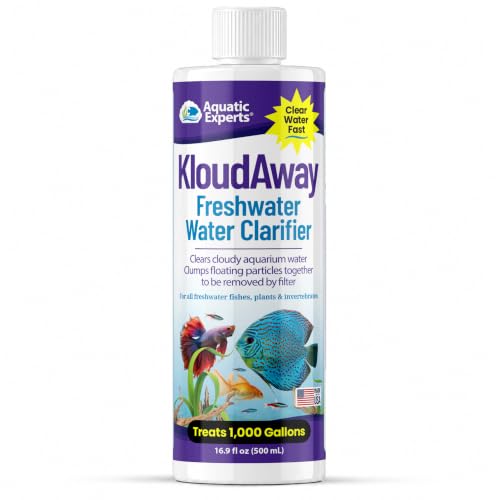 Best for a compact, easy-dose bottleKloudAway Freshwater Aquarium Water Clarifier, 500 mlView on Amazon
- 7
 Best for water conditioning alongside clarifyingAPI TAP WATER CONDITIONER Aquarium Water Conditioner 16-Ounce BottleView on Amazon
Quick note before you buy: Clarifiers work by causing fine particles to clump so the filter or skimmer can remove them. They do not remove dissolved nutrients, and some are not safe for every reef setup. Read the label and confirm saltwater or reef compatibility before dosing a tank with corals.
Our Top Picks
Quick Comparison
| Product | Best for | Key feature |
|---|---|---|
| Fritz Aquatics Clarifier Fresh & Saltwater | Reef and saltwater tanks | Labeled for fresh and saltwater, phosphate-free |
| MICROBE-LIFT Special Blend | Mixed fresh and saltwater tanks | Clarifier plus odor and algae support |
| AquaDoc Aquarium Water Clarifier | Small saltwater systems | Fast-acting, phosphate-free, reef-invertebrate labeling |
| Tetra Water Clarifier Treatment | Budget freshwater use | Small dose treats 10 gallons |
| API ACCU-CLEAR | Quick freshwater clearing | Widely available, simple dosing |
| KloudAway Water Clarifier | Easy, measured dosing | Compact bottle, freshwater and aquarium use |
| API TAP WATER CONDITIONER | Water prep for new water | Conditions tap water before it enters the tank |
Fritz Aquatics Clarifier Fresh & Saltwater – 16oz
Fritz Aquatics Clarifier, Aquarium Water Clarifier Fresh & Saltwater – 16oz | Aquarium Water Clarifier for Cloudy, Hazy & Discolored Water, Phosphate-Free, Freshwater, Saltwater & Reef Safe, 16 oz
Best for: Reef and saltwater tanks that need a clarifier labeled for marine use
This is a good starting point for hobbyists whose main concern is hazy saltwater that is not yet a full bacterial bloom. Its listing emphasizes that it is safe for fresh and saltwater, phosphate-free and reef safe, which matters when you are treating a display with coral.
Key specs
- 16 oz bottle
- Labeled for freshwater and saltwater aquariums
- Labeled phosphate-free and reef safe
Pros
- Explicit saltwater and reef-safe labeling
- Phosphate-free formula
- Targets cloudy, hazy and discolored water
Cons
- Does not address the root cause of a bloom
- Dosing should be done carefully in tanks with sensitive inverts
Bottom line: A strong first choice for reef keepers who want a clarifier with clear marine labeling.
View on AmazonMICROBE-LIFT Special Blend Aquarium Water Care Treatment
MICROBE-LIFT Special Blend Aquarium Water Care Treatment, Cleaner & Clarifier for Fresh and Saltwater Fish Tanks, Reduces Maintenance & Helps with Aquarium Algae Control and Odor, 4 Ounces (SBH04)
Best for: Mixed fresh and saltwater tanks that also need odor and algae support
This product is marketed as a multi-purpose water care treatment rather than a pure clarifier. It suits keepers who run both freshwater and saltwater systems and want one bottle for several small problems.
Key specs
- 4 oz bottle (SBH04)
- Labeled for fresh and saltwater fish tanks
Pros
- Covers clarity, odor and algae in one product
- Works in both freshwater and saltwater
- Small bottle lasts a while at label dosing
Cons
- Multi-purpose formulas can be harder to dose precisely
- Reef keepers should confirm compatibility with their specific livestock
Bottom line: Best for hobbyists who want one treatment across mixed systems, not for those seeking a single-purpose reef clarifier.
View on AmazonAquaDoc Aquarium Water Clarifier, 16 fl oz
AquaDoc Aquarium Water Clarifier for Cloudy Fish Tank Water, 16 fl oz | Fast Acting Clarifier for Freshwater and Saltwater Aquariums – Phosphate Free, Safe for Fish, Live Plants and Invertebrates
Best for: Small saltwater systems that need fast, phosphate-free clearing
Smaller reef tanks and nano setups often need a clarifier that dose-corrects easily. The listing describes it as fast acting and safe for fish, live plants and invertebrates, which makes it a practical option for mixed-stock tanks.
Key specs
- 16 fl oz bottle
- Labeled for freshwater and saltwater aquariums
- Labeled phosphate-free
Pros
- Labeled safe for invertebrates
- Phosphate-free
- Suitable for smaller volumes
Cons
- Dose calculations are needed for nano tanks
- Limited independent data on long-term effects
Bottom line: A sensible pick for small saltwater tanks with invertebrates where careful dosing is possible.
View on AmazonTetra Water Clarifier Treatment For Aquariums, 8.45 oz
Tetra Water Clarifier Treatment For Aquariums, 8.45 oz | Quickly Clears Cloudy Or Hazy Aquarium Water, 1 Teaspoon Treats 10 Gallons Of Water, For Use In Freshwater Fish Tanks
Best for: Budget freshwater clearing
This is a widely stocked freshwater clarifier, and it is often chosen by owners running community tanks. Its listing states one teaspoon treats about 10 gallons, which keeps the dosing simple.
Key specs
- 8.45 oz bottle
- One teaspoon per 10 gallons (per listing)
- Labeled for freshwater fish tanks
Pros
- Simple, easy-to-measure dose
- Budget-friendly option
- Well-known brand
Cons
- Labeled for freshwater, so it is not a reef pick
- Does not solve bacterial blooms on its own
Bottom line: Good for freshwater tanks; reef keepers should look elsewhere.
View on AmazonAPI ACCU-CLEAR Freshwater Aquarium Water Clarifier 8-Ounce Bottle
API ACCU-CLEAR Freshwater Aquarium Water Clarifier 8-Ounce Bottle
Best for: Quick clearing in freshwater tanks
API is a long-established aquarium brand, and ACCU-CLEAR is one of its most recognized clarifiers. It is aimed at freshwater aquariums, so it is best reserved for non-marine systems.
Key specs
- 8 oz bottle
- Labeled for freshwater aquariums
Pros
- Trusted brand with broad availability
- Straightforward dosing
- Works quickly on haze in freshwater
Cons
- Freshwater-only labeling
- Not a substitute for filtration maintenance
Bottom line: A dependable freshwater choice; not recommended for reef tanks.
View on AmazonKloudAway Freshwater Aquarium Water Clarifier, 500 ml
KloudAway Freshwater Aquarium Water Clarifier – Clears Cloudy Water, Water Clarifier for Fish Tank, Made in USA, Aquatic Experts, (500 ml)
Best for: Easy, measured dosing in freshwater tanks
This clarifier is aimed at owners who want a compact bottle with clear dosing instructions. The listing mentions it is made in the USA and is intended for clearing cloudy water.
Key specs
- 500 ml bottle
- Labeled for freshwater aquariums
- Made in USA (per listing)
Pros
- Compact and easy to store
- Clear dosing guidance
- Targets cloudy aquarium water
Cons
- Freshwater-labeled, not for reef use
- Less brand history than API or Tetra
Bottom line: Suited to freshwater hobbyists who want a neat, measured bottle.
View on AmazonAPI TAP WATER CONDITIONER Aquarium Water Conditioner 16-Ounce Bottle
API TAP WATER CONDITIONER Aquarium Water Conditioner 16-Ounce Bottle
Best for: Conditioning new water before it enters the tank
This is a water conditioner, not a clarifier. It treats chlorine and chloramine in tap water, which is useful when preparing water for water changes. It will not clear an existing cloudy tank, so treat it as a preventive step.
Key specs
- 16 oz bottle
- Designed for freshwater tap water conditioning
Pros
- Prepares new water for water changes
- Trusted brand
- Easy to use
Cons
- Not a clarifier; does not clear haze
- Freshwater-focused labeling
Bottom line: A helpful supporting product for water changes, not a clarity fix.
View on AmazonBuying Guide
Identify the cause before you dose
Cloudy water in a reef tank usually comes from one of four sources: a bacterial bloom in a new or recently disturbed system, silicates from new sand or rock, fine detritus, or a dissolved-organic bloom after overfeeding. A clarifier is a finishing tool. Test ammonia, nitrite, nitrate and phosphate with a reliable kit first, then decide whether the problem is biological or particulate. A bacterial bloom usually looks milky and clears on its own within days if nutrients are controlled.
Good picks for this: Fritz Aquatics Clarifier Fresh & Saltwater, AquaDoc Aquarium Water Clarifier
Check saltwater and reef compatibility on the label
Many clarifiers are labeled for freshwater only. Reef keepers should look for explicit saltwater or marine labeling, along with a statement about invertebrates or reef safety. Read the full label rather than relying on the product name, and confirm the manufacturer’s dosing guidance for marine tanks.
Good picks for this: Fritz Aquatics Clarifier Fresh & Saltwater, MICROBE-LIFT Special Blend
Phosphate content and nutrient impact
Some clarifiers are described as phosphate-free, which matters in reef systems where phosphate can fuel nuisance algae. Phosphate-free labeling is a useful filter, but it does not guarantee zero nutrient effect. Test phosphate before and after dosing, and remember that clarifiers do not remove dissolved nutrients by themselves.
Good picks for this: AquaDoc Aquarium Water Clarifier, Fritz Aquatics Clarifier Fresh & Saltwater
Dosing accuracy for your tank volume
Dosing is where most mistakes happen. Calculate your actual system volume, including sump and rock displacement, rather than just the display glass. Start at the low end of the label range and observe for 24 to 48 hours before adding more. Measured-cap bottles reduce error, especially on nano systems.
Good picks for this: KloudAway Water Clarifier, Tetra Water Clarifier Treatment
Compatibility with your filtration
A clarifier works by clumping particles so mechanical filtration can catch them. If your skimmer, filter sock or media bed is already dirty, the clumped material may simply stay in the tank. Clean or replace filter socks and check your protein skimmer before and after dosing. Expect a short cloudy period as particles are removed.
Good picks for this: API ACCU-CLEAR, MICROBE-LIFT Special Blend
Tank size and system type
Nano reef tanks and large display systems have very different dosing needs. A bottle that treats thousands of gallons may be too strong for a small tank, and a small bottle may be impractical for a large sump system. Match the product’s stated treatment volume to your tank, and consider whether you need a freshwater-only product for a mixed system.
Good picks for this: AquaDoc Aquarium Water Clarifier, Tetra Water Clarifier Treatment
Supporting water quality beyond clarifiers
Long-term clarity depends on stable water. Regular water changes, correct salinity, appropriate feeding and a well-maintained filtration system do more than any clarifier. Conditioning new water before use also helps prevent problems. Pair any clarifier with a sound maintenance routine rather than relying on it alone.
Good picks for this: API TAP WATER CONDITIONER, MICROBE-LIFT Special Blend
FAQ
Why is my reef tank water cloudy after setup?
New reef tanks often develop a bacterial bloom during the first few weeks as the nitrogen cycle establishes. Fine silicates from new sand or live rock can also cause haze. Test water parameters and avoid overfeeding while the tank settles. Most blooms clear without intervention.
Can a clarifier harm corals or invertebrates?
Some clarifiers are labeled reef safe, but any chemical can affect sensitive livestock at incorrect doses. Read the label, dose conservatively and watch your animals for 24 to 48 hours. If you have concerns about your specific livestock, consult an experienced reef keeper or a marine veterinarian.
Will a protein skimmer clear cloudy water?
A properly tuned skimmer removes dissolved organics and some fine particulates, which can help clarity. It is not a complete fix on its own and may need a clarifier, filter sock cleaning or a water change to restore clear water. See the related article on whether a skimmer clears cloudy water for details.
Is cloudy water dangerous to fish and corals?
Haze itself is mainly an aesthetic concern, but it often signals an underlying imbalance such as high nutrients or a bacterial bloom that can stress livestock. Test your water, address the cause and monitor your animals. Consult a qualified aquatic professional if livestock shows signs of distress.
How long does a clarifier take to work?
Many clarifiers begin clumping particles within a few hours, but full clearing can take 24 to 72 hours depending on the bloom and filtration. Do not redose early, as overdosing can cause problems. Keep your skimmer and filter running during this period.
Should I do a water change instead of using a clarifier?
A partial water change often helps more than a clarifier, especially if nutrients are high. Changing 10 to 20 percent of the water, using properly conditioned saltwater of matching salinity and temperature, reduces dissolved nutrients and supports recovery. Use a clarifier as a supplement, not a replacement, for maintenance.
Can I use freshwater clarifiers in a saltwater tank?
Only if the label explicitly states it is safe for saltwater and marine livestock. Many freshwater clarifiers are not formulated for marine systems. When in doubt, choose a product labeled for both fresh and saltwater, or consult the manufacturer.
Conclusion
For most reef keepers facing cloudy water, the Fritz Aquatics Clarifier Fresh & Saltwater is the most straightforward pick because its labeling addresses marine use directly. The AquaDoc Aquarium Water Clarifier suits small saltwater systems that need careful dosing, while the MICROBE-LIFT Special Blend fits mixed fresh and saltwater households. Freshwater-labeled options such as API ACCU-CLEAR, Tetra and KloudAway are better kept for non-marine tanks. Whichever you choose, identify the cause first, test your parameters and combine any clarifier with a steady maintenance routine.
Sources
- Guidance on water quality parameters and testing practices relevant to aquatic systems (epa.gov)
- Information on water chemistry, nutrients and turbidity in natural and managed waters (usgs.gov)
- University-backed extension resources on aquarium and water-quality management (extension.org)
Related reading
- Water Filter Media Replacement: When and How to Swap It in a Reef Tank
- Top 5 Reef Tank Test Kit Options for Accurate Water Checks (2026)
- Reef Tank Without Protein Skimmer: 6 Steps That Keep Water Clean
- Protein Skimmer Water Level: How to Set It Right for a Reef Tank
About Caleb Morgan
Caleb Morgan is part of our editorial team and reviews and edits our reef & saltwater aquariums guides, checking product details against manufacturer specifications and owner feedback.
About the author
Caleb Morgan writes reviews and buying guides for My Reef Aquarium.