5 Best GFOs for Reef Tank: Phosphate Removers Compared (2026)
Looking for the best GFO for reef tank use? Compare five granular ferric oxide phosphate removers by fit, media capacity and owner feedback before you buy.
 By Caleb Morgan
Updated November 21, 2026
 By Caleb Morgan
Updated November 2026
Phosphate is one of the most common nutrient problems in a reef tank, and a GFO for reef tank setup is one of the most widely used ways to pull it out of the water. This list compares five granular ferric oxide products sold on Amazon US. The selection method is research-based: we looked at manufacturer specifications, brand reputation in the reef hobby, and patterns that owners commonly report about media capacity, dust, flow behavior and how easily the media can be rinsed and replaced.
Our top picks at a glance
- 1TOP CHOICEBest overallTL Reefs GFO Phosphate Remover, Granular Ferric Oxide, for Saltwater Aquariums (1lb, 454g)View on Amazon
- 2
 TOP CHOICEBest for high-capacity dosingGFO HC – High Capacity Bayoxide E33HC Phosphate Remover – for Fish TanView on Amazon
- 3
 TOP CHOICEBest for larger systemsGranular Ferric Oxide (GFO), Bayoxide E33-2.25 lbs – 1,021 g – SaltwatView on Amazon
- 4
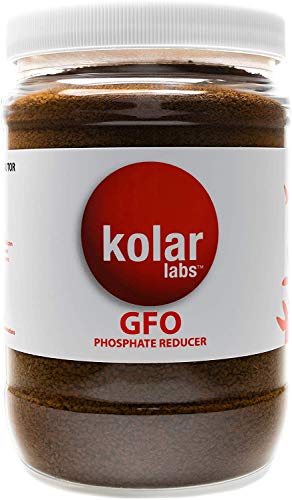 Best budget pickKolar Labs GFO Bayoxide E33 Phosphate Remover – for Freshwater and SalView on Amazon
- 5
 Best for coral-safe sensitive tanksMagTool GFO Phosphate Remover, Granular Ferric Oxide for Reef Tanks |View on Amazon
Our Top Picks
Quick Comparison
| Product | Best for | Key feature |
|---|---|---|
| TL Reefs GFO Phosphate Remover | Most reef tanks | Granular ferric oxide in a 1 lb (454 g) bag |
| Kolar Labs GFO Bayoxide E33 Phosphate Remover | Budget-conscious reefers | Bayoxide E33 media, 454 g, usable in fresh and saltwater |
| Granular Ferric Oxide Bayoxide E33-2.25 lbs | Larger systems and frequent dosing | About 1,021 g of media per package |
| MagTool GFO Phosphate Remover | Sensitive or coral-heavy tanks | Synthetic GFO with high adsorption capacity, marketed as coral-safe |
| GFO HC High Capacity Bayoxide E33HC | Heavy bioload and high phosphate | High-capacity E33HC formulation in a 350 g jar |
TL Reefs GFO Phosphate Remover, Granular Ferric Oxide, for Saltwater Aquariums (1lb, 454g)
TL Reefs GFO Phosphate Remover, Granular Ferric Oxide, for Saltwater Aquariums (1lb, 454g)
Best for: Most reef tanks that need a reliable, general-purpose phosphate remover.
This is a good starting point for a mixed reef in the 30 to 120 gallon range, where phosphate spikes come mostly from feeding and occasional overdosing. It suits hobbyists who want a single, clearly labeled saltwater media without extra complexity.
Key specs
- Granular ferric oxide media
- Package size: 1 lb (454 g)
- Labeled for saltwater aquariums
Pros
- Clearly labeled for saltwater use
- Easy to portion into a reactor or media bag
- Good size for a single-tank starter dose
Cons
- A single bag may run short for larger sumps with heavy feeding
- Owners often recommend rinsing before first use to reduce dust
Bottom line: A sensible first pick for most reef keepers who want a straightforward GFO without over-specifying.
View on AmazonKolar Labs GFO Bayoxide E33 Phosphate Remover – for Freshwater and Saltwater Aquariums, Reef Tanks, Promotes Coral Health (454g)
Kolar Labs GFO Bayoxide E33 Phosphate Remover – for Freshwater and Saltwater Aquariums, Reef Tanks, Promotes Coral Health (454g)
Best for: Budget-conscious reefers who want a well-known Bayoxide E33 media.
Kolar Labs is one of the names most often associated with Bayoxide E33 in the aquarium trade. This listing suits smaller reef and fish-only tanks where phosphate control is important but the bioload is moderate.
Key specs
- Bayoxide E33 granular ferric oxide
- Package size: 454 g
- Labeled for both freshwater and saltwater aquariums
Pros
- Well-established media type with wide owner familiarity
- Labeled for reef use, not only freshwater
- Straightforward dosing in a media reactor
Cons
- Standard capacity may be exhausted sooner in heavily fed tanks
- Dust is commonly reported, so pre-rinsing is advised
Bottom line: A good choice for smaller reefs and anyone comparing well-known Bayoxide E33 options on a tighter budget.
View on AmazonGranular Ferric Oxide (GFO), Bayoxide E33-2.25 lbs – 1,021 g – Saltwater & Freshwater Aquarium Filtration Media for Phosphate Removal
Granular Ferric Oxide (GFO), Bayoxide E33-2.25 lbs – 1,021 g – Saltwater & Freshwater Aquarium Filtration Media for Phosphate Removal
Best for: Larger systems and frequent media changes.
The 2.25 lb (about 1,021 g) package gives more media per purchase, which helps in sumps or reactors serving large or heavily stocked tanks. It is also practical for hobbyists who run GFO continuously and replace it on a regular schedule.
Key specs
- Granular ferric oxide, Bayoxide E33 type
- Package size: about 1,021 g (2.25 lbs)
- Listed for saltwater and freshwater filtration
Pros
- Larger package reduces how often you reorder
- Suits reactor or sock-style dosing in bigger sumps
- Clear phosphate-removal purpose stated in the listing
Cons
- Higher upfront quantity may be more than a nano tank needs
- Requires storage in a sealed container to keep it dry
Bottom line: Best for larger reefs and anyone who prefers buying media in bulk for regular replacement.
View on AmazonMagTool GFO Phosphate Remover, Granular Ferric Oxide for Reef Tanks | Synthetic GFO Media, High Adsorption Capacity, Helps Reduce PO4 & Silicates in Saltwater Aquariums, Safe for Coral
MagTool GFO Phosphate Remover, Granular Ferric Oxide for Reef Tanks | Synthetic GFO Media, High Adsorption Capacity, Helps Reduce PO4 & Silicates in Saltwater Aquariums, Safe for Coral
Best for: Sensitive or coral-heavy tanks where the keeper wants a media marketed as coral-safe.
The listing emphasizes synthetic GFO with high adsorption capacity and mentions reducing both phosphate and silicates. It fits reefers with SPS or other sensitive corals who want to be deliberate about media choice.
Key specs
- Synthetic granular ferric oxide
- Listed to reduce PO4 and silicates
- Marketed as safe for coral in saltwater aquariums
Pros
- Stated focus on coral safety in the listing
- Mentions silicate reduction in addition to phosphate
- Designed specifically for reef tank use
Cons
- Less long-running owner history than some older Bayoxide products
- Capacity claims should be verified against your own phosphate readings
Bottom line: A reasonable pick for coral-focused reefs that want media positioned specifically for saltwater use.
View on AmazonGFO HC – High Capacity Bayoxide E33HC Phosphate Remover – for Fish Tanks, Aquariums & Ponds, 350g (16oz Jar, 0.77lb), By Kolar Labs
GFO HC – High Capacity Bayoxide E33HC Phosphate Remover – for Fish Tanks, Aquariums & Ponds, 350g (16oz Jar, 0.77lb), By Kolar Labs
Best for: Heavy bioload tanks and high phosphate situations.
The E33HC formulation is positioned as a higher-capacity version of standard Bayoxide E33. It suits tanks with heavy feeding, large fish loads, or phosphate readings that stay high despite regular water changes.
Key specs
- Bayoxide E33HC high-capacity granular ferric oxide
- Package size: 350 g (16 oz jar)
- Listed for fish tanks, aquariums and ponds
Pros
- High-capacity formulation for demanding tanks
- Jar packaging keeps media sealed and dry
- Well-known manufacturer in the media category
Cons
- Smaller quantity than the 2.25 lb option for the same money of attention
- Listing is broader in scope, so confirm reef suitability for your use
Bottom line: The right pick when phosphate stays stubbornly high and you want a stronger media than standard E33.
View on AmazonBuying Guide
Media type and formulation
Most GFO for reef tank products are granular ferric oxide designed to bind phosphate. Bayoxide E33 is the most widely recognized commercial type, while some brands sell synthetic variants and high-capacity versions such as E33HC. Check the label for the exact formulation and whether it is intended for saltwater use.
Good picks for this: Kolar Labs GFO Bayoxide E33 Phosphate Remover, GFO HC High Capacity Bayoxide E33HC
Package size and dosing needs
Match the package to your tank and reactor. A common rough guide from hobby literature is to start with a modest amount per reactor and adjust by phosphate readings, rather than dumping in a fixed quantity. Larger packages suit bigger sumps and continuous use; smaller jars suit nano tanks or periodic dosing.
Good picks for this: Granular Ferric Oxide Bayoxide E33-2.25 lbs, TL Reefs GFO Phosphate Remover
Dust and pre-rinsing
Granular media often releases fine dust. Owners commonly rinse media under running water, sometimes in a fine-mesh bag, until the runoff runs mostly clear, before placing it in the reactor. This reduces cloudiness and protects the sump from fine particles.
Good picks for this: Kolar Labs GFO Bayoxide E33 Phosphate Remover, MagTool GFO Phosphate Remover
Reactor compatibility and flow
GFO works best when water flows through the media rather than sitting still. A media reactor or a mesh bag in the sump with enough flow to keep the granules moving but not blowing them out is the usual setup. Make sure the reactor or bag size matches the volume of media you buy.
Good picks for this: TL Reefs GFO Phosphate Remover, MagTool GFO Phosphate Remover
Coral sensitivity and water chemistry
Some reefers worry about GFO affecting water chemistry. Manufacturers generally describe their media as safe for saltwater use, but monitor alkalinity, pH and phosphate after starting or changing media. If a sensitive coral reacts, pause and retest before continuing. For concerns about your specific livestock, consult an experienced reef professional or aquarium veterinarian.
Good picks for this: MagTool GFO Phosphate Remover, TL Reefs GFO Phosphate Remover
Capacity and replacement schedule
Media does not last forever. Phosphate readings that start creeping back up, or media that has turned fully colored and stopped adsorbing, are common signs it needs replacing. Owners often track phosphate with a test kit and replace media on a schedule guided by those results rather than a fixed calendar date.
Good picks for this: GFO HC High Capacity Bayoxide E33HC, Granular Ferric Oxide Bayoxide E33-2.25 lbs
Storage and packaging
Dry, sealed storage protects media from moisture and contamination. Jar packaging and resealable bags are practical for keeping unused media in good condition between uses.
Good picks for this: GFO HC High Capacity Bayoxide E33HC, Kolar Labs GFO Bayoxide E33 Phosphate Remover
FAQ
What does GFO do in a reef tank?
GFO, or granular ferric oxide, binds dissolved phosphate in the water as it passes through the media. Lower phosphate can help limit nuisance algae and support healthier coral growth, though phosphate should be managed alongside feeding and water changes.
How do I know when to replace GFO?
Track phosphate with a reliable test kit. When readings climb back up despite normal feeding and maintenance, or the media has visibly lost effectiveness, it is time to replace it. Many owners tie replacement to test results rather than a fixed date.
Should I rinse GFO before using it?
Many owners recommend rinsing granular media until the runoff is mostly clear. This reduces dust and cloudiness in the tank. Follow any instructions on the specific product label.
Can GFO remove silicates too?
Some GFO products are marketed as reducing both phosphate and silicates. Effects vary by product and water conditions, so confirm with your own test results rather than relying solely on listing claims.
Do I need a reactor to use GFO?
A reactor or a mesh bag in the sump is the usual approach. Water needs to flow through the media for it to work well. Placing loose media directly in the tank is generally not recommended because it can spread dust and is harder to control.
Is GFO safe for corals?
Manufacturers generally describe their saltwater-labeled GFO as safe for corals when used as directed. Monitor water parameters after starting or changing media, and consult an experienced reef professional if sensitive livestock shows stress.
Conclusion
For most reef keepers, the TL Reefs GFO Phosphate Remover is a sensible general-purpose starting point, and the Kolar Labs Bayoxide E33 option is a good choice for budget-minded smaller reefs. Larger systems that use GFO continuously will likely prefer the 2.25 lb Bayoxide E33 package, while heavy phosphate loads may call for the high-capacity E33HC jar. Coral-focused hobbyists who want media positioned specifically for saltwater may consider the MagTool option. Match the product to your tank size, phosphate readings and how often you plan to replace media.
Sources
- General guidance on nutrient pollution and phosphorus as a water-quality parameter (epa.gov)
- Background on phosphorus chemistry and iron-based sorption in natural and engineered water systems (usgs.gov)
- Standards and certification information for water treatment media and filtration products (nsf.org)
Related reading
- What Is a Protein Skimmer in a Fish Tank? How It Works for Reef Tanks
- What Is a Protein Skimmer Used For in a Reef Tank? Uses and Benefits
- What Is a Protein Skimmer Aquarium? How It Works and Why Reef Tanks Use One
- Wave Maker Reef Tank: How to Set Up Flow for a Healthy Reef (2026)
- Wave Maker Placement in Aquarium: A Step-by-Step Guide for Reef Tanks
- Wave Maker Aquarium 100cm: How to Pick, Place and Tune Flow for a Reef Tank
About Caleb Morgan
Caleb Morgan is part of our editorial team and reviews and edits our reef & saltwater aquariums guides, checking product details against manufacturer specifications and owner feedback.
About the author
Caleb Morgan writes reviews and buying guides for My Reef Aquarium.