Phosphates in Reef Tank: 4 Best Removal Picks for 2026
Comparing four phosphate removers for reef tanks, including GFO media, liquid phosphate removers, and a test kit to check phosphates in reef tank water.
 By Caleb Morgan
Updated November 21, 2026
 By Caleb Morgan
Updated November 2026
If you keep a reef, phosphates in reef tank water are one of the first numbers worth watching. Phosphate feeds nuisance algae, can slow coral growth and color, and tends to creep up quietly from fish food, tap-water impurities, and decaying matter. This guide covers the products that most reef keepers reach for to measure and reduce it. The selection criteria were product type, manufacturer specifications, brand reputation in the reef hobby, and the patterns owners commonly report, with a focus on how each option fits a particular need.
Our top picks at a glance
- 1TOP CHOICEBest overallBrightwell Aquatics Phosphāt-E Liquid Phosphate Remover, 125mlView on Amazon
- 2
 Best for dosing-based controlBrightwell Aquatics NēoPhos Phosphate Reef Supplement, 250mlView on Amazon
- 3
 Best for accurate measurementSALIFERT Phosphate (PO4) Aquarium Water Test Kit – Fresh & Marine Fish TanksView on Amazon
- 4
 Best for media-based removalTL Reefs GFO Phosphate Remover, Granular Ferric Oxide, 1lb (454g)View on Amazon
Our Top Picks
| Product | Best for | Key feature |
|---|---|---|
| Brightwell Aquatics Phosphāt-E Liquid Phosphate Remover | Quick, all-round reduction | Liquid remover for direct dosing |
| Brightwell Aquatics NēoPhos Phosphate Reef Supplement | Ongoing dosing-based control | Supplement-style phosphate reduction |
| SALIFERT Phosphate (PO4) Aquarium Water Test Kit | Knowing your real phosphate level | Test kit for fresh and marine tanks |
| TL Reefs GFO Phosphate Remover | Media-based removal in a filter or reactor | Granular ferric oxide media, 1lb |
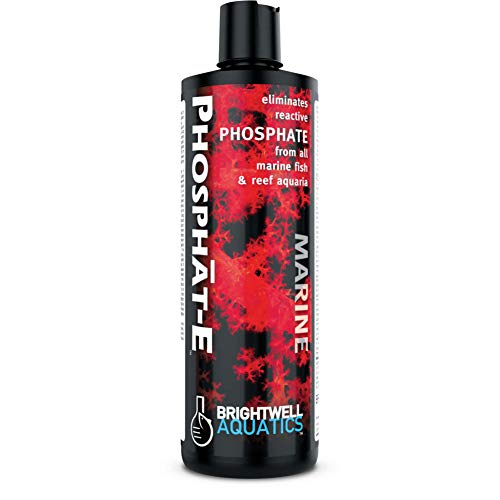
Brightwell Aquatics Phosphāt-E Liquid Phosphate Remover, 125ml
Brightwell Aquatics Phosphāt-E Liquid Phosphate Remover, 125ml
Best for: Quick, all-round phosphate reduction in a reef tank.
This is a good fit for reef keepers who want a direct, liquid-form remover they can dose in measured amounts and then monitor with a test kit. It suits tanks where phosphate has spiked and needs bringing down without adding a media reactor.
Key specs:
- Liquid phosphate remover
- 125ml bottle
Pros:
- Simple to dose and easy to fit into a routine
- Works without extra equipment
- Useful for correcting short-term spikes
Cons:
- Requires regular testing to avoid overdosing
- Does not replace the underlying cause of phosphate input
Bottom line: A sensible first choice for hobbyists who want a straightforward liquid option and are willing to test often.
View on AmazonBrightwell Aquatics NēoPhos Phosphate Reef Supplement, 250ml
Brightwell Aquatics NēoPhos Phosphate Reef Supplement, 250ml
Best for: Ongoing, dosing-based phosphate control.
This suits reef keepers who prefer a supplement-style approach to phosphate control and want a larger bottle for consistent use over time. It is a reasonable pick for tanks with steady, moderate phosphate input.
Key specs:
- Reef supplement format
- 250ml bottle
Pros:
- Larger volume for longer-term use
- Fits a routine dosing schedule
- Pairs well with regular testing
Cons:
- Dosing has to be matched to tank volume and test results
- Less immediate than a media-based reactor for heavy loads
Bottom line: Best for reef keepers comfortable with a dosing plan who want steady, ongoing control.
View on AmazonSALIFERT Phosphate (PO4) Aquarium Water Test Kit – Fresh & Marine Fish Tanks
SALIFERT PHOSPHATE (PO4) AQUARIUM WATER TEST KIT – FRESH & MARINE FISH TANKS
Best for: Knowing your actual phosphate level before and after any correction.
Every phosphate decision starts with a reliable reading. This test kit is aimed at reef keepers who want to check phosphate in reef tank water rather than guess, and who want to confirm that a remover is doing its job.
Key specs:
- Phosphate (PO4) test for fresh and marine aquariums
Pros:
- Gives a measured reading to guide dosing or media decisions
- Useful for tracking trends over weeks
- Applies to both fresh and marine systems
Cons:
- Test results are only as good as careful, consistent technique
- Does not reduce phosphate on its own
Bottom line: A must-have companion for any phosphate plan, whichever removal method you choose.
View on AmazonTL Reefs GFO Phosphate Remover, Granular Ferric Oxide, 1lb (454g)
TL Reefs GFO Phosphate Remover, Granular Ferric Oxide, for Saltwater Aquariums (1lb, 454g)
Best for: Media-based phosphate removal in a filter or reactor.
GFO is a granular media that binds phosphate as water passes through it. It suits reef keepers running a sump or reactor who want a continuous, filter-based approach rather than repeated dosing.
Key specs:
- Granular ferric oxide (GFO) media
- 1lb (454g) package
Pros:
- Continuous removal without daily dosing
- Well-known media type in the reef hobby
- Can handle moderate to higher phosphate loads when sized correctly
Cons:
- Requires a reactor or media bag placement and periodic replacement
- Can release phosphate back if exhausted and left in the water
Bottom line: Best for keepers with a sump or reactor who want media-based control and are willing to monitor exhaustion.
View on AmazonBuying Guide
Know your phosphate target before buying
Reef keepers commonly aim for very low phosphate, often targeting readings in the low parts-per-billion range, though acceptable levels depend on the livestock and system. Measure first so you can judge whether a product is needed at all. For target ranges and safe lowering steps, see Phosphate Level in Reef Tank: Target Ranges and How to Lower It Safely.
Good picks for this: SALIFERT Phosphate (PO4) Aquarium Water Test Kit, Brightwell Aquatics Phosphāt-E Liquid Phosphate Remover
Liquid remover versus media
Liquid removers act quickly and suit spot correction, while media such as GFO works continuously in a filter or reactor. Choose liquid for short-term control and media for steady, ongoing removal.
Good picks for this: Brightwell Aquatics Phosphāt-E Liquid Phosphate Remover, TL Reefs GFO Phosphate Remover
Dosing discipline and tank volume
Any liquid product must be dosed against your actual tank volume and test results. Overdosing can cause problems of its own, so follow manufacturer directions and dose in small steps.
Good picks for this: Brightwell Aquatics NēoPhos Phosphate Reef Supplement, Brightwell Aquatics Phosphāt-E Liquid Phosphate Remover
Reactor and filter compatibility
Media products need a suitable reactor, media bag, or filter space with good water flow through the media. Confirm you have room and a way to keep the media moving through the water.
Good picks for this: TL Reefs GFO Phosphate Remover
Media exhaustion and replacement
GFO eventually becomes saturated. Once exhausted, it can stop removing phosphate and may release some back. Plan to replace media on a schedule guided by testing, and rinse new media before use as its maker directs.
Good picks for this: TL Reefs GFO Phosphate Remover, SALIFERT Phosphate (PO4) Aquarium Water Test Kit
Test accuracy and consistency
Phosphate tests rely on careful reagent handling, clean glassware, and consistent timing. Use the same method each time so trends are meaningful rather than random.
Good picks for this: SALIFERT Phosphate (PO4) Aquarium Water Test Kit
Addressing the source
Removers treat symptoms. Common phosphate sources include overfeeding, tap water, dead matter, and dust. Reduce input where you can, and consider RO/DI water to keep phosphate from entering with top-off water.
Good picks for this: Brightwell Aquatics NēoPhos Phosphate Reef Supplement, SALIFERT Phosphate (PO4) Aquarium Water Test Kit
FAQ
What causes phosphates in reef tank water?
Common sources include overfeeding, fish waste, decaying food and organic matter, tap water contaminants, and dust. Using RO/DI water for top-off and evaporation replacement helps limit what enters the system.
How do I know if phosphate is too high?
Test your water with a reliable phosphate test kit. Persistent nuisance algae and slow coral growth can point to excess phosphate, but testing is the only way to confirm the number.
Can phosphate removers harm my corals?
Used as directed and dosed against measured results, most reef keepers use them without trouble. Overdosing or sudden large changes can stress livestock, so make adjustments gradually and watch your tank.
How often should I replace GFO media?
There is no single schedule. Replace it when testing shows it is no longer holding phosphate down, or follow the manufacturer’s guidance for your use. Do not leave exhausted media in the water.
Is a test kit necessary if I use a remover?
Yes. Testing tells you whether your remover is working and prevents overdosing. Without measurements, dosing is guesswork.
Should I use a protein skimmer to help with phosphate?
A skimmer removes some organic material before it breaks down into phosphate, which can help indirectly. For background, see What Is a Protein Skimmer Used For in a Reef Tank? Uses and Benefits.
Does water change frequency affect phosphate?
Regular water changes with clean, low-phosphate water can dilute accumulated nutrients. Pair water changes with good feeding habits and testing for the best results.
Conclusion
For most reef keepers, the sensible sequence is to test first, reduce phosphate input, then choose a removal method that fits your setup. The Brightwell Aquatics Phosphāt-E Liquid Phosphate Remover suits quick, all-round correction, while the Brightwell Aquatics NēoPhos Phosphate Reef Supplement fits ongoing dosing. The TL Reefs GFO Phosphate Remover works well in a sump or reactor for continuous removal, and the SALIFERT test kit is the foundation for any plan. Choose based on your equipment and how closely you are willing to monitor your tank.
Sources
- General information on nutrient pollution and phosphorus sources in water (epa.gov)
- Background on phosphorus behavior and monitoring in aquatic systems (usgs.gov)
- Information on nutrient effects on marine and coastal ecosystems (noaa.gov)
Related reading
- 5 Best Phosphate Removers for Reef Tank: Top Picks Compared (2026)
- What Is a Protein Skimmer in a Fish Tank? How It Works for Reef Tanks
About Caleb Morgan
Caleb Morgan is part of our editorial team and reviews and edits our reef & saltwater aquariums guides, checking product details against manufacturer specifications and owner feedback.
About the author
Caleb Morgan writes reviews and buying guides for My Reef Aquarium.