3 Best Reef Aquarium Salt Mix Picks for Coral Health (2026)
Compare three top reef aquarium salt mix options for stable parameters and coral health. See key specs, pros, cons and who each salt mix suits best.
 By Emily Parker
Updated November 21, 2026
 By Emily Parker
Updated November 2026
Choosing a reef aquarium salt mix is one of the most consequential decisions a reef keeper makes, because the salt you start with determines your baseline alkalinity, calcium, magnesium and trace element levels for the life of the system. The picks below were selected by comparing manufacturer specifications, brand reputation for reef use, and recurring owner feedback about mixing ease, water clarity, and parameter stability. Each salt is judged on how well it suits a typical reef-focused setup rather than general freshwater or fish-only use.
Our top picks at a glance
- 1TOP CHOICEBest overallRed Sea Coral Pro Marine Salt Mix 200 Gallon Bag – Premium Reef AquariView on Amazon
- 2
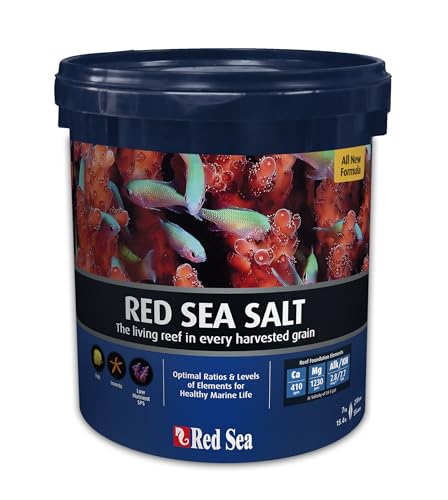 Best for smaller systemsRed Sea Reef Salt Mix Small Bucket | Makes 55 Gallons Complete MarineView on Amazon
- 3
 Best for large-volume valueFritz Aquatics 80243 Reef Pro Mix Complete Marine Salt, 200 Gallon | fView on Amazon
Our Top Picks
Quick Comparison
| Product | Best for | Key feature |
|---|---|---|
| Red Sea Coral Pro Marine Salt Mix 200 Gallon Bag | Established reef tanks wanting high-volume supply | Formulated for coral growth and color support |
| Red Sea Reef Salt Mix Small Bucket | Nano and mid-size reef systems | Makes 55 gallons from a compact, easy-to-store bucket |
| Fritz Aquatics 80243 Reef Pro Mix Complete Marine Salt, 200 Gallon | Large reef systems and cost-conscious bulk buyers | Complete marine formula in a 200-gallon yield |
Red Sea Coral Pro Marine Salt Mix 200 Gallon Bag – Premium Reef Aquarium Salt for Accelerated Coral Growth, Vibrant Colors & Balanced Water Parameters
Red Sea Coral Pro Marine Salt Mix 200 Gallon Bag – Premium Reef Aquarium Salt for Accelerated Coral Growth, Vibrant Colors & Balanced Water Parameters
Red Sea Coral Pro Marine Salt Mix 200 Gallon Bag
Best for: Established reef tanks that need a large, consistent supply of salt for frequent water changes.
This is aimed at reefers who run a mature system with regular water changes and want to buy once for months rather than mixing small batches. It suits people who already know their parameter targets and want a salt marketed specifically around coral coloration and growth.
Key specs
- 200-gallon bag size, per the listing name
- Marketed as a premium reef salt for coral growth, color, and balanced parameters
Pros
- Large yield means fewer purchases for active systems
- Reef-specific positioning around coral health and coloration
- Brand is widely used in the reef hobby, so mixing guidance is easy to find
Cons
- Bag format needs dry, cool storage and a clean scoop to avoid clumping
- Overkill for a small nano tank that only does occasional water changes
Bottom line: A strong fit for larger or well-established reef systems that change water often and want a high-volume salt.
View on Amazon
Red Sea Reef Salt Mix Small Bucket | Makes 55 Gallons Complete Marine Saltwater Aquarium Advanced Formula Optimal Coral Health & Stability
Red Sea Reef Salt Mix Small Bucket | Makes 55 Gallons Complete Marine Saltwater Aquarium Advanced Formula Optimal Coral Health & Stability
Red Sea Reef Salt Mix Small Bucket
Best for: Nano and mid-size reef systems where a smaller bucket is easier to store and use up before it degrades.
This suits hobbyists running tanks in the roughly 20 to 75 gallon range who want a manageable quantity. It is also a sensible starting point for someone new to mixing saltwater who wants to confirm their process before committing to a bulk bag.
Key specs
- Listed yield of 55 gallons per bucket, per the listing name
- Advanced formula positioned for coral health and parameter stability
Pros
- Smaller container is easier to handle and store
- Good for trying a salt before buying in bulk
- Same brand family as the larger bag, so reefers can scale up later
Cons
- Higher cost per gallon mixed than bulk options
- Will run out quickly on larger or heavily stocked systems
Bottom line: Best for smaller reef tanks and first-time buyers who want a manageable, low-commitment bucket.
View on Amazon
Fritz Aquatics 80243 Reef Pro Mix Complete Marine Salt, 200 Gallon | for Marine & Saltwater Aquariums
Fritz Aquatics 80243 Reef Pro Mix Complete Marine Salt, 200 Gallon | for Marine & Saltwater Aquariums
Fritz Aquatics 80243 Reef Pro Mix Complete Marine Salt, 200 Gallon
Best for: Large-volume reef keepers who prioritize yield per dollar spent and a complete marine formula.
Aimed at reefers with big sumps or multiple systems who mix large batches for regular water changes. It works well for anyone who already has a stable routine and wants to reduce how often they reorder.
Key specs
- 200-gallon yield, per the listing name
- Marketed as a complete marine salt for reef and saltwater aquariums
Pros
- Large yield suits big systems and frequent water changes
- Complete formula positioned for reef and marine use
- Good budget-leaning option for bulk buyers
Cons
- Heavy bag requires careful handling and dry storage
- Less reef-specific marketing language than some premium brands, so check parameter results against your own testing
Bottom line: A practical pick for large reef systems where volume and value matter more than premium branding.
View on AmazonBuying Guide
Salt Formula and Parameter Targets
Check whether the salt lists alkalinity, calcium, and magnesium targets or a recommended dosing approach. A reef salt should produce a stable baseline that matches your test kit readings after mixing. Always test your mixed water before adding it to the tank.
Good picks for this: Red Sea Coral Pro Marine Salt Mix 200 Gallon Bag, Red Sea Reef Salt Mix Small Bucket
Yield and Batch Size
Match the yield to your water change schedule. A common approach is to calculate your monthly water change volume and buy enough salt to cover two or three months. Owners of larger tanks often find bulk bags more practical than small buckets.
Good picks for this: Fritz Aquatics 80243 Reef Pro Mix Complete Marine Salt, Red Sea Coral Pro Marine Salt Mix 200 Gallon Bag
Tank Size and Use Case
Nano tanks and mid-size reef systems usually do better with smaller containers that stay fresh. Salt that sits open or in a humid environment can clump and lose consistency.
Good picks for this: Red Sea Reef Salt Mix Small Bucket
Mixing Quality and Water Clarity
Look for salt that dissolves fully without leaving residue or cloudiness. Use a dedicated mixing container with a powerhead or air pump, and allow the water to circulate for the time the manufacturer recommends, usually several hours, before testing.
Good picks for this: Red Sea Coral Pro Marine Salt Mix 200 Gallon Bag, Red Sea Reef Salt Mix Small Bucket
Storage and Shelf Life
Store dry salt in a sealed container, away from moisture and heat. Bags that absorb humidity can clump, which makes accurate measuring harder. Keep the original packaging sealed when not in use.
Good picks for this: Fritz Aquatics 80243 Reef Pro Mix Complete Marine Salt, Red Sea Reef Salt Mix Small Bucket
Budget and Value per Gallon
Compare the yield-to-volume ratio rather than the container size alone. Larger bags generally offer better value per gallon mixed, but only if you will use them before they degrade.
Good picks for this: Fritz Aquatics 80243 Reef Pro Mix Complete Marine Salt, Red Sea Coral Pro Marine Salt Mix 200 Gallon Bag
Compatibility With Your Test Kits and Equipment
Confirm that the salt you choose produces readings your test kits can measure reliably. Pair the salt with a refractometer or calibrated hydrometer, and check salinity against your target, which is commonly in the 1.024 to 1.026 specific gravity range for reef tanks.
Good picks for this: Red Sea Reef Salt Mix Small Bucket, Red Sea Coral Pro Marine Salt Mix 200 Gallon Bag
FAQ
What is reef aquarium salt mix?
Reef aquarium salt mix is a dry blend of sea salts, often with added trace elements, designed to recreate natural seawater for corals and invertebrates. It is mixed with fresh water, aerated, and tested before use in a reef system.
How long should I mix reef aquarium salt before adding it to the tank?
Most manufacturers recommend mixing for several hours with a powerhead or air pump so the salt fully dissolves and the water stabilizes. Check the specific instructions on your product, and test salinity and key parameters before adding it.
What salinity should a reef tank run at?
Many reef keepers aim for a specific gravity of about 1.024 to 1.026 at a stable temperature. Measure with a calibrated refractometer or hydrometer and keep changes gradual.
Can I use regular sea salt instead of reef-specific salt?
Some general marine salts work for fish-only tanks, but reef systems usually benefit from salts formulated to support calcium, alkalinity, magnesium, and trace elements. Test your water to see how any salt performs in your system.
How often should I change my salt mix?
There is no fixed schedule. Mix fresh water for each regular water change, and store dry salt in sealed packaging so it does not absorb moisture. Discard any salt that has clumped heavily or shows signs of contamination.
Should I consult a professional about my water chemistry?
If your parameters are persistently off or corals are declining, consult an experienced reef keeper or a qualified aquatic veterinarian before making major changes.
Conclusion
For most reef keepers, the best starting point is a salt that matches your tank size, water change routine, and storage conditions. The Red Sea Coral Pro Marine Salt Mix 200 Gallon Bag suits large, established systems. The Red Sea Reef Salt Mix Small Bucket fits nano and mid-size tanks and first-time buyers. The Fritz Aquatics 80243 Reef Pro Mix Complete Marine Salt, 200 Gallon suits large-volume reefers who prioritize yield. In every case, test your mixed water before use and adjust your routine based on your own readings.
Sources
- Background on seawater composition and ocean chemistry relevant to marine water parameters (noaa.gov)
- Guidance on water chemistry measurement and salinity concepts (usgs.gov)
- General information on water quality testing methods and standards (epa.gov)
Related reading
- Where to Put Wave Maker in Aquarium: A Reef Placement Guide
- Where to Position a Wave Maker in an Aquarium: Best Reef Flow Spots
- What Is a Protein Skimmer Aquarium? How It Works and Why Reef Tanks Use One
- Wave Maker Placement in Aquarium: A Step-by-Step Guide for Reef Tanks
- Wave Maker Aquarium Terbaik: 5 Picks and How to Choose the Best for Your Reef
About Emily Parker
Emily Parker is part of our editorial team and reviews and edits our reef & saltwater aquariums guides, checking product details against manufacturer specifications and owner feedback.
About the author
Emily Parker writes reviews and buying guides for My Reef Aquarium.