Refractometer for Specific Gravity: 6 Best Picks for Reef Tanks (2026)
Find the best refractometer for specific gravity. We compare six models for reef tank salinity, urine testing and brewing, with pros, cons and buying tips.
 By Caleb Morgan
Updated November 22, 2026
 By Caleb Morgan
Updated November 2026
A reliable refractometer for specific gravity is the most practical way to measure salinity in a reef or saltwater aquarium, and it also has uses in veterinary clinics and home brewing. Readers searching this topic usually want to know which instrument reads accurately in their application, how much scale range they need, and whether temperature compensation is built in. The picks below were chosen by comparing manufacturer specifications, brand reputation and the patterns owners commonly report, with attention to scale range, temperature compensation, and whether the instrument is designed for the medium being measured.
Our top picks at a glance
- 1TOP CHOICEBest overallAtago 4410 PAL-10S Digital Hand-Held Pocket Urine Specific Gravity RefractometerView on Amazon
- 2
 TOP CHOICEBest for reef salinityAgriculture Solutions Salinity Refractometer for Seawater and Marine FView on Amazon
- 3
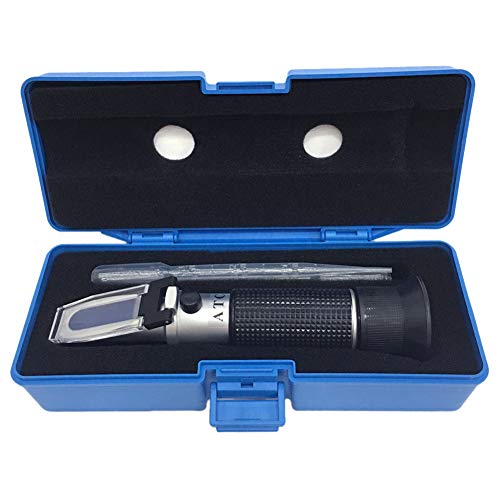 TOP CHOICEBest for brewersaichose Brix Refractometer with ATC, Dual Scale – Specific Gravity & BView on Amazon
- 4
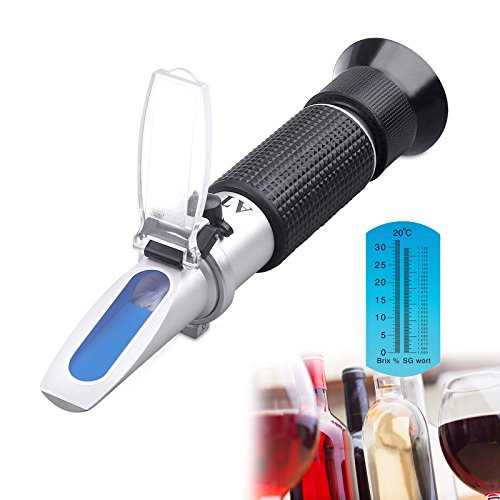 Best budget pick for brewingBrix Refractometer with ATC – Tiaoyeer Digital Handheld RefractometerView on Amazon
- 5
 Best for veterinary urine testingV·RESOURCING Pet Dog & Cat Refractometer,Pet Urine Specific Gravity (1View on Amazon
- 6
 Best clinical multi-scale option3-in-1 Clinical Refractometer with ATC for Tri-Scale Serum Protein 0-1View on Amazon
Our Top Picks
Quick Comparison
| Product | Best for | Key feature |
|---|---|---|
| Atago 4410 PAL-10S Digital Hand-Held Pocket Urine Specific Gravity Refractometer | Clinical and urine specific gravity checks | Digital readout in a pocket format |
| Agriculture Solutions Salinity Refractometer for Seawater and Marine Fishkeeping Aquarium | Reef and marine aquarium salinity | 0–100 PPT range with automatic temperature compensation |
| aichose Brix Refractometer with ATC, Dual Scale | Homebrewers measuring wort and wine | Dual scale for specific gravity and Brix with ATC |
| Tiaoyeer Brix Refractometer with ATC | Budget-minded brewers | Specific gravity 1.000–1.130 and Brix 0–32% |
| V·RESOURCING Pet Dog & Cat Refractometer | Veterinary urine specific gravity | Urine SG 1.000–1.060 and protein scale |
| 3-in-1 Clinical Refractometer with ATC | Multi-parameter clinical testing | Tri-scale for serum protein, urine SG and refractive index |
Atago 4410 PAL-10S Digital Hand-Held Pocket Urine Specific Gravity Refractometer
Atago 4410 PAL-10S Digital Hand-Held Pocket Urine Specific Gravity Refractometer
Best for: Clinical and urine specific gravity checks
This model suits veterinary staff, clinic technicians and anyone who needs a fast, portable urine specific gravity reading in a compact body. It is a clinical tool first and is not designed for reef salinity work.
Key specs
- Digital hand-held pocket design
- Urine specific gravity measurement
Pros
- Compact and easy to carry between exam rooms
- Digital readout reduces manual scale interpretation
- Well-established brand in refractometry
Cons
- Built for urine testing, not seawater salinity
- Requires a small sample volume and careful cleaning between uses
Bottom line: Best for clinical staff who need a portable urine specific gravity reader. Reef keepers should look at a salinity-specific model.
View on AmazonAgriculture Solutions Salinity Refractometer for Seawater and Marine Fishkeeping Aquarium 0-100 PPT with Automatic Temperature Compensation
Agriculture Solutions Salinity Refractometer for Seawater and Marine Fishkeeping Aquarium 0-100 PPT with Automatic Temperature Compensation
Best for: Reef and marine aquarium salinity
Reef keepers who want a dedicated salinity instrument will find this the most direct fit. The listing names a 0–100 PPT scale and automatic temperature compensation, which are the two features that matter most for seawater checks.
Key specs
- Salinity range 0–100 PPT
- Automatic temperature compensation (ATC)
Pros
- Scale is aimed directly at seawater and reef salinity
- ATC reduces error when the sample is not at calibration temperature
- Simple optical design for quick reads
Cons
- Requires periodic calibration with a known standard
- Optical readings need a bright light source and a steady eye
Bottom line: The right choice for most reef hobbyists who want accurate salinity readings without a digital controller.
View on Amazonaichose Brix Refractometer with ATC, Dual Scale – Specific Gravity & Brix, Hydrometer in Wine Making and Beer Brewing, Homebrew Kit
aichose Brix Refractometer with ATC, Dual Scale – Specific Gravity & Brix, Hydrometer in Wine Making and Beer Brewing, Homebrew Kit
Best for: Homebrewers measuring wort and wine
Homebrewers who want to track sugar content before and after fermentation will appreciate the dual scale. It covers specific gravity and Brix on one instrument, which simplifies brewing logs.
Key specs
- Dual scale: specific gravity and Brix
- Automatic temperature compensation (ATC)
Pros
- Dual scale covers wort and wine readings
- ATC improves accuracy across temperatures
- Useful reference for fermentation tracking
Cons
- Brewing scales do not translate directly to reef salinity
- Needs cleaning with distilled water after sugary samples
Bottom line: A solid pick for brewers who want one tool for gravity and Brix. Not intended for reef tanks.
View on AmazonTiaoyeer Brix Refractometer with ATC – Digital Handheld Refractometer for Beer Wine Brewing, Dual Scale-Specific Gravity 1.000-1.130 and Brix 0-32%
Brix Refractometer with ATC – Tiaoyeer Digital Handheld Refractometer for Beer Wine Brewing, Dual Scale-Specific Gravity 1.000-1.130 and Brix 0-32%
Best for: Budget-minded brewers
Brewers on a tighter budget who still want specific gravity and Brix on one body will find this a practical option. The listing states a specific gravity range of 1.000–1.130 and a Brix range of 0–32%.
Key specs
- Specific gravity range 1.000–1.130
- Brix range 0–32%
- Automatic temperature compensation (ATC)
Pros
- Covers the full typical brewing gravity range
- Dual scale in a handheld body
- ATC is included
Cons
- Brand reputation is less established than some optical instruments
- Scales are brewing-specific and not suited to seawater
Bottom line: A sensible budget choice for home brewers. Reef keepers should choose a salinity-scale model.
View on AmazonV·RESOURCING Pet Dog & Cat Refractometer, Pet Urine Specific Gravity (1.000~1.060) Clinical Refractometer with Serum or Plasma Protein Test (2~14 g/100ml)
V·RESOURCING Pet Dog & Cat Refractometer,Pet Urine Specific Gravity (1.000~1.060) Clinical Refractometer with Serum or Plasma Protein Test (2~14 g/100ml) for Veterinary Cat,Dog, Pets
Best for: Veterinary urine specific gravity
This model is aimed at veterinary use, where urine specific gravity and serum protein are checked during routine work. It fits clinics and pet owners working with a vet’s guidance.
Key specs
- Urine specific gravity range 1.000–1.060
- Serum or plasma protein range 2–14 g/100ml
Pros
- Two scales in one clinical instrument
- Targeted at pet urine and serum testing
- Compact optical design
Cons
- Not suitable for seawater or brewing
- Results should be interpreted by a veterinary professional
Bottom line: A focused veterinary tool. Consult a veterinarian before acting on any test result.
View on Amazon3-in-1 Clinical Refractometer with ATC for Tri-Scale Serum Protein 0-12 g/100ml Urine Specific Gravity SG 1.000-1.050 Refractive Index 1.333-1.360RI w/Extra LED Light & Pipette for Human Use
3-in-1 Clinical Refractometer with ATC for Tri-Scale Serum Protein 0-12 g/100ml Urine Specific Gravity SG 1.000-1.050 Refractive Index 1.333-1.360RI w/Extra LED Light & Pipette for Human Use
Best for: Multi-parameter clinical testing
Clinical settings that need serum protein, urine specific gravity and refractive index from a single instrument will find the tri-scale layout useful. The listing includes an LED light and pipette.
Key specs
- Serum protein 0–12 g/100ml
- Urine specific gravity 1.000–1.050
- Refractive index 1.333–1.360
- Automatic temperature compensation (ATC)
Pros
- Three scales in one body
- LED light helps reading in dim spaces
- Pipette included for sample handling
Cons
- Designed for human clinical use, not aquarium work
- More scales means more to learn before first use
Bottom line: A good fit for clinical users who need multiple scales. Not a reef salinity tool.
View on AmazonBuying Guide
Match the scale to your application
The most important factor is the scale. A specific gravity scale for brewing, a urine specific gravity scale for clinics, and a salinity scale in PPT for reef tanks read different ranges and are not interchangeable. Reef salinity is typically measured near 35 PPT, which corresponds to a specific gravity near 1.026 at 25°C. Check that the listed range covers your target.
Good picks for this: Agriculture Solutions Salinity Refractometer; Atago 4410 PAL-10S
Temperature compensation
Refractive index changes with temperature, so automatic temperature compensation (ATC) matters. Without it, readings drift and you need to correct manually with a chart. Look for ATC in the listing, and still confirm readings at a consistent temperature.
Good picks for this: aichose Brix Refractometer with ATC; Tiaoyeer Brix Refractometer with ATC
Calibration
A refractometer is only as good as its calibration. Most reef keepers calibrate with distilled water (reading zero) and a calibration fluid of known salinity. Check the manufacturer instructions for the correct calibration method, and recalibrate regularly.
Good picks for this: Agriculture Solutions Salinity Refractometer
Optical versus digital
Optical refractometers are simple, rugged and do not need batteries. Digital models offer a numeric readout, which reduces interpretation errors but adds electronics that need care. Choose based on how you prefer to read results.
Good picks for this: Atago 4410 PAL-10S; 3-in-1 Clinical Refractometer with ATC
Sample volume and cleaning
Most refractometers need only a few drops of sample. Clean the prism with distilled water after each use, and dry it with a soft cloth. Salt residue and sugary wort can both leave films that affect accuracy.
Good picks for this: Agriculture Solutions Salinity Refractometer; aichose Brix Refractometer with ATC
Intended use and durability
Clinical instruments, brewing instruments and aquarium instruments are built for different environments. A clinic model may not handle salt spray well, and a brewing model may not match seawater scales. Choose the instrument built for your primary use.
Good picks for this: V·RESOURCING Pet Dog & Cat Refractometer; 3-in-1 Clinical Refractometer with ATC
Light and reading comfort
Optical readings depend on light. Some models include an LED light to help in dim rooms or tanks with dark backgrounds. If you read in a dim room, a built-in light can make a real difference.
Good picks for this: 3-in-1 Clinical Refractometer with ATC
FAQ
What specific gravity should a reef tank be?
Most reef keepers target a specific gravity around 1.025 to 1.026 at 25°C, which corresponds to roughly 35 PPT salinity. Always confirm your target with your livestock needs and your test method.
Can I use a brewing refractometer for my reef tank?
Brewing refractometers use Brix and brewing gravity scales that do not match seawater salinity. For reef work, choose a model with a salinity or PPT scale.
Do refractometers need calibration?
Yes. Calibrate with distilled water and check against a calibration fluid of known value. Recalibrate regularly, especially if you notice drift.
Why does temperature affect refractometer readings?
Refractive index changes with temperature. Models with automatic temperature compensation adjust the reading, but it is still good practice to measure at a consistent temperature.
How do I clean a refractometer after testing saltwater?
Rinse the prism and cover with distilled water, then dry gently with a soft lint-free cloth. Salt residue can affect the next reading.
Is a digital or optical refractometer better?
Neither is universally better. Optical models are simple and battery-free. Digital models give numeric readouts. Pick the one you will use consistently.
Conclusion
For reef salinity, the Agriculture Solutions Salinity Refractometer is the most direct fit, and the Atago 4410 PAL-10S is a strong overall choice for clinical urine work. Brewers should look at the aichose or Tiaoyeer Brix models, while veterinary and multi-scale clinical users will find the V·RESOURCING and 3-in-1 options more suitable. Match the scale and intended use to your application before buying.
Sources
- Background on water density, salinity and specific gravity measurement (usgs.gov)
- Standards and calibration practices for measurement instruments (nist.gov)
- Veterinary guidance on urine specific gravity testing (avma.org)
Related reading
- Salinity in Reef Tank: 5 Best Refractometers and Hydrometers Compared (2026)
- Ideal Reef Tank Salinity: 6 Refractometers and Hydrometers Compared (2026)
- 7 Best Refractometers for Saltwater Tank Options (2026)
- 5 Best Refractometers for Saltwater Aquarium Compared (2026)
About Caleb Morgan
Caleb Morgan is part of our editorial team and reviews and edits our reef & saltwater aquariums guides, checking product details against manufacturer specifications and owner feedback.
About the author
Caleb Morgan writes reviews and buying guides for My Reef Aquarium.