Top 5 Reef Tank Phosphate Test Kits Compared for Accurate Readings (2026)
Compare the best reef tank phosphate test kits for accurate PO4 readings. See which kit suits beginners, budget builds and sensitive low-level reef testing.
 By Caleb Morgan
Updated November 21, 2026
 By Caleb Morgan
Updated November 2026
Choosing a reef tank phosphate test kit is one of the most useful decisions a saltwater hobbyist can make, because phosphate is the nutrient most often linked to nuisance algae, slowed coral growth and skimmer performance problems. Reef keepers usually want to know three things: whether the chemistry is accurate at the low end where corals actually live, whether the reagents are easy to read by eye, and whether the kit gives enough tests to keep up with routine monitoring. The picks below were compared on those points using manufacturer specifications, brand reputation and the patterns owners commonly report in reviews and forums.
Our top picks at a glance
- 1TOP CHOICEBest overallSALIFERT PHOSPHATE (PO4) AQUARIUM WATER TEST KIT – FRESH & MARINE FISHView on Amazon
- 2
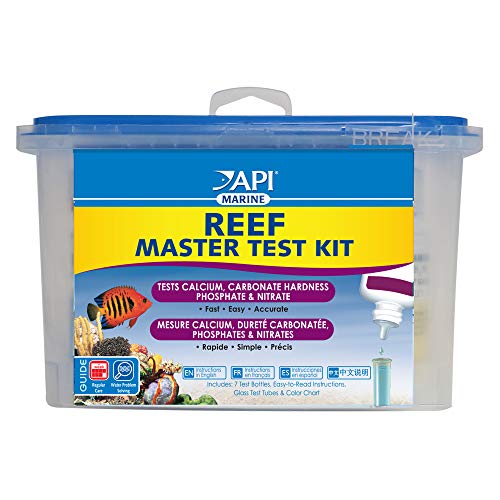 TOP CHOICEBest for reef-focused monitoringAPI REEF MASTER TEST KIT Reef Aquarium Water Test Kit 1-CountView on Amazon
- 3
 TOP CHOICEBest budget pickSeachem MultiTest: Phosphate 75 TestsView on Amazon
- 4
 Best for low-level sensitivityNYOS® Phosphate Reefer Test Kit for Saltwater Aquariums – Ultra-SensitView on Amazon
- 5
 Best for multi-parameter checksPawfly 5 in 1 Aquarium Water Master Test Kit, Fish Tank Water TestingView on Amazon
Our Top Picks
Quick Comparison
| Product | Best for | Key feature |
|---|---|---|
| SALIFERT Phosphate (PO4) Aquarium Water Test Kit | Reef keepers who want a dedicated phosphate-only kit | Single-purpose PO4 reagent system for marine tanks |
| API REEF MASTER Test Kit | Reef tanks needing several core parameters in one box | Bundled reef panel that includes phosphate |
| Seachem MultiTest: Phosphate 75 Tests | Budget-minded hobbyists who test regularly | 75 tests per kit for a long reagent supply |
| NYOS Phosphate Reefer Test Kit | Keepers chasing very low phosphate readings | Stated range of 0.025–1.00 mg/l PO4 with 50 tests |
| Pawfly 5 in 1 Aquarium Water Master Test Kit | Beginners who want phosphate plus water basics | Five parameters in one kit, fresh and saltwater use |
SALIFERT PHOSPHATE (PO4) AQUARIUM WATER TEST KIT – FRESH & MARINE FISH TANKS
SALIFERT PHOSPHATE (PO4) AQUARIUM WATER TEST KIT – FRESH & MARINE FISH TANKS
SALIFERT PHOSPHATE (PO4) Aquarium Water Test Kit
Best for: Dedicated phosphate testing in marine aquariums
This kit suits reef keepers who want a focused, single-parameter test rather than a broad panel. It is a common choice for hobbyists who already track other values with separate tools and want a phosphate reagent they can rely on for routine checks.
Key specs
- Phosphate (PO4) test for fresh and marine aquariums
- Designed for saltwater and reef use, per the listing name
Pros
- Single-purpose kit keeps phosphate testing simple
- Brand is widely associated with marine test reagents
- Suitable for both fresh and marine tanks
Cons
- Tests only phosphate, so other parameters need separate kits
- Color matching still depends on the user’s eyesight and lighting
Bottom line: A strong pick for reef keepers who want a dedicated phosphate test and already own tests for the rest of their water chemistry.
View on Amazon
API REEF MASTER TEST KIT Reef Aquarium Water Test Kit 1-Count
API REEF MASTER TEST KIT Reef Aquarium Water Test Kit 1-Count
API REEF MASTER Test Kit Reef Aquarium Water Test Kit 1-Count
Best for: Reef tanks needing several core parameters in one box
This kit fits hobbyists who prefer one purchase covering the main reef chemistry checks. It is often recommended to newer reef keepers who want a starting panel before adding individual specialty tests.
Key specs
- Reef aquarium water test kit with a 1-count package
- Multi-parameter panel that includes phosphate, per the listing name
Pros
- Covers several reef parameters in a single kit
- API is a long-established name in aquarium testing
- Good for building a regular testing routine
Cons
- Phosphate reagent may run out faster than a dedicated phosphate kit
- Low-end phosphate sensitivity is less fine-grained than specialty kits
Bottom line: A practical all-round choice for reef keepers who want broad coverage and a simple starting point.
View on Amazon
Seachem MultiTest: Phosphate 75 Tests
Seachem MultiTest: Phosphate 75 Tests
Seachem MultiTest: Phosphate 75 Tests
Best for: Budget-minded hobbyists who test regularly
This kit is aimed at keepers who check phosphate often and want a large number of tests per box. The 75-test count makes it practical for weekly or twice-weekly monitoring over many months.
Key specs
- Phosphate test with 75 tests, per the listing name
- Seachem MultiTest line used across freshwater and marine tanks
Pros
- Large test count supports frequent monitoring
- Budget-friendly option for a dedicated phosphate test
- Seachem has a broad reputation in aquarium chemistry products
Cons
- Single parameter only
- Owners often note that matching shades takes practice
Bottom line: The best fit for hobbyists who want a dependable phosphate test with a long supply and a lower-cost entry.
View on Amazon
NYOS® Phosphate Reefer Test Kit for Saltwater Aquariums – Ultra-Sensitive 0.025-1.00 mg/l PO4-50 Tests – Lab Grade – Glass Vials
NYOS® Phosphate Reefer Test Kit for Saltwater Aquariums – Ultra-Sensitive 0.025-1.00 mg/l PO4-50 Tests – Lab Grade – Glass Vials
NYOS® Phosphate Reefer Test Kit for Saltwater Aquariums – Ultra-Sensitive 0.025-1.00 mg/l PO4-50 Tests – Lab Grade – Glass Vials
Best for: Keepers chasing very low phosphate readings
This kit suits reef keepers who keep phosphate at the bottom of the recommended range and want finer resolution at the low end. It is a good match for those dosing carefully for coral growth and tracking small changes.
Key specs
- Stated measurement range of 0.025–1.00 mg/l PO4, per the listing name
- 50 tests included, per the listing name
- Glass vials for the sample process, per the listing name
Pros
- Stated sensitivity suits low-phosphate reef tanks
- Glass vials are a common preference over plastic for repeated use
- Dedicated reefer design focuses on marine chemistry
Cons
- Costs more per test than budget phosphate kits
- Sensitive reagents need careful handling and proper storage
Bottom line: Worth considering for reef keepers who need fine low-end phosphate resolution and are willing to pay for precision.
View on Amazon
Pawfly 5 in 1 Aquarium Water Master Test Kit, Fish Tank Water Testing Kit | Aquarium Water Test Kit for pH Nitrite Nitrate Ammonia & Phosphate, Aquarium Test Kit for Freshwater & Saltwater Fish Tanks
Pawfly 5 in 1 Aquarium Water Master Test Kit, Fish Tank Water Testing Kit | Aquarium Water Test Kit for pH Nitrite Nitrate Ammonia & Phosphate, Aquarium Test Kit for Freshwater & Saltwater Fish Tanks
Pawfly 5 in 1 Aquarium Water Master Test Kit, Fish Tank Water Testing Kit
Best for: Beginners who want phosphate plus water basics
This kit covers five parameters in one package, including phosphate, which makes it useful for newer hobbyists building a basic monitoring habit. It also works across fresh and saltwater tanks, so it can serve mixed setups.
Key specs
- 5 in 1 kit covering pH, nitrite, nitrate, ammonia and phosphate, per the listing name
- Listed for freshwater and saltwater fish tanks
Pros
- Five parameters in one kit suit beginners
- Works across fresh and saltwater setups
- Easy way to add phosphate to a basic test routine
Cons
- Phosphate range may be less fine-grained than dedicated reef kits
- Multi-parameter kits generally use less reagent per test, so accuracy depends on careful technique
Bottom line: A reasonable starter pick for beginners who want phosphate alongside basic water checks, with the understanding that serious reef keepers may later add a dedicated phosphate test.
View on AmazonBuying Guide
Measurement range and sensitivity
Reef corals generally do best with phosphate kept low, and many keepers aim for readings near the bottom of the commonly cited range. Check the stated detection limit on the kit. A kit that only resolves readings above 0.1 mg/l will not tell you much when your tank sits at very low levels. Compare the stated range to your target values before buying.
Good picks for this: NYOS Phosphate Reefer Test Kit, SALIFERT Phosphate (PO4) Aquarium Water Test Kit
Single-parameter versus multi-parameter kits
Dedicated phosphate kits usually offer finer resolution for one chemical. Multi-parameter kits save money and shelf space and are convenient for beginners, but the phosphate panel in a bundle may be less precise. Decide whether you want a full routine check or a focused phosphate tool.
Good picks for this: API REEF MASTER Test Kit, Pawfly 5 in 1 Aquarium Water Master Test Kit
Number of tests and reagent life
Count how often you plan to test. A weekly test uses roughly 52 tests a year, so a kit with a larger test count can cut restocking. Reagent shelf life also matters: once opened, many liquid reagents degrade, so buy sizes you can use before they expire.
Good picks for this: Seachem MultiTest: Phosphate 75 Tests, NYOS Phosphate Reefer Test Kit
Ease of color reading
Phosphate tests rely on color comparison, so lighting and eyesight affect results. Test in consistent lighting, ideally daylight or a neutral white light, and compare against the chart in the same position each time. Owners often report that practice improves consistency noticeably.
Good picks for this: SALIFERT Phosphate (PO4) Aquarium Water Test Kit, Seachem MultiTest: Phosphate 75 Tests
Glass versus plastic vials
Many reef keepers prefer glass test vials because they are less prone to scratching and staining, which can affect how color reads over time. Rinse vials thoroughly between tests and dry them before reuse to avoid carryover from previous samples.
Good picks for this: NYOS Phosphate Reefer Test Kit
Brand reputation and reagent consistency
Established aquarium chemistry brands tend to publish clearer instructions and more consistent reagent batches. Look for clear expiration dates and instructions that state the test method. If you need the result to match a professional lab, consult a water-testing professional or accredited lab for periodic confirmation.
Good picks for this: API REEF MASTER Test Kit, SALIFERT Phosphate (PO4) Aquarium Water Test Kit
Storage and handling
Keep reagents at room temperature, away from direct sunlight and freezing conditions, and cap bottles tightly. Note the open date on each bottle. Expired or contaminated reagents are one of the most common reasons for unexpected readings, so replace them on schedule.
Good picks for this: Seachem MultiTest: Phosphate 75 Tests, Pawfly 5 in 1 Aquarium Water Master Test Kit
FAQ
What phosphate level should a reef tank aim for?
Many reef keepers aim for phosphate near the low end of the commonly cited range, often close to zero to very low readings, because high phosphate is linked to algae problems and reduced coral health. See the guide Phosphate Level in Reef Tank: Target Ranges and How to Lower It Safely for specific targets and safe reduction methods.
Is a dedicated phosphate kit better than a multi-parameter kit?
A dedicated kit usually gives finer resolution for phosphate, which matters when you are working at low levels. A multi-parameter kit is convenient for beginners who want several basic checks in one box. Many keepers use both approaches over time.
How often should I test phosphate?
Weekly testing is a common routine for reef tanks, and more frequent checks make sense after a dosing change, a new livestock addition or an algae outbreak. Keep a simple log so you can spot trends rather than isolated readings.
Can I use a freshwater phosphate test in a reef tank?
Some kits list both freshwater and saltwater use, but reef keepers generally prefer kits designed for marine chemistry. Salt can affect reagent behavior, so check the manufacturer’s instructions before relying on a freshwater-only test for reef water.
Why do my phosphate readings look different from my lab results?
Differences usually come from reagent age, color-matching technique, lighting, sample handling or the detection limits of the kit versus the lab method. Test in consistent light, use fresh reagents and confirm unusual results with an accredited lab if accuracy is critical.
Does a phosphate reading always mean my tank is unhealthy?
No single reading tells the whole story. Phosphate should be read alongside nitrate, alkalinity, calcium, magnesium and livestock behavior. For related parameter checks, see Top 5 Reef Tank Test Kit Options for Accurate Water Checks (2026).
Conclusion
For most reef keepers, the choice comes down to whether you want a focused phosphate tool or a broader panel. The SALIFERT kit suits those who want a dedicated phosphate test, the API REEF MASTER kit works for broader reef checks, and the Seachem MultiTest offers a large test count for frequent monitoring. The NYOS kit is the pick for low-level resolution, while the Pawfly multi-parameter kit fits beginners who want basic coverage. Pair whichever kit you choose with a consistent testing routine, fresh reagents and good lighting, and consider 7 Best Reef Tank Water Test Kits for Stable Saltwater Parameters if you want to round out your monitoring.
Sources
- Background on nutrient pollution and how phosphorus affects aquatic ecosystems (epa.gov)
- Information on coral reef health and water quality factors affecting reef organisms (noaa.gov)
- Guidance on phosphorus measurement methods and water chemistry sampling (usgs.gov)
Related reading
- Top 3 Alkalinity Supplements and Test Kits for Alkalinity in a Reef Tank (2026)
- Ph for Reef Tank: How to Test, Stabilize and Hold 8.1–8.4 (Guide)
- Auto Top Off Kit: A Step-by-Step Setup Guide for Reef Tanks (2026)
About Caleb Morgan
Caleb Morgan is part of our editorial team and reviews and edits our reef & saltwater aquariums guides, checking product details against manufacturer specifications and owner feedback.
About the author
Caleb Morgan writes reviews and buying guides for My Reef Aquarium.