Reverse Osmosis System for Reef Tank: 6 Best Picks for Reef Aquariums (2026)
Compare six reverse osmosis system for reef tank options by filtration stages, GPD output, and TDS performance to choose the right RODI unit for your aquarium.
 By Caleb Morgan
Updated November 22, 2026
 By Caleb Morgan
Updated November 2026
Choosing a reverse osmosis system for reef tank use comes down to a few practical questions: how much water your tank and sump really need each week, whether you want a plain RO unit or a full RODI (reverse osmosis plus deionization) setup, and how much hands-on maintenance you are willing to do. Saltwater corals and invertebrates are sensitive to dissolved solids, phosphate, nitrate, and silicate, so the water you top off and mix salt with needs to be close to zero TDS. The six units below were compared on the criteria that matter most to reef keepers: output rate in gallons per day (GPD), number of filtration stages, whether deionization resin is included, the presence of a flushing or pressure-control valve, and how owners generally describe long-term resin and membrane life.
Our top picks at a glance
- 1TOP CHOICEBest overallBulk Reef Supply 4 Stage Value Plus 75 GPD RO/DI Reverse Osmosis Deionization SystemView on Amazon
- 2
 TOP CHOICEBest for larger reef systemsMax Water 6 Stage 200 GPD Aquarium System/RODI (Reverse Osmosis DeioniView on Amazon
- 3
 TOP CHOICEBest for water-change routinesNU Aqua 4-Stage RODI Deionization Reverse Osmosis System 100 GPD FiltrView on Amazon
- 4
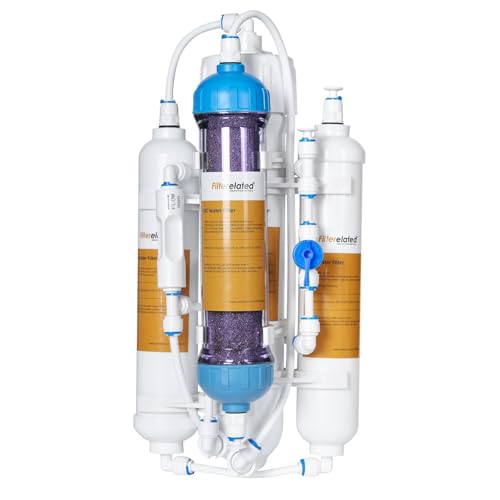 Best for portabilityAquarium RODI Water System 4-Stage Reverse Osmosis, Flushing Valve, 10View on Amazon
- 5
 Best budget pickLiquaGen- 5 Stage Reverse Osmosis & Deionization (RODI) | Aquarium ReeView on Amazon
- 6
 Best for high-efficiency outputRO + DI High Efficiency 1 to 1 Ratio 100 GPD Reverse Osmosis + DI WateView on Amazon
Selection method: This list is based on published specifications, brand reputation in the reef hobby, and recurring patterns in owner feedback. It does not reflect any testing performed by the writer.
Our Top Picks
Quick Comparison
| Product | Best for | Key feature |
|---|---|---|
| Bulk Reef Supply 4 Stage Value Plus 75 GPD RO/DI | Most reef keepers with a standard display tank and sump | 75 GPD, 4-stage RO/DI with reef-oriented design |
| Max Water 6 Stage 200 GPD RODI | Large systems and frequent water changes | 200 GPD output with digital TDS meter and pressure gauge |
| NU Aqua 4-Stage RODI 100 GPD | Owners who want a trial period and a complete kit | 100 GPD with faucet and tank included |
| Aquarium RODI Water System 4-Stage 100 GPD | Users who move units between rooms or need a compact footprint | Portable frame, flushing valve, color-changing DI resin |
| LiquaGen 5 Stage RODI 75 GPD | Keepers who want an extra stage without a large footprint | 5-stage filtration with filters included |
| Koolermax RO + DI 1:1 100 GPD | Reefers who value a near 1:1 waste-to-product ratio | High-efficiency 1:1 ratio, spot-free water focus |
Bulk Reef Supply 4 Stage Value Plus 75 GPD RO/DI Reverse Osmosis Deionization System
Bulk Reef Supply 4 Stage Value Plus 75 GPD RO/DI Reverse Osmosis Deionization System
Best for: Standard reef tanks and sumps that need a steady supply of low-TDS water for weekly changes and top-offs.
This is a common choice for hobbyists running a mid-sized reef who want a dedicated RODI unit without moving into commercial-scale output. It suits keepers who measure their water use and want predictable daily production.
Key specs
- 75 GPD rated membrane output
- 4-stage reverse osmosis and deionization configuration
- Designed for saltwater and reef use
Pros
- Output is well matched to typical reef display and sump volumes
- Four-stage design covers sediment, carbon, membrane, and DI polishing
- Reef-focused product line with an established reputation in the hobby
Cons
- Output is modest for very large systems that run daily top-offs
- Owners should plan for regular resin replacement once TDS readings begin to climb
Bottom line: A strong default choice for most reef tanks in the medium size range who want reliable RODI water without oversizing the unit.
View on AmazonMax Water 6 Stage 200 GPD Aquarium System/RODI Water Filtration System + Digital TDS Meter + Pressure Gauge for Reef Aquarium
Max Water 6 Stage 200 GPD Aquarium System/RODI (Reverse Osmosis Deionization) Water Filtration System + Digital TDS Meter + Pressure Gauge for Reef Aquarium
Best for: Larger reef systems and keepers who do big water changes or run multiple tanks.
Reefers with large sumps, multiple tanks, or frequent water-change schedules often outgrow 50 to 100 GPD units. This higher-output configuration is aimed at that group.
Key specs
- 200 GPD rated output
- 6-stage filtration including RO and DI stages
- Includes digital TDS meter and pressure gauge
Pros
- High output reduces waiting time during large water changes
- Built-in TDS meter makes it easy to monitor membrane and resin performance
- Pressure gauge helps diagnose low-flow problems
Cons
- Larger footprint than compact single-membrane units
- More filter stages mean more components to replace over time
Bottom line: The right pick for keepers with large volumes of water to prepare each week who want monitoring built in.
View on AmazonNU Aqua 4-Stage RODI Deionization Reverse Osmosis System 100 GPD Filtration | For Saltwater & Freshwater Aquarium, Includes Faucet & Tank
NU Aqua 4-Stage RODI Deionization Reverse Osmosis System 100 GPD Filtration | For Saltwater & Freshwater Aquarium, Includes Faucet & Tank, 120-Day Trial, Filters Up To 99.99% (TDS) Total Dissolved Sol
Best for: Reefers who want a complete kit with faucet, storage tank, and a trial period for peace of mind.
This option appeals to hobbyists setting up RODI for the first time, since the listing bundles the main accessories needed for a water-change station.
Key specs
- 100 GPD rated output
- 4-stage RODI configuration
- Includes faucet and storage tank
- Listing references a 120-day trial period
Pros
- Complete setup reduces the number of separate parts to buy
- 100 GPD output suits most weekly water-change schedules
- Trial period gives buyers time to confirm fit
Cons
- Storage tank capacity should be checked against your change volume
- Owners report that filter cartridges need timely replacement to keep TDS low
Bottom line: A practical starter kit for first-time RODI owners who value a bundled, ready-to-run setup.
View on AmazonAquarium RODI Water System 4-Stage Reverse Osmosis, Flushing Valve, 100 GPD | Reef & Saltwater Ready, Color-Changing DI Resin, Portable
Aquarium RODI Water System 4-Stage Reverse Osmosis, Flushing Valve, 100 GPD | Water Filter System, Reef & Saltwater Ready, Color-Changing DI Resin, Portable, 13 ft Tubing
Best for: Keepers who need a portable unit or want to move the system between rooms.
Apartment dwellers and reefers without a dedicated utility sink often prefer a unit they can relocate. The listing emphasizes portability and a flushing valve for routine maintenance.
Key specs
- 100 GPD rated output
- 4-stage reverse osmosis configuration
- Flushing valve included
- Color-changing DI resin indicator
- 13 ft tubing
Pros
- Color-changing resin gives a visual cue for when to replace DI media
- Flushing valve simplifies membrane maintenance
- Portable frame suits rented homes and shared spaces
Cons
- Longer tubing can reduce flow if routed with many bends
- Portable designs may have less rigid mounting than fixed installations
Bottom line: A good match for reefers who need flexibility in placement and want an easy visual check on resin condition.
View on AmazonLiquaGen- 5 Stage Reverse Osmosis & Deionization (RODI) Aquarium Reef Water Filter System – 75 GPD
LiquaGen- 5 Stage Reverse Osmosis & Deionization (RODI) | Aquarium Reef Water Filter System – 75 GPD | Water Purifier for Fish Tank with Filter's Included
Best for: Budget-conscious reefers who want a five-stage system with filters included.
Owners who want an extra filtration stage without moving up to a high-output model often look at five-stage units like this one.
Key specs
- 75 GPD rated output
- 5-stage RO and DI filtration
- Replacement filters included with the listing
Pros
- Five stages give added pre-filtration before the membrane
- Output suits small to medium reef systems
- Filters included in the kit help get started quickly
Cons
- Lower output means longer fill times for large volumes
- Owners should verify replacement filter availability over the long term
Bottom line: A sensible value pick for small and mid-sized reef tanks where water demand is moderate.
View on AmazonRO + DI High Efficiency 1 to 1 Ratio 100 GPD Reverse Osmosis + DI Water Purification System Made by Koolermax USA
RO + DI High Efficiency 1 to 1 Ratio 100 GPD Reverse Osmosis + DI Water Purification System Made by Koolermax USA for Aquarium, Reef, Aeroponics, hydroponics, misting, ultrapure Water, spot Free
Best for: Reefers who want a high-efficiency design that wastes less water per gallon produced.
Keepers in areas with metered or expensive water, or those who want less drain water per batch, may find the efficiency claim of this design appealing.
Key specs
- 100 GPD rated output
- Listed 1:1 waste-to-product ratio
- RO plus DI configuration
Pros
- Efficiency-focused design reduces drain water per gallon
- Output is well suited to regular reef water changes
- Suitable for other ultrapure applications as well
Cons
- Higher-efficiency designs can produce water more slowly than some high-waste models
- Buyers should confirm the included stages match their TDS goals
Bottom line: Best for reefers who prioritize water efficiency and steady, moderate output.
View on AmazonBuying Guide
Output rate (GPD) and tank volume
Gallons per day tells you how long a batch takes to produce. Divide your planned change volume by the unit’s GPD to estimate fill time, and add a buffer for membrane temperature and feed pressure. A 75 GPD unit needs roughly 13 hours to make 40 gallons, so plan around that.
Good picks for this: Bulk Reef Supply 4 Stage Value Plus 75 GPD RO/DI; Max Water 6 Stage 200 GPD RODI
Number of filtration stages
Pre-filters protect the membrane from sediment and chlorine. More stages do not automatically mean better water, but they can extend membrane life and give you more control over the final TDS reading. Check whether the unit includes sediment and carbon pre-filters.
Good picks for this: LiquaGen 5 Stage RODI 75 GPD; NU Aqua 4-Stage RODI 100 GPD
RO only versus RO plus DI
RO alone typically leaves a small amount of dissolved solids, while adding deionization resin brings TDS close to zero. Most reef keepers prefer RO/DI for mixing salt and topping off. Confirm that the unit includes DI media and a plan for replacing it.
Good picks for this: Aquarium RODI Water System 4-Stage 100 GPD; Koolermax RO + DI 1:1 100 GPD
Monitoring tools
A TDS meter lets you check output quality quickly. Some kits include a digital meter and pressure gauge, which help you spot membrane fouling or a failing DI stage before corals show stress. Owners often report that a simple meter prevents guesswork.
Good picks for this: Max Water 6 Stage 200 GPD RODI; Aquarium RODI Water System 4-Stage 100 GPD
Footprint and portability
Measure the space under your sink or cabinet, and check tubing length and drain routing. Portable frames suit renters or people who move the system between rooms. Fixed installations are typically more stable but require more planning.
Good picks for this: Aquarium RODI Water System 4-Stage 100 GPD; NU Aqua 4-Stage RODI 100 GPD
Waste water and efficiency
Most RO units discard several gallons for every gallon produced. Efficiency-rated designs reduce that ratio and lower drain volume. This matters more if your water is metered or if you run the unit daily.
Good picks for this: Koolermax RO + DI 1:1 100 GPD; Bulk Reef Supply 4 Stage Value Plus 75 GPD RO/DI
Replacement parts and long-term care
Membranes, pre-filters, and DI resin all wear out. Check whether replacement parts are easy to source and how often the manufacturer recommends changing them. Keep a log of TDS readings so you can spot resin exhaustion early. For guidance on setting up the system alongside your top-off equipment, see Setting Up an Auto Top Off System: A Step-by-Step Guide for Reef Tanks.
Good picks for this: Max Water 6 Stage 200 GPD RODI; NU Aqua 4-Stage RODI 100 GPD
FAQ
What TDS reading should reef tank water have?
Most reefers aim for 0 ppm TDS for top-off and salt-mix water. Many RODI systems produce water in the 0 to 1 ppm range when the DI resin is fresh. Once readings climb above your target, replace the DI media and check the membrane.
How often should DI resin be replaced?
There is no single schedule. Replacement depends on feed-water quality, daily volume, and how the system is used. Monitor output TDS with a meter and replace the resin when readings no longer meet your target. Some units include color-changing resin as a visual cue.
Do I need a booster pump for a reef RODI system?
Many RO membranes need adequate feed pressure to perform well. If your household supply is low, a booster pump may help. Check the manufacturer’s pressure requirements before installing.
Is RO water safe for drinking?
Reverse osmosis water is often low in minerals, and filtered water from aquarium-grade systems is not intended for human consumption unless the manufacturer states it is. If you plan to drink or cook with it, consult a water quality professional or your local health authority.
How much waste water does an RO unit produce?
Waste ratios vary. Standard designs may discard several gallons per gallon produced, while high-efficiency designs reduce that ratio. Check the specifications for the model you choose and estimate your monthly drain volume.
Can one RODI unit serve multiple tanks?
Yes, if the output rate and storage capacity match your combined water-change volume. Plan storage so you can prepare water ahead of schedule, and remember that larger tanks and sumps use more water over time.
What should I check before buying?
Confirm GPD output against your change schedule, whether DI resin is included, pre-filter stages, footprint, and availability of replacement parts. Read the warranty terms and check that the unit fits your water supply pressure.
Conclusion
For most reef keepers, a reverse osmosis system for reef tank use works best when its output matches your weekly water needs and it includes deionization for near-zero TDS. The Bulk Reef Supply 4 Stage Value Plus 75 GPD unit is a reasonable default for standard systems. Larger reefs with frequent changes may prefer the Max Water 200 GPD model, while keepers who want a complete starter kit may look at NU Aqua. Portable designs suit renters, budget-minded buyers can consider LiquaGen, and efficiency-focused reefers may find the Koolermax 1:1 design appealing. Match the GPD, stages, and monitoring tools to your tank volume and routine, then keep a TDS log to catch resin or membrane problems early.
Sources
- Background on drinking water treatment methods, including reverse osmosis and filtration basics (epa.gov)
- Standards and certification information for point-of-use water treatment products (nsf.org)
- Water quality concepts, including total dissolved solids and their measurement (usgs.gov)
Related reading
- Tunze Osmolator Nano Auto Top Off System: 3 Best Picks for Reef Tanks (2026)
- Top 7 Pool Auto Top Off Systems for Reef Tanks Compared (2026)
- Top 6 Auto Top Off Reef Systems Compared for Reef Tanks (2026)
About Caleb Morgan
Caleb Morgan is part of our editorial team and reviews and edits our reef & saltwater aquariums guides, checking product details against manufacturer specifications and owner feedback.
About the author
Caleb Morgan writes reviews and buying guides for My Reef Aquarium.