6 Best Reef Tank Temperatures: 6 Heaters and Thermometers Compared for 2026
Find the best reef tank temperature range and the gear to hold it. We compare 6 heaters, controllers and thermometers by specs, use case and owner feedback.
 By Caleb Morgan
Updated November 21, 2026
 By Caleb Morgan
Updated November 2026
Keeping the best reef tank temperature steady is one of the quiet jobs that decides whether corals color up or melt down. Most reef keepers aim for a range around 76 to 78°F, and the real challenge is not hitting that number once but holding it through room swings, lights-on heat and seasonal changes. This guide compares six products that cover the three pieces of gear most reefers need: a reliable heater, a controller to manage it, and an accurate thermometer to confirm what the water is really doing. Our selection weighed published specifications, brand reputation and the patterns owners tend to report about accuracy, build and ease of setup.
Our top picks at a glance
- 1TOP CHOICEBest overallInkbird Aquarium Heater with Probe ThermostatView on Amazon
- 2
 TOP CHOICEBest for dual-stage controlInkbird ITC-308S Dual Stage Temperature ControllerView on Amazon
- 3
 TOP CHOICEBest for small nano tankshygger Small Submersible Aquarium Heater 100WView on Amazon
- 4
 Best budget pickAQUANEAT 2 Pack Aquarium ThermometerView on Amazon
- 5
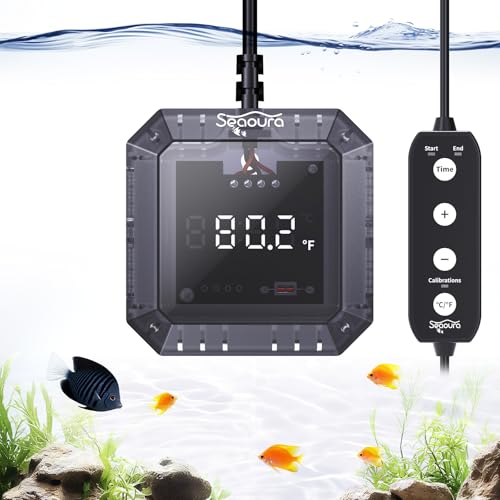 Best for accurate readoutsAquarium Thermometer Submersible Digital with USBView on Amazon
- 6
 Best for multi-tank monitoring4Pcs Aquarium Thermometer Digital with LCD DisplayView on Amazon
Our Top Picks
Quick Comparison
| Product | Best for | Key feature |
|---|---|---|
| Inkbird Aquarium Heater with Probe Thermostat | Most reef tanks with a main heater | Probe thermostat with 24-hour double-time control |
| Inkbird ITC-308S Dual Stage Temperature Controller | Tanks needing heating and cooling | Dual-stage control for heater and chiller or fan |
| hygger Small Submersible Aquarium Heater 100W | 10 to 20 gallon nano reefs | Compact body with adjustable temperature |
| AQUANEAT 2 Pack Aquarium Thermometer | Budget monitoring of two tanks | Large LCD display |
| Aquarium Thermometer Submersible Digital with USB | Readers who want precise, cable-managed monitoring | ±1°F accuracy with USB power cord |
| 4Pcs Aquarium Thermometer Digital with LCD Display | Keepers running several tanks or racks | Four units with Fahrenheit and Celsius display |
Inkbird Aquarium Heater with Probe Thermostat
Inkbird Aquarium Heater with Probe Thermostat Fish Ornamental Shrimp Reef Tanks 24 Hours Double Time with Day Night Automatic Temperature Controller
Best for: Most reef tanks that need a dependable main heater with an external probe
This is a good fit for reefers who want the heater and thermostat sold as one system. The separate probe lets you position the sensing point away from the heater body, which matters because a heater placed near a return outlet can read the wrong temperature.
Key specs
- Probe-based thermostat controller
- 24-hour double-time programming with day and night settings
- Designed for freshwater, saltwater and reef aquariums
Pros
- Separate probe makes placement flexible
- Day and night settings allow a small temperature shift if desired
- Suits a wide range of tank sizes
Cons
- Owners often recommend a backup thermometer for verification
- Sizing still needs to match your tank volume and room temperature
Bottom line: A strong first choice for a standard reef that needs a heater and thermostat in one package.
View on AmazonInkbird ITC-308S Dual Stage Temperature Controller
Inkbird ITC-308S Aquarium Heating and Cooling Dual Stage Temperature Controller Freshwater Saltwater Aquarium Tropical Fish Ornamental Shrimp
Best for: Tanks that need both heating and cooling control
Reefers in warm climates or with high-output lighting often need a cooling device as well as a heater. A dual-stage controller runs one output for heat and one for cooling, with a dead band between them to prevent rapid cycling.
Key specs
- Dual-stage heating and cooling control
- Separate outlets for heater and chiller or fan
- Compatible with freshwater and saltwater systems
Pros
- Prevents heater and cooler from running at the same time
- Suitable for summer temperature spikes
- Works with a range of equipment
Cons
- Requires careful wiring and calibration
- Needs a separate heater and cooling device
Bottom line: Best for keepers whose rooms run hot and who want precise control over both directions.
View on Amazonhygger Small Submersible Aquarium Heater 100W
hygger Small Submersible Aquarium Heater 100W Mini Betta Fish Tank Heater with LED Display Adjustable Temperature for 10-20 Gallon Freshwater Saltwater Coral Reef Tanks
Best for: Nano reef tanks in the 10 to 20 gallon range
Smaller tanks heat up and cool down quickly, so a compact heater with an adjustable setting suits them well. This model is marketed for mini tanks and saltwater use.
Key specs
- 100W rated output
- Submersible compact design
- LED display with adjustable temperature setting
Pros
- Compact footprint fits nano tanks and sumps
- Digital display makes setpoint easy to read
- Marketed for saltwater and coral reef use
Cons
- Overpowered heaters can overshoot in small volumes if unmonitored
- Owners often add an independent thermometer for confirmation
Bottom line: A practical match for small reefs that need a compact, easy-to-read heater.
View on AmazonAQUANEAT 2 Pack Aquarium Thermometer
AQUANEAT 2 Pack Aquarium Thermometer, Fish Tank Thermometer, Digital Temperature Test, with Large LCD Display
Best for: Budget monitoring of one or two tanks
Every reef needs an independent thermometer to check the heater and controller. This two-pack gives you a backup for a second tank or a sump without a large outlay. A related read: 5 Best Temps for Reef Tank Thermometers and Heaters Compared (2026).
Key specs
- Digital LCD display
- Sold as a two-pack
- Suitable for aquarium water temperature checks
Pros
- Good value for two units
- Large, readable display
- Easy to place in a sump or tank corner
Cons
- Basic feature set compared with USB models
- Owners sometimes recommend checking against a calibrated reference
Bottom line: The sensible pick for keepers who want a second opinion on temperature without spending much.
View on AmazonAquarium Thermometer Submersible Digital with USB
Aquarium Thermometer Submersible, Digital Fish Tank Thermometers with USB | Aquariums Temperature Gauge ±1℉ Accurate for GlassTank, Suitable for Fish, Turtle, Saltwater or Freshwater, 6.56ft Power Cor
Best for: Readers who want a precise, cable-managed monitor
This submersible digital thermometer is listed with ±1°F accuracy and a long power cord, which suits tanks where cable routing matters.
Key specs
- Stated accuracy of ±1°F
- USB power cord about 6.5 feet long
- Submersible probe for glass tanks
Pros
- Listed accuracy suits reef setpoints
- Long cord eases placement
- Works for saltwater and freshwater
Cons
- Needs a USB power source nearby
- Cord length may still require planning in larger systems
Bottom line: A good choice for reefers who value a stated accuracy figure and tidy wiring.
View on Amazon4Pcs Aquarium Thermometer Digital with LCD Display
4Pcs Aquarium Thermometer Fish Tank Thermometer Reptile Fahrenheit Terrarium Water Temperature Indicator Test Digital with LCD Display Fahrenheit/Celsius
Best for: Keepers running several tanks or racks
Four units in one pack make it easy to monitor multiple systems, or to place one in each of a display tank, sump, quarantine tank and frag rack.
Key specs
- Four-piece set
- LCD display with Fahrenheit and Celsius
- Digital temperature indicator
Pros
- Covers several tanks at once
- Dual temperature units
- Simple, readable displays
Cons
- Listing is aimed at general terrarium and aquarium use, so verify accuracy yourself
- Owners sometimes report uneven build quality across units
Bottom line: Useful for multi-tank keepers who want inexpensive coverage across systems.
View on AmazonBuying Guide
Target temperature range
Most reef keepers run between about 76 and 78°F. Many corals tolerate a slightly wider band, but sustained readings above roughly 80°F increase stress, and larger swings reduce stability. Pick equipment that can hold a setpoint within about a degree of your target rather than one that merely reaches it.
Good picks for this: Inkbird Aquarium Heater with Probe Thermostat, Inkbird ITC-308S Dual Stage Temperature Controller
Heater wattage and tank volume
A common rule of thumb is roughly 3 to 5 watts per gallon, adjusted for how cold your room gets. Manufacturers specify output ratings, and owners often report that an undersized heater struggles in winter while an oversized one overshoots when unmonitored. Match wattage to volume and room conditions rather than choosing the largest model.
Good picks for this: hygger Small Submersible Aquarium Heater 100W, Inkbird Aquarium Heater with Probe Thermostat
Controller type: single or dual stage
A single-stage thermostat only switches heat. A dual-stage controller adds cooling and prevents the two from fighting. If your room regularly exceeds your setpoint in summer, a dual-stage unit is the more complete solution.
Good picks for this: Inkbird ITC-308S Dual Stage Temperature Controller
Probe placement and sensor accuracy
Place the sensing point where water circulates, away from the heater and direct flow from pumps. Stated accuracy varies by model, so treat any listed figure as a manufacturer claim and verify with a second thermometer. Owners often recommend checking readings after a few days of stable operation.
Good picks for this: Aquarium Thermometer Submersible Digital with USB, AQUANEAT 2 Pack Aquarium Thermometer
Display and readability
Large LCD displays help when checking from across a room or in a dim cabinet. Look for units that show Fahrenheit or Celsius clearly and that hold a reading without flickering.
Good picks for this: 4Pcs Aquarium Thermometer Digital with LCD Display, AQUANEAT 2 Pack Aquarium Thermometer
Power cord length and cable management
Cord length determines where you can place the controller. Measure from the outlet to the tank or sump before buying, and leave slack for drip loops to keep water away from the plug.
Good picks for this: Aquarium Thermometer Submersible Digital with USB, Inkbird ITC-308S Dual Stage Temperature Controller
Durability and care
Salt creep, splashing and occasional accidental submersion shorten the life of electronics. Owners often recommend rinsing probes in freshwater during water changes and replacing batteries or units that begin to drift. Keep spare thermometers on hand so you always have a reference.
Good picks for this: AQUANEAT 2 Pack Aquarium Thermometer, 4Pcs Aquarium Thermometer Digital with LCD Display
FAQ
What is the best reef tank temperature?
Most reef keepers target about 76 to 78°F. Stability matters as much as the exact number, so aim for a setpoint you can hold day and night.
Is 80°F too hot for a reef tank?
Sustained temperatures above about 80°F increase stress for many corals and reduce dissolved oxygen. Short, brief excursions are less concerning than prolonged heat, but keeping the water in the mid-70s to upper-70s is the safer approach.
Do I need a heater and a thermometer?
Yes. A heater provides warmth, and a separate thermometer lets you verify what the heater and controller are doing. Owners often recommend keeping at least one independent reference reading.
Can a reef tank be too cold?
Temperatures well below the mid-70s can slow coral metabolism and make the system more vulnerable to stress. Many reefers use a heater to keep the water from dropping during winter nights.
Should I use a controller with my heater?
A controller lets you set a precise target and cut power when the water reaches it. Without one, heaters can overshoot, especially in small tanks.
How often should I check my tank temperature?
Check at least once a day, and more often after room temperature changes or equipment work. A digital display or logging thermometer makes routine checks easier.
For questions about setting up a tank or any health concern involving fish or corals, consult an experienced aquarist or a qualified aquatic veterinarian.
Conclusion
For most reef tanks, the best reef tank temperature is a steady 76 to 78°F, and reaching it takes a reliable heater, a controller and an independent thermometer. The Inkbird Aquarium Heater with Probe Thermostat suits general reef use, while the Inkbird ITC-308S Dual Stage Temperature Controller is the better pick for tanks that need cooling as well. Nano keepers will find the hygger Small Submersible Aquarium Heater 100W a practical match, and the AQUANEAT 2 Pack or the USB submersible thermometer provides the verification every reef should have. Choose by tank size, room climate and how much monitoring you want.
Sources
- Background on ocean temperature variation and coral reef thermal stress (noaa.gov)
- Information on water temperature measurement and its effect on aquatic systems (usgs.gov)
- Resources on coral reef ecology and environmental conditions (nps.gov)
Related reading
- Tunze Osmolator Nano Auto Top Off System: 3 Best Picks for Reef Tanks (2026)
- Tunze Auto Top Off Not Working: 6 Fixes for Reef Tanks
- Top 7 Pool Auto Top Off Systems for Reef Tanks Compared (2026)
- Top 6 Auto Top Off Reef Systems Compared for Reef Tanks (2026)
About Caleb Morgan
Caleb Morgan is part of our editorial team and reviews and edits our reef & saltwater aquariums guides, checking product details against manufacturer specifications and owner feedback.
About the author
Caleb Morgan writes reviews and buying guides for My Reef Aquarium.