ICP Test for Reef Tank: 5 Best Lab Kits Compared (2026)
Comparing the best ICP test for reef tank options: lab kits, element coverage, sample process and who each one suits. Find the right ICP water test for your ree
 By Caleb Morgan
Updated November 23, 2026
 By Caleb Morgan
Updated November 2026
An ICP test for reef tank water gives you a full elemental picture of your system, covering trace metals, major ions and contaminants that a standard home test kit cannot see. If you are trying to track down a mysterious coral problem, verify RO/DI quality or check your salt mix, this is the kind of analysis that answers questions your drop tests leave open. The picks below were chosen by comparing manufacturer specifications, the number of elements each lab reports, how the sample is collected and shipped, and the patterns reefers tend to describe in owner feedback. We have not run these tests ourselves, so treat the details as what each listing and manufacturer states, and confirm current specifics before you order.
Our top picks at a glance
- 1TOP CHOICEBest overallATI ICP Lab Analysis Pro for Reef Aquariums – Advanced Water Testing wView on Amazon
- 2
 TOP CHOICEBest for broad element coverageICP Water Test – Elemental Water Test Kit – 45 Elements – Reef AquariuView on Amazon
- 3
 TOP CHOICEBest for a 32-element panelTriton Labs ICP-OES Water Test- Full Panel of 32 Elements – SaltwaterView on Amazon
- 4
 Best for reef-specific brand supportFauna Marin Reef ICP TestView on Amazon
- 5
 Best budget-minded standard panelATI ICP-OES Lab Analysis Standard for Reef Aquariums – Professional WaView on Amazon
Our Top Picks
Before the individual reviews, here is how the five options line up. Reading this table first will help you narrow the field quickly.
Quick Comparison
| Product | Best for | Key feature |
|---|---|---|
| ATI ICP Lab Analysis Pro for Reef Aquariums | Reefers who want RO water analysis alongside tank testing | Includes nitrate, KH and fluoride reporting, per the listing |
| ICP Water Test Elemental Kit (45 elements) | Hobbyists who want the widest elemental panel | 45-element ICP-OES analysis |
| Triton Labs ICP-OES Water Test | Reefers seeking a full 32-element saltwater panel | 32-element ICP-OES panel designed for reef water |
| Fauna Marin Reef ICP Test | Reefers already using Fauna Marin products | Brand-associated reef water analysis |
| ATI ICP-OES Lab Analysis Standard | Routine major and trace element checks | Salinity, trace and major element reporting |
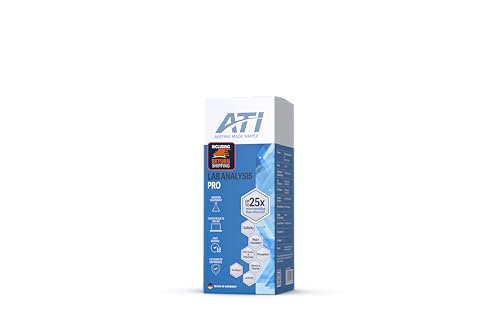
ATI ICP Lab Analysis Pro for Reef Aquariums – Advanced Water Testing with RO Water Analysis – Nitrate, KH & Fluoride – 1 Test Kit
ATI ICP Lab Analysis Pro for Reef Aquariums – Advanced Water Testing with RO Water Analysis – Nitrate, KH & Fluoride – 1 Test Kit
Best for: Reefers who want tank water and source water (RO/DI) analyzed together.
This is the most comprehensive-sounding option on the list for keeping an eye on both your tank and the water you top off with. If you suspect your RO unit or DI resin is letting something through, a combined analysis makes sense.
Key specs
- Lab-based ICP analysis of reef water
- Listing names nitrate, KH and fluoride among the reported items
- Single test kit per order
Pros
- Covers source water as well as display tank water
- Reports several parameters home kits struggle with
- Brand is widely referenced in reef hobby discussions
Cons
- Results take time because samples go to a lab
- Not a substitute for daily testing of alkalinity and calcium
Bottom line: The best fit if you want to audit both your RO water and your display tank in one analysis.
View on Amazon
ICP Water Test – Elemental Water Test Kit – 45 Elements – Reef Aquarium Test -ICP-OES – Saltwater Test Kit – Reef Tank Water Test
ICP Water Test – Elemental Water Test Kit – 45 Elements – Reef Aquarium Test -ICP-OES – Saltwater Test Kit – Reef Tank Water Test
Best for: Hobbyists who want the widest elemental panel available.
Owners who are chasing an unexplained issue often want as many elements as possible in a single report, so a 45-element panel is attractive when you are not sure what to look for.
Key specs
- Listing states 45 elements analyzed by ICP-OES
- Designed for saltwater reef tank samples
Pros
- Broad coverage for troubleshooting
- Useful for catching trace contaminants
- Clear element-by-element reporting style in listings
Cons
- A wide panel can produce many numbers that need context
- Results still arrive after lab turnaround, not instantly
Bottom line: Suited to reefers who prefer maximum data and are comfortable interpreting a long element list.
View on Amazon
Triton Labs ICP-OES Water Test- Full Panel of 32 Elements – Saltwater Reef Testing Kit
Triton Labs ICP-OES Water Test- Full Panel of 32 Elements – Saltwater Reef Testing Kit
Best for: Reefers who want a defined 32-element saltwater panel.
A fixed, well-described panel makes it easier to compare results over several tests, since you know exactly which elements are reported each time.
Key specs
- Listing states a full panel of 32 elements
- ICP-OES analysis, saltwater reef focus
Pros
- Consistent panel suits trend tracking
- Reef-focused testing rather than general water testing
- Clear scope stated in the product name
Cons
- Fewer elements than the 45-element option
- Requires mailing a sample and waiting for lab results
Bottom line: A solid middle-ground choice for reefers who want a dependable panel for periodic check-ups.
View on Amazon
Fauna Marin Reef ICP Test
Fauna Marin Reef ICP Test
Best for: Reefers already invested in the Fauna Marin ecosystem.
Brand-matched testing can make it simpler to relate results to the supplements and salt you are already dosing.
Key specs
- Reef-focused ICP test from the Fauna Marin line, per the listing
- Designed for reef aquarium water samples
Pros
- Pairs naturally with a Fauna Marin dosing routine
- Straightforward reef-oriented test purpose
- Brand name is familiar to many reef keepers
Cons
- Element coverage details are less prominent in the listing name than competitors
- Most useful only if you are also in that product line
Bottom line: Best for reefers who want a brand-aligned test that fits an existing Fauna Marin routine.
View on Amazon
ATI ICP-OES Lab Analysis Standard for Reef Aquariums – Professional Water Testing – Salinity, Trace & Major Elements – 1 Test Kit
ATI ICP-OES Lab Analysis Standard for Reef Aquariums – Professional Water Testing – Salinity, Trace & Major Elements – 1 Test Kit
Best for: Routine checks of major and trace elements on a reef.
A standard-style panel is often enough for periodic audits when you do not need an exhaustive element list every time.
Key specs
- ICP-OES professional lab analysis, per the listing
- Covers salinity along with trace and major elements
- Single test kit per order
Pros
- Covers the parameters most reefers care about day to day
- Lab-based analysis for more reliable numbers than drop kits
- Same brand family as the top pick, useful if you want consistency
Cons
- Narrower panel than the 45-element option
- Still requires lab turnaround time
Bottom line: A sensible pick for reefers who want periodic professional checks without the largest possible panel.
View on AmazonBuying Guide
Element Coverage
Check how many elements the panel reports and which ones. A wider panel helps when you are troubleshooting, but more numbers mean more interpretation. Match the panel to the question you are trying to answer.
Good picks for this: ICP Water Test Elemental Kit (45 elements), Triton Labs ICP-OES Water Test
Source Water vs. Display Tank
Some tests focus on the tank, while others also analyze RO or DI source water. If you suspect contaminants are entering with top-off water, a test that covers source water is more useful.
Good picks for this: ATI ICP Lab Analysis Pro for Reef Aquariums
Sample Collection and Shipping
Read the collection instructions carefully. Lab tests depend on clean containers, correct sample volume and prompt shipping. Mishandled samples produce unreliable data, so follow the manufacturer’s sampling steps exactly.
Good picks for this: ATI ICP-OES Lab Analysis Standard, Fauna Marin Reef ICP Test
Turnaround Time
Lab analysis is not instant. Plan for shipping time plus processing before you expect results, and avoid ordering when you need an answer the same day.
Good picks for this: Triton Labs ICP-OES Water Test, ATI ICP-OES Lab Analysis Standard
Brand Ecosystem Fit
If you dose a particular brand of salt, supplements or additives, a test from the same brand can make it easier to connect results to your routine.
Good picks for this: Fauna Marin Reef ICP Test, ATI ICP Lab Analysis Pro for Reef Aquariums
Interpreting Results
An ICP report lists concentrations, not a diagnosis. Compare results against accepted reef reference ranges and consider how they match your observed corals, algae and livestock. Consult a knowledgeable reef professional or your lab’s technical support before making major changes to your system.
Good picks for this: ICP Water Test Elemental Kit (45 elements), Triton Labs ICP-OES Water Test
FAQ
What does an ICP test for reef tank water actually measure?
ICP-OES analysis measures the concentration of many elements in a water sample, including major ions and trace metals. It goes well beyond what standard home test kits cover, which is why reefers use it to investigate unexplained problems.
How often should I run an ICP test?
Most reefers use ICP testing occasionally, such as when setting up a new system, after changing salt or source water, or when troubleshooting. Daily and weekly parameters like alkalinity, calcium and magnesium are still tracked with home tests.
Do I need to test my RO/DI water too?
Many reefers find it useful to analyze source water, since contaminants in top-off water accumulate over time in an evaporating tank. A product that covers both source and display water can help you find where a problem starts.
Is an ICP test a replacement for regular test kits?
No. ICP testing complements routine home testing. Daily and weekly checks are still the foundation of reef water management, and lab results are best used as periodic audits.
How long does the process take?
Expect shipping time both ways plus lab processing. Exact turnaround depends on the provider, so check the listing and manufacturer instructions before ordering.
Can I interpret the results on my own?
You can read the numbers, but context matters. Compare results to reputable reef reference ranges and consult an experienced reef keeper or the lab’s support team before making large changes. This is general hobby information, not professional advice.
Conclusion
For most reefers, the right ICP test for reef tank use depends on what you are trying to learn. If you want to audit both source water and display tank, the ATI ICP Lab Analysis Pro is the most directly suited to that job. If you want the widest elemental panel for troubleshooting, the 45-element ICP Water Test kit covers the most ground. The Triton Labs 32-element panel suits trend tracking, the Fauna Marin test fits reefers already using that brand, and the ATI Standard panel works for routine major and trace checks. Match the panel to your question, follow the sampling instructions carefully, and use the results alongside your regular home testing.
Sources
- Guidance on water quality terms and how laboratory analytical methods are described (epa.gov)
- Background on ICP-OES and how dissolved elements are measured in water samples (usgs.gov)
- Standards and certification context for drinking and treated water, useful when evaluating RO/DI source water (nsf.org)
Related reading
- Top 5 Reef Tank Test Kit Options for Accurate Water Checks (2026)
- Top 5 Reef Tank Phosphate Test Kits Compared for Accurate Readings (2026)
- Top 5 Reef Tank Calcium Test Kits Compared for Accurate Water Checks
- Top 3 Alkalinity Supplements and Test Kits for Alkalinity in a Reef Tank (2026)
- Reef Tank Ph Level: How to Test, Stabilize and Hold 8.1–8.4
- Ph for Reef Tank: How to Test, Stabilize and Hold 8.1–8.4 (Guide)
- 7 Best Reef Tank Water Test Kits for Stable Saltwater Parameters
About Caleb Morgan
Caleb Morgan is part of our editorial team and reviews and edits our reef & saltwater aquariums guides, checking product details against manufacturer specifications and owner feedback.
About the author
Caleb Morgan writes reviews and buying guides for My Reef Aquarium.