6 Best Saltwater Auto Top Off Systems for Reef Tanks (2026)
Compare 6 saltwater auto top off systems for reef tanks, with best-fit picks, key features, pros, cons and buying tips to keep your salinity stable.
 By Caleb Morgan
Updated November 9, 2026
 By Caleb Morgan
Updated November 2026
Evaporation is the quiet enemy of every saltwater tank. Water leaves the system, salt stays behind, and salinity drifts upward if nothing replaces the lost volume. A saltwater auto top off system solves that by sensing the water level in your display or sump and adding fresh RO/DI water automatically, so your salinity and water level stay steady between manual checks. This guide covers six systems from the Useek, FZONE and ATET lines, judged on sensing method, anti-overflow protection, installation fit, and the owner feedback patterns that tend to separate reliable units from frustrating ones.
Our top picks at a glance
- 1TOP CHOICEBest overallUseek Auto Top Off System Saltwater AquariumView on Amazon
- 2
 TOP CHOICEBest for smart controller setupsFZONE Aquarium ATO System QST2.0View on Amazon
- 3
 TOP CHOICEBest for nano sumpsAuto Top Off Saltwater Freshwater Aquarium Anti-OverflowView on Amazon
- 4
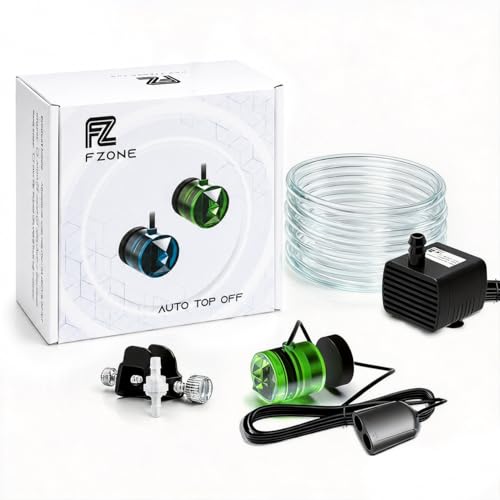 Best for dual-sensor redundancyFZONE ATO System Dual Optical SensorsView on Amazon
- 5
 Best budget pickAuto Top Off System Saltwater Aquarium Anti-OverflowView on Amazon
- 6
 Best for purple-accent reef buildsATET Auto Top Off System Saltwater AquariumView on Amazon
Our Top Picks
Quick Comparison
| Product | Best for | Key feature |
|---|---|---|
| Useek Auto Top Off System Saltwater Aquarium | Overall reliability | QST real-time anti-overflow with 1mm precision sensing |
| FZONE Aquarium ATO System QST2.0 | Smart controller setups | Precise controller for saltwater and freshwater |
| Auto Top Off Saltwater Freshwater Aquarium Anti-Overflow | Nano sumps | Sealed, mini top off with one-piece probe |
| FZONE ATO System Dual Optical Sensors | Redundant sensing | Dual optical sensors for water level control |
| Auto Top Off System Saltwater Aquarium Anti-Overflow | Budget-minded tanks | Compact probe with auto shutoff |
| ATET Auto Top Off System Saltwater Aquarium | Purple-accent builds | Dual optical sensor with plug-and-play setup |
Useek Auto Top Off System Saltwater Aquarium
Useek Auto Top Off System Saltwater Aquarium, Water ATO for Reef Fresh Tank | Stable Water Levels & Salinity, QST Real-Time Anti-Overflow, 1mm Precision Sensing, Easy Setup, 2-Year Warranty, Blue
Best for: Overall reliability and stable salinity
This is a good match for hobbyists who want a dependable, mainstream system with a clear anti-overflow feature and a standard two-year warranty. It suits both reef and fresh tanks and works well as a first ATO for a medium display.
Key specs
- Stated sensing precision of 1mm
- QST real-time anti-overflow protection
- Two-year warranty
- Designed for saltwater and freshwater aquariums
Pros
- Anti-overflow protection helps prevent flooding if the sensor fails
- Precision sensing supports tight water level control
- Simple setup for most sump configurations
Cons
- Requires a reservoir and a reliable RO/DI supply
- Calibration is still needed for each tank’s sump geometry
Bottom line: A strong default choice for most reef keepers who want a balanced, well-protected ATO without advanced controller features.
View on AmazonFZONE Aquarium ATO System QST2.0
FZONE Aquarium ATO System, QST2.0 Auto Top Off Controller for Tanks | Smart ATO system with precise controller for saltwater and freshwater aquariums, maintaining stable water levels
Best for: Smart controller setups
Aimed at aquarists who prefer a dedicated controller with precise regulation and want one system that handles both saltwater and freshwater tanks. It fits hobbyists comfortable with a bit of calibration in exchange for finer control.
Key specs
- QST2.0 controller platform
- Designed for saltwater and freshwater aquariums
Pros
- Controller-based regulation supports stable water levels
- Works across both saltwater and freshwater setups
- Good fit for users who want programmable behavior
Cons
- More setup steps than a basic probe kit
- Owners report that sensor placement affects accuracy
Bottom line: Best for hobbyists who want controller-level precision and are willing to spend time on calibration.
View on AmazonAuto Top Off Saltwater Freshwater Aquarium Anti-Overflow
Auto Top Off Saltwater Freshwater Aquarium, Anti-Overflow ATO Reef Tank | sealed, mini top off, one piece probe, no flood, nano sump, easy setup, silent, reef safe, 2-year warranty, AI smart
Best for: Nano sumps
Designed for small systems where space is tight and quiet operation matters. A good fit for nano reef tanks and compact sumps where a bulky reservoir or large float would be impractical.
Key specs
- Sealed design with one-piece probe
- Mini top off format for small sumps
- Two-year warranty
Pros
- Compact footprint suits nano and small sump setups
- One-piece probe simplifies installation
- Anti-overflow design limits flood risk
Cons
- Smaller reservoir capacity means more frequent refills
- Less suited to large display tanks with high evaporation
Bottom line: The right pick for nano reefers who need a discreet, space-saving ATO.
View on AmazonFZONE ATO System Dual Optical Sensors
FZONE ATO System, Auto Top Off with Dual Optical Sensors for Aquarium Green | Dual optical sensor ATO system for reef and freshwater tanks, with precise water level control and stable operation
Best for: Redundant sensing
Suited to keepers who want a second layer of safety. Two optical sensors give the controller a way to cross-check level readings, which can reduce false triggers caused by surface film or bubbles.
Key specs
- Dual optical sensor design
- Designed for reef and freshwater tanks
Pros
- Two sensors add redundancy
- Stable operation in reef and freshwater tanks
- Precise level control
Cons
- Optical sensors need periodic cleaning to stay accurate
- Installation is slightly more involved than single-probe units
Bottom line: A solid choice for keepers who want backup sensing and are willing to clean sensors on a schedule.
View on AmazonAuto Top Off System Saltwater Aquarium Anti-Overflow
Auto Top Off System Saltwater Aquarium, ATO Reef Fresh Tank Anti-Overflow | compact probe, sealed sensor, flood prevention, long pump life, strong magnet, auto shutoff, freshwater, 2-year warranty
Best for: Budget-minded tanks
A sensible option for hobbyists who want core ATO functions without extra controller features. The compact probe and magnetic mounting make it easy to fit on a range of sumps and reservoirs.
Key specs
- Compact probe design
- Sealed sensor with auto shutoff
- Strong magnet for mounting
- Two-year warranty
Pros
- Auto shutoff adds flood protection
- Compact probe is easy to position
- Works for freshwater and saltwater
Cons
- Fewer advanced controls than controller-based systems
- Owners report that placement needs care to avoid false readings
Bottom line: A practical, no-frills ATO for keepers who value simplicity and core safety features.
View on AmazonATET Auto Top Off System Saltwater Aquarium
ATET Auto Top Off System Saltwater Aquarium, ATO for Fresh & Reef Tank | Maintain stable salinity & water level, QST Anti-Overflow, Dual Optical Sensor, 1mm Precision Sensor, Plug & Play, Purple
Best for: Purple-accent reef builds
Suited to aquarists who want a plug-and-play system with dual optical sensing and a finish that matches a colorful reef aesthetic. It targets salinity and level stability in both reef and freshwater tanks.
Key specs
- Dual optical sensor design
- 1mm precision sensor
- QST anti-overflow feature
- Plug-and-play setup
Pros
- Plug-and-play setup reduces installation time
- Dual optical sensing adds redundancy
- Precision sensor supports stable levels
Cons
- Optical sensors need occasional cleaning
- Limited independent long-term owner data compared with older brands
Bottom line: Good for reefers who want an easy install with dual sensing and a distinctive color option.
View on AmazonBuying Guide
Sensing Method: Float, Optical and Probe Systems
Most saltwater ATO systems use one of three sensing approaches. Float switches are mechanical and simple but can stick. Optical sensors detect the water line through light refraction and are generally clean and quiet, though they need occasional wiping. Conductive probes read water contact and work well in sumps with steady surfaces. Dual sensing, as in the FZONE and ATET models above, adds a second check that can catch a single sensor fault before it becomes a flood or a dry sump.
Good picks for this: FZONE ATO System Dual Optical Sensors, ATET Auto Top Off System Saltwater Aquarium
Anti-Overflow Protection
Anti-overflow is the feature that matters most when something goes wrong. Look for a system that cuts the pump when the reservoir runs low or the sensor sees an abnormal level change. Owners consistently point to flood prevention as the reason they trust an ATO enough to leave it running unattended for days.
Good picks for this: Useek Auto Top Off System Saltwater Aquarium, Auto Top Off System Saltwater Aquarium Anti-Overflow
Sump and Reservoir Fit
Measure your sump’s usable height and the space around the return section before buying. Compact probes and mini top-off designs suit nano sumps, while controller-based systems often need more room for the box and cabling. Check that the probe or sensor can be mounted securely without touching the skimmer, heater or return flow.
Good picks for this: Auto Top Off Saltwater Freshwater Aquarium Anti-Overflow, Auto Top Off System Saltwater Aquarium Anti-Overflow
Tank Size and Evaporation Rate
Evaporation depends on tank size, room humidity, lighting heat and surface agitation. A nano tank may lose only a few liters per week, while a large reef can lose many gallons. Size your reservoir so it covers at least a week of evaporation at your local conditions, and choose a pump rated for the flow you need.
Good picks for this: Useek Auto Top Off System Saltwater Aquarium, FZONE Aquarium ATO System QST2.0
Controller Features and Calibration
Controller-based systems offer finer regulation and sometimes programmable behavior. They also require calibration for your specific sump geometry. Expect to set the sensing range, test the cutoff, and verify that the pump stops when the reservoir is empty. Follow the manufacturer’s calibration steps exactly and recheck after any sump change.
Good picks for this: FZONE Aquarium ATO System QST2.0, Useek Auto Top Off System Saltwater Aquarium
Water Quality and Reservoir Material
Only use RO/DI water in the reservoir. Tap water or untreated salt mix will raise nitrate, phosphate or total dissolved solids over time and undo your reef’s chemistry. Choose a food-safe, opaque reservoir to limit algae growth, and clean it at least monthly. The pump and tubing should be rated for saltwater use.
Good picks for this: Auto Top Off System Saltwater Aquarium Anti-Overflow, ATET Auto Top Off System Saltwater Aquarium
Durability, Warranty and Care
Saltwater is harsh on electronics and pump seals. Look for sealed sensor housings and a clear warranty period. Plan routine care: wipe optical sensors, check tubing for kinks or salt creep, and test the anti-overflow function every few weeks. Owners who keep a simple maintenance log tend to catch problems early.
Good picks for this: Auto Top Off Saltwater Freshwater Aquarium Anti-Overflow, FZONE ATO System Dual Optical Sensors
FAQ
Can I use tap water in a saltwater auto top off system?
No. Tap water contains minerals, chlorine and other dissolved substances that build up in the tank and can destabilize salinity and water chemistry. Use RO/DI water only in the reservoir.
How often should I clean the sensor?
Optical and probe sensors should be wiped every one to two weeks, or whenever salt film or algae is visible. Cleaning helps prevent false readings that could cause overfilling or dry running.
Do I still need to check salinity if I have an ATO?
Yes. An ATO replaces evaporated water with fresh RO/DI water, which keeps salinity from rising, but it does not correct salt that is already imbalanced. Test salinity regularly with a refractometer or a calibrated digital meter.
What happens if the reservoir runs empty?
Systems with anti-overflow or auto shutoff stop the pump when the reservoir is depleted. Keep the reservoir topped up and consider a low-level alarm if you travel often.
Can one ATO work for both saltwater and freshwater tanks?
Several of these systems list both uses, but the reservoir must always contain the water appropriate for the tank. Do not switch a reservoir between saltwater and freshwater without thorough cleaning.
How do I calibrate the sensor?
Set the sensor so it triggers at the normal low point of your sump, then test by lowering the water manually and confirming the pump starts and stops at the right levels. Follow the manufacturer’s steps for your model.
Is a dual-sensor system worth it?
For many keepers, yes. A second sensor provides redundancy if one fails or gets fouled, which is especially useful for tanks left unattended for long periods.
Conclusion
For most reef tanks, the Useek Auto Top Off System Saltwater Aquarium is a balanced starting point with clear anti-overflow protection. Keepers who want controller-level precision should look at the FZONE QST2.0, while nano reefers will find the compact Auto Top Off Saltwater Freshwater Aquarium the best fit for small sumps. Those who want redundant sensing can consider the FZONE dual optical model or the ATET system, and budget-minded hobbyists may prefer the compact probe kit with auto shutoff. Match the system to your sump size, evaporation rate and how much calibration you are willing to do.
Sources
- Guidance on water quality and safe handling of treated water supplies (epa.gov)
- Background on water chemistry, dissolved solids and evaporation (usgs.gov)
- Standards and certification information for water treatment and filtration products (nsf.org)
Related reading
- 7 Best Auto Top Off Saltwater Tank Systems Compared (2026)
- 5 Best Auto Top Off Saltwater Aquarium Systems Compared (2026)
- Tunze Osmolator 3 Auto Top Off: Setup and Calibration Guide
- Tunze Auto Top Off: Setup, Calibration and Troubleshooting Guide (2026)
About Caleb Morgan
Caleb Morgan is part of our editorial team and reviews and edits our reef & saltwater aquariums guides, checking product details against manufacturer specifications and owner feedback.
About the author
Caleb Morgan writes reviews and buying guides for My Reef Aquarium.