RO DI Auto Top Off Review: FZONE Nano ATO Features and Performance
Reviewing the FZONE Nano ATO for RO/DI auto top off use: specs, pros and cons, who it suits, and alternatives for reef and nano tanks.
 By Caleb Morgan
Updated November 11, 2026
 By Caleb Morgan
Updated November 2026
If you run an RO/DI system and want an auto top off for a nano reef or a small saltwater tank, the FZONE Nano ATO with solenoid is a budget-friendly option worth a close look. It is built for RO/DI top off duty, with a solenoid valve that stops water flow when the target level is reached, and it is marketed for both saltwater and freshwater aquariums. It suits hobbyists with a small sump or refugium, a reservoir of RO/DI water, and a tolerance for hands-on calibration. It is a weaker fit for large systems, for anyone who wants a multi-sensor setup with built-in alarms, or for keepers who would rather pay for a longer warranty and a more established service network.
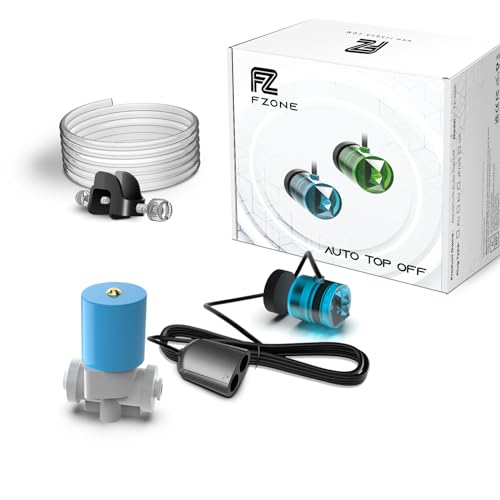
FZONE Nano ATO Auto Top Off with Solenoid for RO/DI, Saltwater & Freshwater | Automatic Water Level Control for Saltwater and Freshwater Aquariums, Ideal for RO/DI Systems and Nano Tanks
Product Overview
The FZONE Nano ATO is an automatic top off controller sold under the listing name “FZONE Nano ATO Auto Top Off with Solenoid for RO/DI, Saltwater & Freshwater.” Its job is simple: keep the water level in your display tank or sump steady by adding RO/DI water whenever evaporation drops the level below a set point. Evaporation removes pure water and leaves salt behind, so an ATO is what keeps salinity from creeping upward between your manual water changes. For a reef, that stability matters for coral tolerance, pH, and the consistency of your livestock’s environment.
The product is positioned as an ATO for nano tanks and RO/DI systems. The listing emphasizes the solenoid valve, which is the component that actually opens and closes the water line. Solenoid-based systems are a common approach across the category: a sensor detects the water level, the controller decides when to add water, and the solenoid valve controls flow from a reservoir that is typically gravity-fed or pressurized by a pump. Because the valve is the part that handles the water, its reliability and the quality of the sensor and controller determine most of the day-to-day experience.
Like most budget-oriented ATO units, the FZONE Nano ATO is best understood as a sensing and control package rather than a complete turnkey system. You will still need a suitable reservoir, tubing, a reliable RO/DI source, and a safe placement in or near the sump. Owners who run a nano tank generally find this workable. Owners who are trying to build a larger, redundant top off system may find they need to add components.
Key Features & Specifications
The table below lists only the features that are either named in the product title or are well established for this type of solenoid ATO. Where the exact figure varies between batches or was not confirmed, we have left it out rather than guess.
| Feature | What It Means for You |
|---|---|
| Solenoid valve control | Shuts off water flow automatically at the set level, which limits the risk of overfilling if the sensor is positioned correctly |
| RO/DI compatibility | Designed for use with purified water from an RO/DI system, which is the preferred top off water for reef tanks |
| Saltwater and freshwater use | Marketed for both marine and freshwater aquariums, so it can serve more than one tank |
| Nano tank focus | Intended for small systems where a compact controller and modest water volumes are the norm |
| Automatic water level control | Maintains level between manual checks, reducing evaporation-driven salinity swings |
Manufacturers and listings for solenoid ATOs typically specify items such as input voltage, valve size, maximum flow rate, and sensor type. These specifications should be confirmed on the current product page before purchase, because they can change between production runs. If you need a specific tubing diameter or a particular electrical rating for your setup, check those details directly on the listing.
Pros & Cons
Pros
- Designed around RO/DI top off, which is the standard for reef keepers who want to avoid introducing tap-water contaminants.
- Solenoid valve approach provides a clear shutoff, which is the core safety function of any ATO.
- Suitable for both saltwater and freshwater, giving flexibility if you keep more than one system.
- Aimed at nano tanks, so it matches the scale of small sumps and compact reef setups.
- Generally positioned at a budget-friendly level within the category, which appeals to first-time reef keepers.
Cons
- Brand recognition and service network are smaller than the major names in reef equipment, so support may be harder to find.
- Requires careful sensor placement and calibration; an improperly set level is the most common source of problems with any ATO.
- Not a complete system. You will need to supply a reservoir, tubing, and a reliable water supply.
- Larger or multi-tank setups may outgrow a single nano-focused controller.
- No built-in redundancy such as a dual-sensor backup, which means a failed valve or sensor can go unnoticed without a separate alarm or monitoring habit.
Performance Analysis
Performance for any ATO comes down to three things: how accurately the sensor detects the target level, how reliably the solenoid opens and closes, and how well the reservoir supplies water at the flow rate the valve needs. Because this is a research-based review and not a report from hands-on testing, the observations below draw on the typical design logic of solenoid ATOs and on patterns that owners of comparable budget units tend to describe.
Sensor placement is the first variable. Owners of budget ATOs frequently report that the most stable results come from mounting the sensor in a calm area of the sump, away from the return pump outlet and the skimmer’s bubble plume. Turbulent water can cause false readings and erratic valve cycling. A sensor placed in a still zone usually gives a cleaner, more predictable top off cycle.
Valve reliability is the second variable. Solenoid valves are generally dependable when they are kept clean and fed with water that is free of particulate matter. Owners often recommend installing an inline filter or sediment pre-filter upstream of the valve, particularly if the RO/DI unit is older or the membrane is near the end of its life. Debris lodged in a solenoid can cause it to stick open, which is the failure mode that causes overflows. Because of this, a simple shutoff backup, such as a float valve set slightly higher, is a sensible addition for many keepers.
Flow and reservoir supply are the third variable. A gravity-fed setup works well for a small nano sump with a reservoir placed above the water line. If the reservoir sits lower, a small pump is required, and the pump’s output must be matched to what the valve and tubing can handle. Undersized tubing restricts flow and can cause the system to run longer than expected on each cycle, which can make level swings larger rather than smaller.
In practical terms, a well-placed sensor, a clean valve, and a properly sized reservoir line should produce a steady, quiet top off cycle. Keepers should still check the tank daily during the first few weeks, verify the level by eye, and confirm the salinity with a refractometer. An ATO reduces work, but it does not replace routine monitoring, and any new controller deserves a period of supervised operation before it is trusted unattended.
Who Should Buy This Product?
The FZONE Nano ATO is a reasonable match for a few specific types of hobbyist. Keepers who run a nano reef, a small refugium, or a compact sump with a modest evaporation rate are the clearest fit. If you already own an RO/DI unit and a dedicated reservoir, and you are comfortable with basic plumbing and electrical connections, this controller can serve as an entry-level automation step without a large commitment.
Freshwater keepers who want an ATO for a planted or community tank will also find the product relevant, since the listing covers freshwater use as well. Those keepers should still choose RO/DI or dechlorinated water for top off, depending on their species and water chemistry goals.
Who should skip it? Keepers with large systems, multi-tank setups, or a strong need for dual-sensor redundancy should look at more robust options. Hobbyists who want a built-in alarm, a longer warranty, or a brand with a deep service history may prefer a more established name. Anyone who is uncomfortable with calibration, or who wants a fully plug-and-play installation, may find a more guided system easier to live with.
Buying Guide
Before buying any ATO for an RO/DI system, consider a few practical points. First, measure your sump and calculate your daily evaporation. A typical nano tank may lose a small amount of water per day, but heated, high-flow, or open-top systems can lose considerably more. Your reservoir must hold enough RO/DI water to cover at least several days of evaporation, and it should be sized so that you can refill it without difficulty.
Second, decide how you will mount the sensor and where the valve will sit. Choose a location that is protected from splashing and direct flow, and make sure the tubing run is short enough to avoid excessive back pressure. Third, plan for a backup. Many experienced keepers pair a solenoid ATO with a secondary float switch or a simple overflow safeguard, so that a failed valve does not flood the room. For guidance on troubleshooting and calibration steps that apply across the category, see our site and the related guides below.
Several alternatives are worth comparing. The Useek Auto Top Off System is marketed for saltwater reef tanks with real-time anti-overflow protection and a two-year warranty, which may appeal to keepers who want a longer coverage period.

Useek Auto Top Off System Saltwater Aquarium, Water ATO for Reef Fresh Tank | Stable Water Levels & Salinity, QST Real-Time Anti-Overflow, 1mm Precision Sensing, Easy Setup, 2-Year Warranty, Blue
The DIGITEN Auto Top Off System is another option, offered as a smart ATO with a pump and a sump-mounted design for fish tank use. Keepers who want a pump-driven setup rather than a gravity-fed one may find it a useful comparison.

DIGITEN Auto Top Off System, Smart ato System, Fish Tank Sump Water Filler Refiller, Automatic ATO System for Aquarium with Pump
For a broader look at how these systems compare across features and use cases, you may find 6 Best RO Auto Top Off System Picks for Reef Tanks (2026) helpful. If you are setting up a unit for the first time, Marine Auto Top Off: How to Set Up and Calibrate an ATO for Reef Tanks walks through the basic steps. Owners who run into problems after installation may also benefit from JBJ Auto Top Off Not Working: Troubleshooting Steps That Fix It.
FAQ
Is the FZONE Nano ATO safe to use with RO/DI water?
The listing identifies it as designed for RO/DI systems, which is the preferred source of top off water for reef tanks. Use only water that has been properly purified, and check your RO/DI unit’s TDS reading regularly to confirm it is producing clean water.
Can I use it in a freshwater aquarium as well?
The product is marketed for both saltwater and freshwater aquariums. For freshwater tanks, choose top off water that suits your species and your water chemistry, and confirm the setup works with your specific tank.
How do I prevent the ATO from overflowing my sump?
Position the sensor carefully in a calm area, set the target level conservatively, and add a secondary safeguard such as a float switch or an independent high-level alarm. Test the system by briefly raising the level manually to confirm the valve shuts off as expected.
What size reservoir do I need?
Calculate your daily evaporation and multiply it by the number of days you want between refills. A reservoir that covers at least several days of evaporation is a sensible minimum, and a larger container reduces how often you need to refill it.
Does it need a pump?
That depends on how you arrange the reservoir. If the reservoir sits above the water line, gravity may be enough. If it sits lower, a pump is required. Match the pump’s output to the valve and tubing so that flow is adequate without being excessive.
Why does my ATO keep running longer than expected?
Common causes include a sensor placed in turbulent water, a restricted or clogged inlet line, a low reservoir supply, or a valve partially obstructed by debris. Check each of these before assuming the controller itself has failed.
Should I use an ATO if I already check my tank daily?
Yes, many keepers find an ATO useful because it fills the gap between checks and reduces the risk of salinity swings on busy days. It is not a substitute for regular monitoring, so keep testing salinity and checking the level, even with automation in place.
Final Verdict
The FZONE Nano ATO is a sensible, budget-oriented solenoid top off controller for RO/DI-based nano reef and small saltwater systems, and it can also be used with freshwater tanks. It makes the most sense for hobbyists who want to automate basic top off duty without stepping into a premium price band, and who are comfortable with sensor placement, calibration, and a basic backup plan. It is less suitable for large systems, for anyone who needs redundant sensing, or for keepers who want the reassurance of a major brand’s service network. Before buying, confirm the current specifications on the listing, plan your reservoir and backup, and test the system under supervision before leaving it unattended.
View on AmazonAbout Caleb Morgan
Caleb Morgan is part of our editorial team and reviews and edits our reef & saltwater aquariums guides, checking product details against manufacturer specifications and owner feedback.
About the author
Caleb Morgan writes reviews and buying guides for My Reef Aquarium.